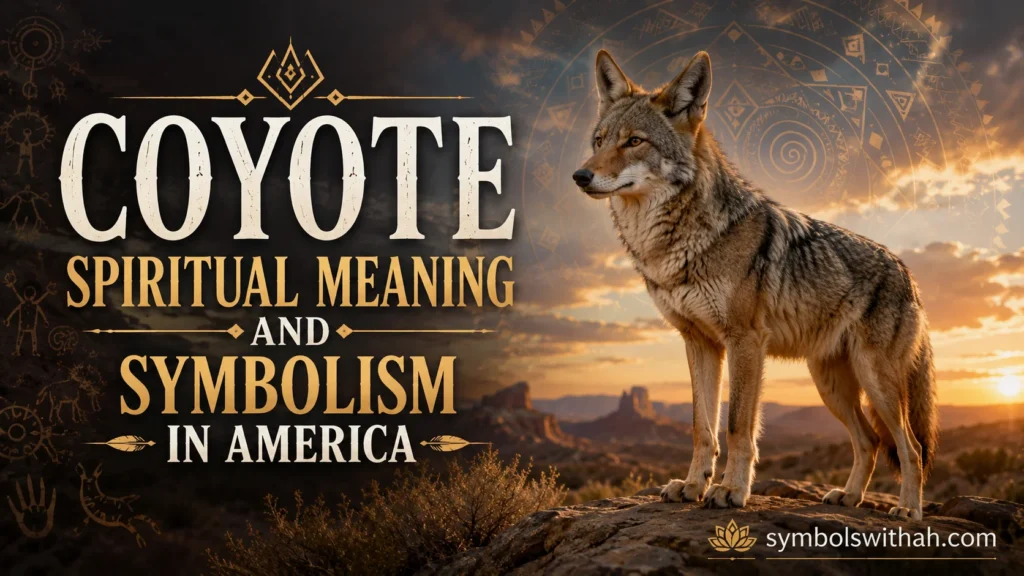

Coyote symbolism has fascinated people across the United States for generations. From Native American stories to modern tattoos and social media posts, the coyote carries meanings tied to survival, cleverness, adaptability, and spiritual transformation.
Today, many Americans see the coyote as a symbol of resilience. It survives in deserts, forests, suburbs, and even large cities. Because of that, the animal often represents independence and the ability to adjust during difficult times.
At the same time, the coyote has older spiritual roots. In many Indigenous traditions, the coyote appears as a trickster figure. Sometimes wise and sometimes chaotic, it teaches lessons through humor, mistakes, and unexpected change.
Read More: Skink Lizard Spiritual Meaning and Symbolism
Quick Answer
Coyote spiritual meaning and symbolism usually center on adaptability, intelligence, survival, and transformation. In the United States, the coyote often symbolizes resilience and freedom, while many spiritual traditions also connect it with trickster energy, life lessons, and personal growth.
TL;DR
• Coyotes symbolize survival, cleverness, and adaptability.
• Native traditions often portray coyotes as tricksters.
• In America, coyotes represent independence and resilience.
• Many people connect coyotes with spiritual awakening.
• Coyote tattoos often symbolize strength and transformation.
• Meanings have shifted from fear to admiration over time.
What Does the Coyote Represent?
Coyotes are medium-sized wild canines found across North America. They usually have gray-brown fur, pointed ears, narrow faces, and bushy tails. Because they move quietly and survive in harsh environments, they often appear mysterious and symbolic.
For many Americans, the coyote represents intelligence mixed with unpredictability. Unlike wolves, coyotes are often seen as lone survivors. However, they also work together in family groups when needed.
Core Symbolic Meanings
• Adaptability during difficult life changes
• Clever thinking and quick problem-solving
• Survival against the odds
• Independence and freedom
• Humor mixed with deeper wisdom
• Spiritual transformation and awakening
Why the Coyote Feels Symbolic
Coyotes thrive where many animals cannot. They live in deserts, mountains, suburbs, and cities. Because they keep adapting, people often connect them with persistence and inner strength.
Their nighttime howls also create emotional reactions. Some people hear loneliness in the sound, while others hear communication, warning, or spiritual calling.
The Historical Roots of Coyote Symbolism
The spiritual meaning of coyotes goes back thousands of years. Long before modern America existed, Indigenous peoples across North America told stories about the coyote.
These stories differed by tribe and region. However, many shared one important theme: the coyote was a powerful teacher.
Ancient and Indigenous Traditions
In many Native American traditions, the coyote appears as a trickster spirit. Tricksters break rules, create confusion, and challenge normal thinking. Yet they also reveal hidden truths.
Sometimes the coyote helps humans. Other times it causes trouble. Because of this dual role, the coyote became a symbol of life’s unpredictability.
Common Themes in Traditional Stories
• Breaking routines to reveal wisdom
• Learning through mistakes
• Survival through intelligence instead of strength
• Crossing boundaries between worlds
• Balancing chaos and creativity
The Trickster Archetype
The trickster appears in many world cultures. In North America, the coyote became one of the best-known examples. Stories often describe it as selfish, funny, foolish, or wise all at once.
Because of this complexity, the coyote symbolizes the messy side of human nature. It reminds people that growth often comes through failure and change.
Coyote Symbolism in the United States
In modern America, coyote symbolism has evolved beyond mythology. Today, the animal reflects ideas about freedom, survival, and life outside traditional systems.
Many Americans also associate coyotes with the American West. The animal appears in deserts, old frontier stories, and Southwestern landscapes.
The Coyote and the American West
Coyotes became linked with rugged independence during the expansion of the western United States. Cowboys, ranchers, and travelers often heard coyotes at night across open land.
Because of that history, the coyote still symbolizes:
• Wild freedom
• Self-reliance
• Frontier survival
• Life beyond civilization
• Untamed nature
Urban Coyotes and Modern Meaning
Today, coyotes live in places like Los Angeles, Chicago, and Phoenix. Their ability to survive in cities changed public perception.
Instead of symbolizing only wilderness, the coyote now represents adaptation in modern life. Many people admire its intelligence and flexibility.
| Context | Meaning in the USA | Common Associations | Notes |
| Western culture | Freedom and survival | Deserts, open landscapes | Linked to frontier identity |
| Urban environments | Adaptability | City wildlife | Growing public fascination |
| Spiritual practices | Transformation | Intuition, awakening | Popular in modern spirituality |
| Tattoos | Independence | Strength and resilience | Often deeply personal |
| Pop culture | Humor and chaos | Trickster energy | Influenced by cartoons and films |
Coyote Spiritual Meaning
Spiritually, coyotes often symbolize lessons hidden inside disruption. Many people believe the coyote appears during periods of uncertainty or personal change.
Unlike symbols connected only with peace or harmony, the coyote represents growth through challenge.
A Messenger of Change
People sometimes view coyotes as spiritual messengers. Seeing one repeatedly may feel meaningful during major life transitions.
The coyote may symbolize:
• Learning to trust instincts
• Letting go of rigid thinking
• Adapting to uncertainty
• Finding humor during hardship
• Becoming emotionally stronger
Intuition and Awareness
Coyotes are highly alert animals. Because they notice danger quickly, they often symbolize intuition and awareness.
In spiritual interpretation, the coyote can encourage people to pay attention to hidden details or emotional signals.
Shadow and Self-Reflection
The coyote also has a darker side in symbolism. It can represent deception, selfishness, or emotional confusion.
However, these meanings are usually connected to self-reflection rather than fear. The coyote asks people to examine their choices honestly.
Coyote Meaning in Native American Traditions
Native American coyote symbolism is complex and diverse. There is no single universal meaning because tribal traditions differ greatly.
Still, many stories portray the coyote as both creator and disruptor.
Creator and Transformer
In some traditions, the coyote helps shape the world. It may bring fire, teach survival skills, or guide humans through change.
These stories often show that wisdom does not always come from perfect behavior.
Respecting Cultural Context
Modern spiritual discussions sometimes oversimplify Indigenous beliefs. Therefore, it’s important to approach Native traditions respectfully and avoid treating them as one unified system.
Different nations and tribes have unique relationships with coyote symbolism.
Shared Themes Across Traditions
• Intelligence over physical power
• Humor as spiritual teaching
• Survival during hardship
• Transformation through mistakes
• Crossing spiritual boundaries
Coyote Symbolism in Dreams
Dreams about coyotes often feel emotional and memorable. Their meaning depends heavily on the dream’s mood and details.
A calm coyote may symbolize guidance, while an aggressive coyote could reflect fear or mistrust.
Common Dream Interpretations
• A friendly coyote may symbolize intuition
• A chasing coyote may reflect avoidance
• A howling coyote may represent communication
• A hidden coyote may symbolize uncertainty
• A wounded coyote may reflect emotional exhaustion
Emotional Themes in Coyote Dreams
Many coyote dreams connect with transition periods. These may include career changes, relationship shifts, or identity struggles.
Because coyotes survive through adaptation, dream interpretations often focus on resilience and personal flexibility.
Emotional and Psychological Meaning of Coyotes
Animals often become emotional symbols because humans project feelings onto them. Coyotes are no exception.
Psychologically, the coyote often represents independence mixed with vulnerability.
Emotional Associations
People commonly associate coyotes with:
• Loneliness and solitude
• Survival under pressure
• Cleverness and alertness
• Emotional resilience
• Freedom from social expectations
Why People Relate to Coyotes
Unlike lions or eagles, coyotes are not usually viewed as dominant or glamorous. Instead, they survive through intelligence and persistence.
Because of that, many people see themselves reflected in coyote symbolism during difficult life periods.
Coyote Tattoos and Modern Identity
Coyote tattoos have become increasingly popular in the United States. Many people choose them to represent personal transformation or survival.
Designs range from realistic portraits to tribal-inspired art and minimalist outlines.
Popular Tattoo Meanings
• Overcoming hardship
• Trusting instincts
• Independence and freedom
• Spiritual awakening
• Embracing personal change
Common Tattoo Styles
Some coyote tattoos include desert landscapes, moons, feathers, or geometric symbols. Others focus on the animal’s eyes or howl.
Because coyotes symbolize adaptability, tattoo meanings are often deeply personal rather than fixed.
Coyotes in Pop Culture and Media
American media strongly shaped modern coyote symbolism. Cartoons, films, and television often portray coyotes as clever but chaotic.
This image strengthened the trickster association already found in older traditions.
The Influence of Cartoons
One of the most famous fictional coyotes is Wile E. Coyote from the TV show Looney Tunes. His constant failures turned the coyote into a symbol of persistence despite setbacks.
Even when plans fail repeatedly, the character keeps trying. Many viewers connect that image with determination and resilience.
Modern Media Associations
• Clever but imperfect behavior
• Persistence after failure
• Humor mixed with frustration
• Outsider identity
• Creative problem-solving
Cross-Cultural Meanings of the Coyote
Although coyotes mainly live in North America, their symbolism overlaps with similar trickster animals worldwide.
Foxes, ravens, and jackals often carry related meanings in other cultures.
Shared Global Themes
Across cultures, trickster animals commonly symbolize:
• Adaptation and survival
• Intelligence and deception
• Spiritual lessons through chaos
• Boundary-crossing behavior
• Unpredictable transformation
Spiritual Interpretations Today
Modern spiritual communities sometimes view coyotes as spirit guides or power animals. These interpretations usually focus on flexibility, awareness, and change.
However, respectful discussion matters. Spiritual traditions should not be reduced to trends or stereotypes.
Misunderstandings and Controversies Around Coyote Symbolism
Coyote symbolism is not always positive. In some communities, coyotes are feared because they prey on pets or livestock.
This creates tension between admiration and concern.
Negative Symbolic Associations
Coyotes can also symbolize:
• Deception or manipulation
• Isolation from others
• Recklessness
• Opportunistic behavior
• Emotional unpredictability
Cultural Misuse and Oversimplification
Another issue involves the misuse of Indigenous symbolism. Some commercial products use Native-inspired coyote imagery without proper understanding or respect.
Because of that, many people encourage learning the historical and cultural background before adopting spiritual interpretations.
How Coyote Symbolism Has Changed Over Time
The meaning of the coyote has evolved significantly in American culture.
Earlier settlers often viewed coyotes mainly as pests or threats. Today, public attitudes are more mixed and sometimes even admiring.
From Threat to Survivor
As cities expanded, coyotes adapted surprisingly well. Scientists and wildlife experts began studying their intelligence and flexibility more closely.
This changed the animal’s public image.
Modern Shifts in Meaning
• Greater appreciation for wildlife resilience
• Stronger focus on adaptability
• Increased spiritual interest online
• Growing fascination with urban coyotes
• More nuanced understanding of Native traditions
FAQs
1. What does seeing a coyote mean spiritually?
Many people believe seeing a coyote symbolizes change, awareness, or adaptability. Spiritually, it may encourage flexibility and trusting your instincts.
2. Is the coyote a good or bad symbol?
The coyote is generally considered a mixed symbol. It can represent wisdom, intelligence, and survival, but it may also symbolize trickery, unpredictability, or caution.
3. What does a coyote tattoo symbolize?
A coyote tattoo often symbolizes resilience, independence, adaptability, and transformation. Some people also associate it with spiritual growth, freedom, and intuition.
4. Why is the coyote called a trickster?
Many Indigenous stories portray the coyote as a trickster because it bends rules, challenges authority, and creates unexpected situations. These stories often use the coyote to teach important life lessons.
5. What does hearing a coyote howl mean?
A coyote howl is often associated with communication, warning, community, or connection. Spiritually, some interpret it as a reminder to stay alert and aware of your surroundings.
6. Are coyotes sacred in Native American traditions?
In some Native American traditions, the coyote holds spiritual significance and appears in important stories and teachings. However, meanings vary widely among different tribes and regions.
Conclusion
The coyote remains one of the most layered animal symbols in North America. It represents survival, intelligence, unpredictability, and transformation all at once.
In the United States, the coyote has grown from a feared wilderness animal into a symbol of resilience and adaptation. Its ability to survive changing environments mirrors many modern human experiences.
At the same time, coyote spiritual meaning and symbolism continue to carry deeper lessons about growth, humor, instinct, and personal change. Whether encountered in dreams, stories, tattoos, or real life, the coyote often reminds people that strength sometimes comes from flexibility rather than control.