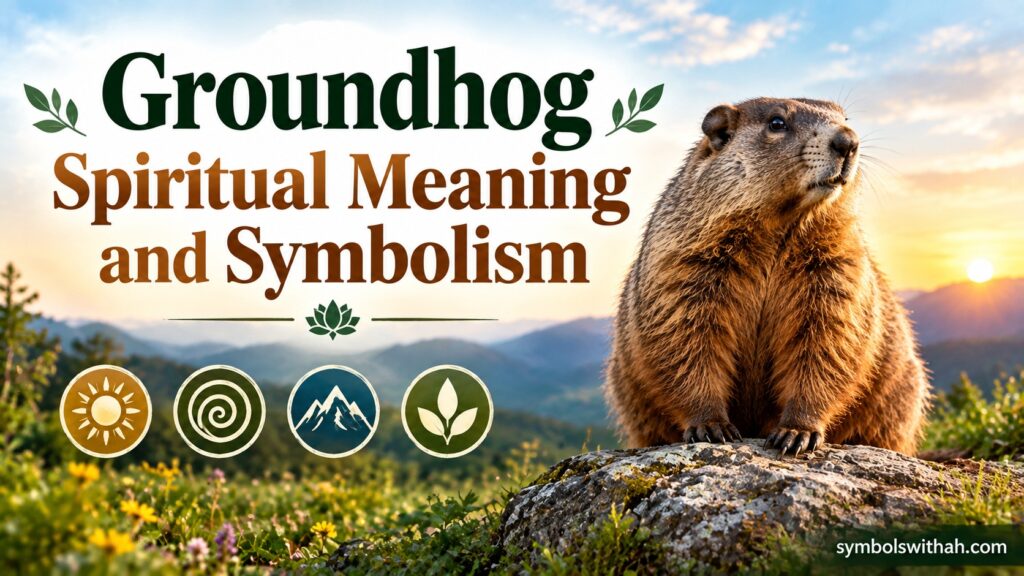

A groundhog can look like an ordinary woodland animal, yet its symbolism reaches far beyond its burrow. Groundhog spiritual meaning and symbolism often centers on patience, renewal, intuition, protection, retreat, and the natural rhythm of change. In the United States, those ideas are closely tied to the familiar Groundhog Day tradition.
Groundhogs also have fascinating natural habits. They spend much of winter underground, emerge seasonally, and respond strongly to changing environmental conditions. Their burrowing lifestyle naturally creates a powerful metaphor for going inward before returning to the world. (History)
However, spiritual symbolism isn’t the same as scientific fact. A groundhog doesn’t literally predict your future or carry one universal supernatural message. Instead, people may use its behavior as a reflective symbol for personal growth, seasonal transitions, and knowing when to pause.
Read More: White Aura Meaning: Spiritual and Symbolism Significance
Quick Answer
Groundhog spiritual meaning and symbolism commonly represents renewal, patience, protection, intuition, retreat, and emerging at the right time. In the United States, the animal also carries strong associations with seasonal change, Groundhog Day, and the hopeful transition from winter toward spring.
TL;DR
• Groundhogs symbolize patience, renewal, retreat, and seasonal transformation.
• Their burrows can represent safety, privacy, grounding, and inner reflection.
• Emerging from hibernation often symbolizes awakening and fresh beginnings.
• Groundhog Day connects the animal with weather lore and changing seasons.
• Spiritual interpretations vary and aren’t scientific predictions.
• Modern symbolism often blends folklore, nature, humor, and personal reflection.
What Does a Groundhog Symbolize?
A groundhog’s symbolism begins with one simple image: an animal disappearing underground and returning later. That rhythm naturally evokes ideas about withdrawal, preparation, survival, and emergence.
For many modern readers, the groundhog becomes a symbol of knowing when to step back and when to reappear. Its message isn’t necessarily about avoiding life. Instead, it can suggest using quiet periods to regain strength.
Core Groundhog Symbolism
The most common symbolic associations include:
• Patience: Waiting for the appropriate season before taking action.
• Renewal: Emerging from a dormant period with renewed energy.
• Protection: Creating a safe retreat during uncertain conditions.
• Intuition: Paying attention to environmental signals before moving forward.
• Grounding: Staying connected to practical needs and natural rhythms.
• Transformation: Moving from one life chapter into another.
• Self-reflection: Spending time privately before returning with greater clarity.
These meanings are interpretive rather than universal rules. A person’s circumstances often shape which symbolism feels most relevant.
Groundhog Spiritual Meaning and Personal Growth
Sometimes the most meaningful animal symbols appear during periods of transition. The groundhog fits this pattern especially well because its life revolves around seasonal rhythms.
Its retreat underground can represent a quieter chapter. Meanwhile, its eventual emergence can represent readiness rather than sudden change.
A Symbol of Patient Growth
Modern spiritual interpretations often connect the groundhog with slow progress.
Not every transformation happens dramatically. Some changes develop beneath the surface before anyone else notices them.
The groundhog therefore offers an appealing metaphor for people who are:
• Building something privately before sharing it publicly.
• Recovering confidence after a difficult chapter.
• Preparing carefully before making major changes.
• Learning to respect their own natural pace.
• Allowing personal growth to happen without constant attention.
This symbolism can be especially comforting when progress feels invisible.
Why Patience Matters
Nature rarely follows human deadlines. A groundhog doesn’t emerge because someone demands immediate results.
That makes the animal a useful reminder that readiness and speed aren’t the same thing.
Groundhog Symbolism of Hibernation and Retreat
Few groundhog behaviors carry stronger symbolic weight than hibernation. The animal’s winter retreat creates a vivid image of stepping away from external activity.
Groundhogs enter deep winter dormancy, during which their body temperature and heart rate drop dramatically. Their seasonal behavior is therefore a genuine biological adaptation, not evidence of supernatural forecasting. (History)
The Spiritual Meaning of Going Within
Symbolically, entering a burrow can represent moving inward.
It may suggest:
• Creating distance from unnecessary distractions.
• Protecting your energy during demanding periods.
• Thinking privately before making an important decision.
• Resting after prolonged emotional or physical effort.
• Reconnecting with personal values away from outside pressure.
The symbolism becomes especially powerful when someone feels overwhelmed by constant stimulation.
Retreat Doesn’t Always Mean Avoidance
There is an important distinction between healthy retreat and permanent withdrawal.
A groundhog eventually emerges. Symbolically, that matters.
The lesson isn’t simply “hide from the world.” Instead, it can suggest withdraw temporarily, restore yourself, then return when prepared.
Groundhog Symbolism of Burrows and Protection
A groundhog’s burrow is more than a hiding place. It provides shelter, protection, and a controlled environment where the animal can rest.
That makes the burrow a natural symbol of security and boundaries.
What the Burrow Can Represent
In symbolic interpretation, a groundhog burrow may represent:
• A protected emotional space.
• A private place for reflection.
• Strong personal boundaries.
• A stable foundation during uncertain times.
• The comfort of familiar surroundings.
• A need to simplify your environment.
For someone constantly surrounded by noise, the burrow becomes an appealing metaphor for peaceful solitude.
Grounding and the Earth
Because the groundhog lives close to the earth, some spiritual interpretations associate it with grounding.
Grounding here means reconnecting with ordinary realities rather than constantly chasing abstract possibilities.
That can include paying attention to home, rest, routines, relationships, and practical responsibilities.
Groundhog Meaning of Emergence and Rebirth
The image of a groundhog leaving its winter shelter carries an obvious message of emergence. After darkness and dormancy comes visibility.
That makes the animal a fitting symbol for renewal and fresh beginnings.
Emerging at the Right Time
A groundhog doesn’t remain underground forever.
Symbolically, this can represent a person who has spent enough time reflecting and is finally ready to participate again.
The message may resonate during:
- Starting a new job.
- Beginning a new relationship.
- Moving to a different place.
- Returning to a creative project.
- Rebuilding confidence.
- Entering a new stage of life.
The key idea is timing.
Rebirth Without Erasing the Past
Renewal doesn’t require forgetting everything that happened before.
Instead, the groundhog can symbolize carrying hard-earned knowledge into a new season.
That makes its symbolism less about starting from zero and more about starting again with greater awareness.
Groundhog Meaning in the United States
In the United States, the groundhog has a particularly distinctive cultural identity. Much of it comes from Groundhog Day, celebrated every February 2.
The American tradition developed from Pennsylvania German weather lore. German settlers adapted European animal-weather traditions to the native groundhog, while the first official Punxsutawney celebration took place on February 2, 1887. (History)
Why Groundhog Day Matters Symbolically
For Americans, the groundhog can symbolize:
• The transition between winter and spring.
• Hope for warmer and brighter days.
• Folk traditions passed between generations.
• Small-town American community identity.
• Humor surrounding uncertain weather.
• The human desire to understand seasonal change.
The tradition became much larger than its original weather lore.
Today, Groundhog Day combines folklore, community celebration, tourism, media, humor, and seasonal anticipation. Rutgers University described the holiday in 2026 as a deeply established American tradition celebrated nationwide. (Rutgers University)
Punxsutawney Phil and American Folklore
Punxsutawney Phil became the most famous American groundhog associated with the tradition.
The annual celebration at Gobbler’s Knob transformed an ordinary woodland animal into a recognizable figure of American folk culture. The event has also been amplified by newspapers, television, tourism, and popular entertainment. (History)
Groundhog Day and Seasonal Symbolism
Groundhog Day carries an older seasonal idea beneath its playful modern surface. February 2 falls close to the midpoint between the winter solstice and spring equinox.
That timing helped make the date symbolically important long before the modern American celebration developed.
Candlemas and European Weather Lore
The American tradition has roots in European Candlemas customs. German-speaking communities associated weather on February 2 with the coming weeks of winter.
Earlier European traditions also used animals such as badgers, hedgehogs, and bears in seasonal weather lore. Pennsylvania German settlers adapted the tradition to the groundhog, an animal native to eastern North America. (National Weather Service)
Imbolc and the Seasonal Turning Point
February’s seasonal position also resembles traditions connected with Imbolc, a Celtic seasonal festival associated with the approach of spring.
However, different historical traditions shouldn’t be collapsed into one identical belief. Their calendars, rituals, and meanings developed in different cultural settings.
What they share is a broad seasonal theme: winter is beginning to loosen its grip.
Spiritual Meaning of Seeing a Groundhog
Seeing a groundhog can feel meaningful, especially when the encounter happens unexpectedly. Spiritual interpretations often focus less on predicting an event and more on reflecting upon the timing of the encounter.
What Seeing a Groundhog May Symbolize
Depending on your circumstances, the sighting may represent:
• A reminder to slow down before acting.
• Encouragement to protect your personal boundaries.
• A transition from preparation toward visible action.
• A prompt to reconnect with nature.
• A reminder that growth can happen quietly.
• A symbolic invitation to trust natural timing.
These are reflective interpretations rather than fixed spiritual rules.
Seeing a Groundhog Near Your Home
A groundhog appearing near your home can symbolically emphasize security and personal space.
Because its natural behavior involves burrowing and creating sheltered spaces, the encounter may inspire reflection about your own environment.
Are you creating enough quiet time? Are your boundaries clear? Does your home feel restorative?
Those questions often make the symbolism more useful than searching for one predetermined meaning.
Groundhog Symbolism in Different Spiritual Traditions
Groundhog symbolism doesn’t belong to one universal spiritual system. Its modern meanings are shaped by folklore, nature observation, American culture, and individual interpretation.
European Folklore
European seasonal lore associated burrowing animals with weather changes and the movement from winter toward spring. These traditions helped shape the later Groundhog Day custom in Pennsylvania. (History)
Native American Context
It is important not to claim one universal “Native American groundhog meaning.” Indigenous nations have distinct histories, languages, and traditions.
The groundhog existed within North American ecosystems long before European settlers adapted it to their seasonal folklore. Therefore, broad claims about one shared Indigenous spiritual meaning can be misleading.
Modern Spiritual Interpretation
Today, spiritual writers often interpret the groundhog through themes such as:
- Renewal.
- Introspection.
- Protection.
- Timing.
- Resilience.
- Earth connection.
These are contemporary symbolic readings rather than one ancient doctrine.
Groundhog Meaning in Dreams
A groundhog appearing in a dream can be interpreted through the same themes of retreat, emergence, and timing.
Dream symbolism is highly personal. The animal’s behavior and your emotional response usually matter more than a universal dictionary definition.
Common Groundhog Dream Themes
A groundhog dream may evoke:
• Hiding: A desire for privacy or emotional safety.
• Emerging: Readiness to enter a new chapter.
• Burrowing: Searching for stability beneath surface pressures.
• Watching: Waiting for clearer information.
• Running away: Avoiding an issue that needs attention.
• Returning home: Reconnecting with familiar sources of comfort.
For example, dreaming about a groundhog leaving its burrow could symbolize readiness after a long period of preparation.
Emotional and Psychological Associations of the Groundhog
Animals often become symbolic because their behaviors mirror recognizable human experiences. The groundhog’s lifestyle offers several strong psychological metaphors.
The Need for Solitude
People sometimes need periods away from social demands.
The groundhog’s burrow can therefore symbolize the emotional value of privacy. Solitude can provide room for reflection, especially after prolonged stress or overstimulation.
The Desire for Security
A protected underground home creates another powerful association.
The groundhog can represent the instinct to establish a secure base before taking risks. That idea connects naturally with human desires for stability, familiarity, and belonging.
Resilience Through Seasonal Change
Winter doesn’t last forever.
The groundhog’s emergence therefore provides a simple image of resilience. Difficult periods can have an ending, even when that ending isn’t immediately visible.
Groundhog Symbolism in Nature and Everyday Life
The animal also carries practical ecological meaning beyond folklore. Groundhogs, or woodchucks, are Marmota monax, a species of large ground squirrel native to North America. (History)
They burrow, forage, climb, and swim. Their behavior demonstrates adaptability within changing environments.
What Their Natural Behavior Represents
| Groundhog Behavior | Symbolic Meaning | Modern Interpretation |
| Burrowing | Protection | Create healthy boundaries |
| Hibernation | Rest | Respect periods of recovery |
| Emerging | Renewal | Begin again when ready |
| Foraging | Resourcefulness | Use available opportunities |
| Seasonal movement | Adaptation | Adjust to changing conditions |
| Alert posture | Awareness | Notice what surrounds you |
This approach keeps symbolism connected to observable nature rather than unsupported supernatural claims.
Groundhog Symbolism in Tattoos and Art
Groundhog tattoos are less common than wolf, bear, butterfly, or snake designs. However, that rarity can make the symbol more personal.
Someone might choose a groundhog tattoo to represent home, resilience, seasonal transformation, or a connection to nature.
Groundhog Tattoo Ideas
Common symbolic approaches could include:
• A groundhog emerging from a burrow for renewal.
• A groundhog beneath a rising sun for new beginnings.
• A burrow surrounded by roots for grounding.
• A groundhog with seasonal flowers for transformation.
• A minimalist woodchuck silhouette for quiet resilience.
The strongest design usually connects the animal with a personal story rather than relying on a generic definition.
Groundhog Symbolism in Holidays and Popular Culture
Groundhog Day has transformed the animal into a familiar piece of American seasonal culture.
The holiday appears in school activities, community festivals, television coverage, jokes, decorations, children’s books, and social media posts.
Groundhog Day in Popular Culture
The 1993 film Groundhog Day gave the phrase an entirely new cultural dimension. The movie uses repeated days as a metaphor for personal change, making “Groundhog Day” synonymous with experiencing the same pattern repeatedly.
That meaning differs from the animal’s older seasonal symbolism.
Today, saying something feels like “Groundhog Day” can mean the same events keep happening again and again. This is a major example of how popular culture can reshape symbolism over time.
Misunderstandings About Groundhog Symbolism
Groundhog lore is charming, but several misunderstandings deserve clarification.
Groundhogs Don’t Scientifically Predict Winter
The Library of Congress states clearly that observing a groundhog’s shadow has no scientific basis for predicting six more weeks of winter. (The Library of Congress)
The tradition belongs to folklore rather than modern meteorology.
Spiritual Symbolism Isn’t Scientific Prediction
Likewise, seeing a groundhog shouldn’t be treated as proof that a specific future event will occur.
Symbolism works differently.
It can provide a meaningful framework for reflection without claiming supernatural certainty.
The Groundhog Isn’t an Ancient American Oracle
The modern American weather tradition developed through European and Pennsylvania German folklore. The groundhog became the American substitute for animals used in related European traditions. (History)
That history is more nuanced than describing the groundhog as an ancient universal oracle.
How Groundhog Symbolism Has Changed Over Time
The groundhog’s symbolic identity has undergone several distinct transformations.
First came seasonal and agricultural weather lore. Then Pennsylvania German communities adapted European customs to the American landscape. Later, Punxsutawney turned the tradition into an organized annual celebration. (National Weather Service)
Finally, television, film, tourism, and social media transformed the groundhog into a broader pop-culture figure.
From Weather Sign to Cultural Symbol
The progression looks roughly like this:
European seasonal lore → Pennsylvania German tradition → Groundhog Day → American folk culture → modern spiritual symbolism
Each stage added another layer.
Today, a groundhog can represent weather folklore, seasonal hope, humor, personal renewal, or the need to step back and regroup.
That layered history is what makes the animal particularly interesting.
FAQs About Groundhog Spiritual Meaning and Symbolism
1. What is the spiritual meaning of a groundhog?
A groundhog is often associated with patience, protection, renewal, grounding, and personal reflection. Its retreat into a burrow and later emergence create strong metaphors for rest and transformation.
2. What does seeing a groundhog symbolize?
Seeing a groundhog can symbolize a period of preparation, patience, or emerging from a quieter chapter. The meaning depends heavily on your circumstances and personal beliefs.
3. Is a groundhog a symbol of good luck?
Some people interpret unexpected animal encounters positively, but groundhogs don’t have one universal luck meaning. Their symbolism more commonly centers on seasonal change, resilience, and renewal.
4. What does a groundhog symbolize spiritually in America?
In the United States, the groundhog carries strong associations with Groundhog Day, seasonal transition, folk tradition, and hope for spring. Modern spiritual interpretations often add patience, introspection, and renewal.
5. What does a groundhog symbolize in dreams?
A groundhog dream may suggest retreat, protection, patience, or emerging from a hidden phase. The animal’s behavior and the dreamer’s emotions can change the interpretation.
6. Does Groundhog Day have ancient spiritual origins?
Groundhog Day developed from European seasonal weather traditions and became associated with Candlemas and related midwinter customs. Some accounts also connect its seasonal timing with older Celtic traditions such as Imbolc, although these traditions shouldn’t be treated as identical. (History)
Conclusion
The Groundhog Spiritual Meaning and Symbolism centers on a surprisingly rich set of ideas: patience, protection, grounding, renewal, intuition, and seasonal transformation. Its burrow represents retreat and security, while its emergence suggests readiness for another chapter.
In the United States, these meanings gained an especially distinctive layer through Groundhog Day. What began through European weather lore became a beloved American tradition centered on Punxsutawney, Pennsylvania, seasonal change, and the playful question of when winter will end. (History)
A groundhog doesn’t need to predict your future to be meaningful. Sometimes its most useful symbolism is simpler: rest when necessary, protect what matters, pay attention to changing seasons, and emerge when you’re ready.