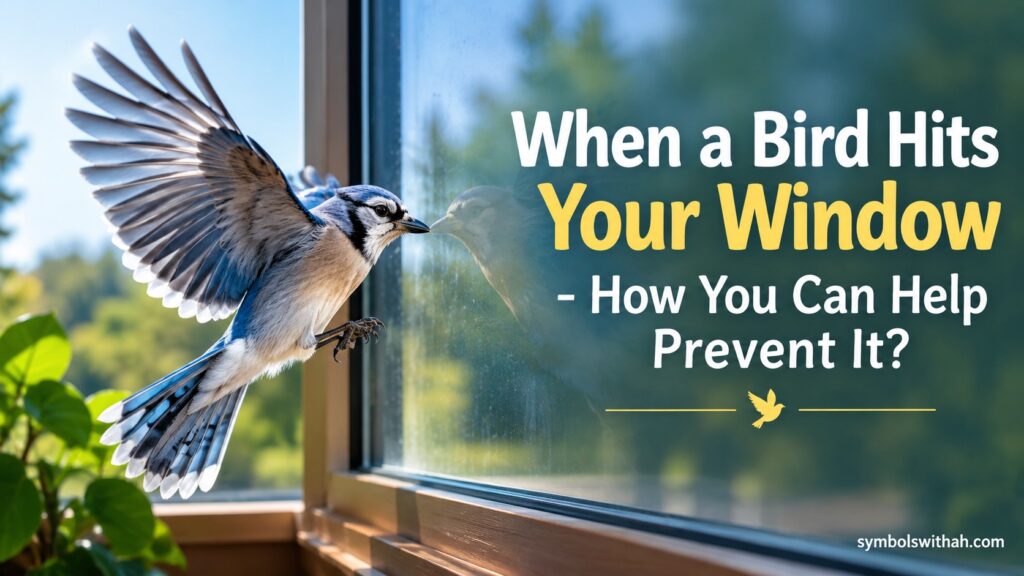

When a bird hits your window, the sudden thud can be startling. You may see the bird fall, fly away, or remain still on the ground. In many cases, the bird has collided with glass because it sees reflections of trees, sky, or open space.
The problem is especially important in the United States. Window collisions kill more than one billion birds in the U.S. each year, according to conservation organizations. Homes matter, too. Low-rise buildings and residences account for a large share of these collisions because there are so many of them. (American Bird Conservancy)
Fortunately, homeowners can take simple steps to reduce the risk. Understanding why the collisions happen is the first step toward choosing an effective solution.
Read More: Symbolism and Spiritual Meaning of Dead Snake
Quick Answer
When a bird hits your window, it usually mistakes reflected or visible habitat for open space. The best prevention is to make the glass visibly solid to birds using closely spaced exterior markers, screens, cords, film, or other bird-safe treatments. (American Bird Conservancy)
TL;DR
- Birds often mistake window reflections for real trees, sky, or open habitat.
- Window strikes can cause serious injuries even when a bird flies away.
- Homes and low-rise buildings are major sources of collisions.
- Exterior window patterns are generally more effective than isolated decals.
- Keep bird feeders away from dangerous windows or make nearby glass safer.
- Turn off unnecessary nighttime lights during migration periods.
- If an injured bird is found, contact a licensed wildlife rehabilitator.
Why Do Birds Hit Windows?
A window looks completely different to a bird than it does to you. Instead of recognizing glass as a solid barrier, a bird may perceive a reflection as part of the surrounding landscape.
For example, a window can reflect a tree standing behind you. A bird may see that reflection and attempt to fly toward it.
Reflections Create the Illusion of Habitat
Glass commonly reflects:
- Trees and shrubs
- Blue sky and clouds
- Gardens and lawns
- Open areas
- Other attractive habitat
Birds can also see through some windows. Indoor plants or outdoor vegetation beyond the glass may appear to create a continuous flight path.
This is why simply having a clean, transparent window can create a serious hazard.
Birds Can Also Attack Their Reflections
Not every window strike involves a bird trying to fly through glass.
During breeding season, some birds become territorial. A bird may see its own reflection and interpret it as a rival.
This can lead to repeated pecking or short attacks against the window. These encounters are usually less dangerous than high-speed collisions, but they can still waste energy and cause stress. (All About Birds)
How Common Are Bird-Window Collisions in the USA?
Window collisions aren’t limited to skyscrapers in major cities. Residential houses, suburban buildings, offices, schools, and other structures can all create dangerous glass surfaces.
American Bird Conservancy estimates that more than one billion birds die from glass collisions in the United States each year. Researchers and conservation groups continue to study ways to reduce this enormous source of bird mortality. (American Bird Conservancy)
Why Homes Are Especially Important
A single house may have only a few dangerous windows. However, the United States contains millions of homes.
American Bird Conservancy notes that an estimated 44% of window collisions occur at residences only one to three stories high. (American Bird Conservancy)
That makes backyard prevention surprisingly important.
Which Birds Are Affected?
Many different species can collide with glass.
Victims may include:
- Songbirds
- Sparrows
- Warblers
- Cardinals
- Thrushes
- Woodpeckers
- Hummingbirds
- Birds of prey
The problem therefore isn’t restricted to rare or migratory species. Common backyard birds can also be affected.
What Should You Do When a Bird Hits Your Window?
The first thing to remember is that a bird flying away doesn’t always mean it’s unharmed.
A collision can cause concussion-like symptoms, internal bleeding, fractures, or other injuries. Some birds initially fly away but later die from injuries sustained during the impact. (American Bird Conservancy)
If the Bird Is Still on the Ground
If the bird remains alive but cannot fly normally, keep people and pets away.
A licensed wildlife rehabilitator is the best source of help for an injured wild bird.
Avoid repeatedly picking up, handling, or chasing the bird. Stress can make an already injured animal’s condition worse.
If the Bird Appears Unconscious
A stunned bird may remain motionless for several minutes. However, severe injuries can look similar to temporary stunning.
Watch for:
- Difficulty standing
- Drooping wings
- Closed or swollen eyes
- Trouble breathing
- Blood around the mouth or nose
- Inability to fly normally
- Unusual weakness or confusion
Because internal injuries aren’t always visible, professional wildlife assistance is preferable when available.
How Can You Prevent Birds From Hitting Windows?
The most important prevention principle is simple: make the glass visible to birds.
A single decorative sticker usually isn’t enough. Effective treatments create a pattern that breaks up the apparent flight path.
American Bird Conservancy recommends window markers with spaces no larger than about two inches. The markers should be visible from a sufficient distance for birds to recognize the obstacle and change direction. (American Bird Conservancy)
Use Exterior Window Markers
Patterns applied to the outside of glass can interrupt reflections.
Options include:
- Dots or patterned decals
- Bird-safe tape
- Exterior window film
- Paint designed for glass
- Vertical lines
- Other tested visual markers
Exterior applications are generally preferred because they remain visible despite changing reflections.
Try External Screens
External insect screens are another practical option.
They reduce reflections and create a physical visual barrier. If a bird does strike the screen, the impact may also be cushioned compared with hitting bare glass. (American Bird Conservancy)
For many homeowners, screens provide a useful combination of bird protection and everyday window function.
Where Should You Put Window Treatments?
You don’t necessarily have to treat every window immediately.
Instead, start with the windows where collisions are already happening.
Prioritize Problem Areas
Pay special attention to:
- Large picture windows
- Glass doors
- Windows near bird feeders
- Windows near birdbaths
- Windows reflecting trees
- Windows where feathers or bird remains are found
American Bird Conservancy recommends prioritizing locations with repeated collisions and windows close to bird-feeding or bathing areas. (American Bird Conservancy)
Watch for Patterns
If you repeatedly hear a thump at the same window, don’t ignore it.
A collision may happen without leaving an obvious body behind. Birds can fly away while carrying serious injuries.
Repeated strikes are also strong evidence that the particular window needs treatment.
Should You Move Your Bird Feeder?
Sometimes moving a bird feeder can reduce dangerous flight paths.
However, the relationship between feeders and windows can be more complicated than simply placing the feeder farther away.
If birds regularly travel between a feeder and a reflective window, they may repeatedly cross the same dangerous area.
The better approach is to make the window bird-safe, while also considering feeder placement.
A Safer Backyard Setup
Think about the entire route birds use.
A feeder beside an untreated picture window can create repeated collision opportunities. A safer window treatment breaks up that hazard.
You can also combine window protection with native plants, safe feeding practices, and other bird-friendly landscaping.
What Window Treatments Work Best?
Different windows require different solutions. The best option depends on the size, reflection, location, and accessibility of the glass.
| Prevention Method | How It Helps | Best Use |
| Exterior patterned film | Makes glass visibly obstructed | Large windows |
| Closely spaced tape | Breaks up flight paths | Affordable home treatment |
| External screens | Reduces reflection and cushions impacts | Residential windows |
| Vertical cords | Create visible barriers across glass | Large glass surfaces |
| Exterior paint markers | Creates custom patterns | Temporary or decorative solutions |
| Shutters or blinds | Can reduce visibility and reflections | Problem windows |
Cornell Lab resources describe products and approaches using external markers, films, and vertical cords that can substantially reduce collisions when properly installed. (All About Birds)
Why One Bird Decal Usually Isn’t Enough
A common mistake is placing one hawk, owl, or bird silhouette on a window.
To a person, that sticker may clearly indicate a window. To a flying bird, however, it can simply look like one obstacle surrounded by open space.
The bird may attempt to fly around it and still strike the glass.
Think in Patterns, Not Symbols
Effective treatments make the whole surface recognizable as an obstacle.
Instead of one large sticker, consider a repeated pattern across the window.
For example:
• Closely spaced dots can interrupt the apparent flight path.
• Vertical lines can break up reflections across large panes.
• External screens can make the entire window more visually obvious.
• Hanging cords can create a consistent vertical barrier.
The goal isn’t to create a warning sign for humans. The goal is to change what the bird perceives.
Are Inside Window Decals Effective?
Interior treatments can help in some situations, but they’re often less reliable.
The outside of the window may continue reflecting trees or sky and hide the material placed indoors.
American Bird Conservancy recommends exterior solutions whenever practical. When exterior installation isn’t possible, testing the treatment at different times can help determine whether birds can actually see it. (American Bird Conservancy)
Why Exterior Treatments Usually Make Sense
Imagine looking at a window from outside.
If the glass strongly reflects a tree, an interior sticker may disappear into that reflection. An exterior pattern remains directly on the surface the bird is approaching.
That’s why placement matters as much as the material itself.
Do Nighttime Lights Cause Birds to Hit Windows?
Artificial light is another part of the problem, especially during migration.
Many migratory birds travel at night. Artificial lights can attract or disorient birds around buildings, particularly during poor visibility or cloudy conditions. (American Bird Conservancy)
Once birds gather around illuminated buildings, they may encounter dangerous glass.
What You Can Do at Night
Simple actions include:
• Turn off unnecessary exterior lighting.
• Close blinds when indoor lights are not needed.
• Use motion sensors instead of continuous lighting.
• Reduce decorative lighting during major migration periods.
• Support local bird-friendly lighting programs.
Turning off lights helps, but it isn’t a complete replacement for treating dangerous windows. Most residential collisions happen during daylight because of reflections and transparent glass. (American Bird Conservancy)
When Are Birds Most Likely to Hit Windows?
Bird-window collisions can happen throughout the year.
However, activity often increases during migration and breeding periods.
Spring and Fall Migration
Spring and fall bring large numbers of birds across North America.
During migration, birds may encounter unfamiliar buildings and reflective surfaces. Dawn and dusk can be particularly important periods because many migrants are beginning or ending nocturnal movements. (All About Birds)
Breeding Season
Spring can bring another type of window problem.
Territorial birds may repeatedly attack their own reflections. In these cases, reducing the reflection itself can help solve the behavior. (All About Birds)
Is a Bird Hitting Your Window a Spiritual Sign?
Bird-window collisions are sometimes given spiritual or symbolic interpretations.
Some people view a bird as a symbol of freedom, transition, communication, or spiritual movement. Because of that symbolism, a sudden collision can feel emotionally significant.
However, there is no scientific evidence that a bird hitting a window predicts a specific spiritual event.
For a practical explanation, reflections and transparent glass are the primary concerns. Spiritual interpretations belong to personal belief and cultural tradition rather than established biology.
A Balanced Way to Interpret the Experience
You don’t have to choose between symbolism and practical action.
A person might personally find meaning in the encounter while also recognizing the physical cause.
In that sense, the experience can become a reminder to pay attention to wildlife and make the home safer for birds.
What Does a Bird Hitting a Window Mean Emotionally?
Even without a spiritual interpretation, the experience can affect people strongly.
A sudden collision can produce shock, sadness, guilt, or concern. Seeing an injured bird outside your home can be especially upsetting.
However, homeowners shouldn’t automatically blame themselves.
Glass creates a visual problem that birds cannot interpret the same way humans do. Prevention is more useful than guilt.
Turning Concern Into Action
A window strike can reveal a hidden hazard.
Once you identify the dangerous window, you can take practical steps to reduce future collisions.
That small action can protect birds for years.
What Has Changed About Bird-Friendly Windows?
Awareness of glass collisions has grown considerably in recent decades.
Researchers now understand that bird-safe design involves more than simply adding a decorative sticker. Building materials, window patterns, lighting, landscaping, and building placement can all influence collision risk.
The issue has also entered local policy discussions.
In May 2025, Lake County, Illinois, adopted rules addressing collision deterrents on windows in new single-family homes. American Bird Conservancy described it as the first U.S. municipality to adopt such rules for new single-family homes. (American Bird Conservancy)
This reflects a broader shift toward designing buildings with birds in mind.
How Can You Make a New Home More Bird-Friendly?
The easiest time to prevent window collisions is before construction.
Large expanses of reflective glass can be beautiful for people while creating hazards for birds.
Better Design Choices
When planning a home or renovation, consider:
• Use patterned or bird-friendly glass in high-risk locations.
• Break up large uninterrupted panes with visible external patterns.
• Avoid placing large reflective windows directly beside dense vegetation.
• Consider screens or exterior shading where appropriate.
• Plan lighting to reduce unnecessary nighttime illumination.
Bird-friendly design isn’t about eliminating windows. Instead, it’s about designing glass so birds can recognize it.
What Should You Do If Your Window Keeps Getting Hit?
Repeated collisions mean the window should be treated as a priority.
Don’t wait for several birds to die before making a change.
A Simple Action Plan
First, identify the exact window.
Next, look at it from outside during different lighting conditions. Notice whether it reflects trees, sky, or open habitat.
Then, install an exterior treatment that creates a dense, visible pattern.
Finally, monitor the window for several weeks.
If collisions continue, change or strengthen the treatment rather than assuming the first solution worked.
Common Mistakes to Avoid
Some prevention attempts fail because they don’t change what the bird sees.
Mistake: Using One Sticker
One silhouette doesn’t make an entire pane look solid.
Mistake: Leaving Large Spaces
Birds may try to fly through open areas between markers. Close spacing is therefore important. (American Bird Conservancy)
Mistake: Treating Only the Inside
Reflections can hide interior markers.
Mistake: Protecting Only Tall Buildings
Homes can cause substantial numbers of collisions because residential structures are so numerous. (American Bird Conservancy)
Mistake: Assuming a Bird Is Fine After Flying Away
A bird can suffer serious injuries even when it manages to leave the collision site. (American Bird Conservancy)
A Simple Bird-Window Prevention Checklist
Use this checklist if you’re trying to make your home safer.
• Identify windows where strikes have occurred.
• Check which windows reflect trees, sky, or garden vegetation.
• Prioritize large panes and glass doors.
• Treat the outside of dangerous windows when possible.
• Use closely spaced visual markers instead of one large decal.
• Consider external screens or hanging cords.
• Keep unnecessary nighttime lights off during migration.
• Contact a wildlife rehabilitator for an injured bird.
Frequently Asked Questions
1. What does it mean when a bird hits your window?
Usually, the bird mistakes a reflection or transparent view for open space. It may see trees, sky, or habitat rather than recognizing the glass as a barrier.
2. Is a bird dead if it hits a window and flies away?
Not necessarily. Some birds appear to recover but later succumb to internal injuries, so flying away doesn’t guarantee that the bird is unharmed. (American Bird Conservancy)
3. How can I stop birds from hitting my windows?
Make the glass visible with an exterior pattern, screen, film, tape, cords, or another appropriate deterrent. Closely spaced markers are generally more useful than a single decal. (American Bird Conservancy)
4. Should bird feeders be moved away from windows?
Feeder placement can influence collision risk, but treating the dangerous window is important. If birds repeatedly travel toward a reflective window, making the glass visible can address the underlying problem.
5. Do window decals really stop birds from hitting glass?
They can help when used as part of an effective pattern. However, one isolated decal may not be enough because birds can simply fly around it.
6. Why do birds repeatedly attack the same window?
They may be reacting to their own reflection. This behavior is often connected with territoriality, particularly during breeding season. (All About Birds)
7. Is a bird hitting a window a spiritual sign?
Some spiritual and cultural traditions may give birds symbolic meanings. However, there is no scientific evidence that a window strike predicts a particular event or message.
Conclusion
When a bird hits your window, the event is usually caused by a visual illusion rather than intentional behavior. Reflections of trees, sky, and open habitat can make glass appear safe to fly through.
The good news is that homeowners can make a meaningful difference. Exterior patterns, screens, cords, films, and thoughtful lighting can reduce collision risks substantially.
Most importantly, When a Bird Hits Your Window -How You Can Help Prevent It? doesn’t have to remain a distressing mystery. Treat the collision as a signal that the glass may need attention, then take a practical step to make that window safer for the birds sharing your environment.