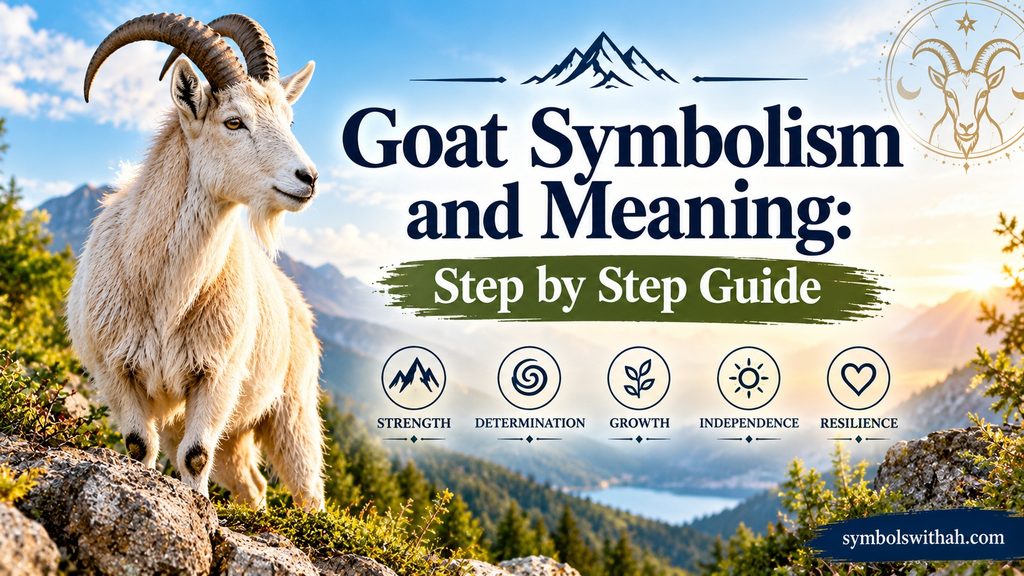

A goat may symbolize strength, independence, determination, or spiritual mystery, depending on the tradition. Goat Symbolism and Meaning: A Step-by-Step Guide explores why this adaptable animal appears in ancient myths, religious stories, folklore, and modern American culture. Its ability to climb steep slopes and survive in challenging environments makes it a natural symbol of persistence and resourcefulness.
However, goats don’t carry one universal meaning. In some traditions, they represent nourishment, fertility, prosperity, and sacrifice. In others, they appear in stories about wilderness, mischief, temptation, or spiritual conflict. Their horns, climbing ability, and association with mountain landscapes have also shaped how people interpret them.
In the United States, goats appear in farm life, children’s stories, sports slang, tattoos, and spiritual imagery. Understanding these different contexts helps separate historical beliefs from modern interpretations. It also reveals how an ordinary animal can become a symbol of confidence, survival, and personal freedom.
Read More: Left Foot Itching Spiritual Meaning and Beliefs
Quick Answer: What Does Goat Symbolism and Meaning Represent?
In the United States, goat symbolism commonly represents strength, independence, determination, and adaptability. Across ancient mythology and religious traditions, goats have also symbolized fertility, abundance, sacrifice, wilderness, and spiritual opposition. The meaning depends on the goat’s appearance, the story surrounding it, and the cultural context.
TL;DR: Goat Symbolism at a Glance
- Strength: Goats symbolize endurance and the ability to overcome difficult terrain.
- Independence: Their sure-footed nature suggests confidence and self-reliance.
- Abundance: Goats have provided milk, meat, hides, and other resources.
- Spiritual meaning: Different traditions associate goats with fertility, sacrifice, or wilderness.
- Religious symbolism: Biblical passages and ancient myths give goats varied meanings.
- Modern culture: Goat imagery can represent ambition, humor, identity, or personal resilience.
What Does a Goat Symbolize?
Goat symbolism comes partly from the animal’s physical traits and its long relationship with humans. Goats can climb steep surfaces, adapt to different environments, and survive on a wide range of vegetation. These qualities have helped shape their associations with persistence, independence, and practical resourcefulness.
Strength, Resilience, and Determination
Goats are known for navigating rocky slopes and uneven ground. Their sure footing makes them useful symbols of determination when life becomes difficult.
Spiritually, a goat may represent the willingness to keep moving despite obstacles. Its image can remind someone that progress doesn’t always require an easy path.
However, resilience isn’t the same as refusing help. A balanced interpretation includes knowing when to persevere and when to change direction.
Independence and Self-Reliance
Goats often explore their surroundings and search for food across varied terrain. This behavior helps explain their symbolic connection with curiosity and independence.
A goat appearing in artwork or a personal design may represent someone who prefers to make their own decisions. It can also suggest confidence, freedom, and comfort with an unconventional path.
Still, independence doesn’t mean isolation. Goats are social animals, and their behavior also supports themes of connection and group awareness.
Fertility, Nourishment, and Abundance
For thousands of years, goats have supplied people with milk, meat, hides, and other useful materials. Their importance to farming communities helped connect them with nourishment and household prosperity.
In older agricultural societies, healthy livestock could influence a family’s security and survival. Therefore, goat imagery sometimes came to represent fertility, plenty, and the continuation of family life.
Today, these meanings may appear in folk art, rural traditions, or spiritual interpretations. They reflect the goat’s practical importance rather than a universal promise of good fortune.
Historical Origins of Goat Symbolism
Goat symbolism developed alongside the history of animal domestication, farming, mythology, and religious practice. Ancient communities depended on goats for food and materials, so the animals became important in everyday life and cultural stories.
Goats in the Ancient Near East
Archaeological evidence places early goat domestication in Southwest Asia thousands of years ago, around the beginning of the Neolithic period. Goats became valuable because they could thrive in varied landscapes and provide milk, meat, hides, and other resources.
As settled farming communities developed, livestock became connected with household wealth and survival. Goats therefore appeared in artistic, economic, and religious settings.
Their meaning wasn’t always positive or spiritual. In many cases, goats were simply valuable animals central to ordinary life.
Goats in Ancient Greek Mythology
Ancient Greek mythology includes several important goat-related figures. Pan, a god associated with wild places, shepherds, and flocks, was commonly depicted with goat features, including horns and legs.
Pan’s imagery linked goats with wilderness, music, sexuality, and forces outside settled society. His appearance could feel playful, powerful, or unsettling, depending on the story.
The Greek myth of Amalthea also connects a goat with nourishment and Zeus’s upbringing. Versions of the story differ, but the association between a goat and divine nourishment became part of later cultural imagery.
Goats in Ancient Art and Daily Life
Goats appeared in pottery, sculpture, coins, and decorative objects throughout parts of the ancient Mediterranean and Near East. Their presence could reflect farming, religious traditions, wealth, or mythological stories.
However, not every goat image had a hidden spiritual meaning. Some simply depicted familiar animals or products important to the community.
This distinction matters today because modern interpretations sometimes assign a single mystical explanation to every ancient goat image. Historical context provides a more reliable guide.
Goat Symbolism in the Bible and Christianity
Goats have several distinct roles in biblical writing, so their meanings shouldn’t be reduced to good or evil. Some passages connect them with sacrifice and the removal of wrongdoing, while others use sheep and goats to describe judgment.
The Scapegoat and the Meaning of Release
In Leviticus 16, two goats play different roles during the ancient Israelite Day of Atonement ritual. One goat is offered as a sin offering, while the other is sent into the wilderness after the community’s wrongdoing is symbolically placed upon it. The ritual represents the removal of sin and impurity from the community.
Bible Gateway
+1
This passage is the source of the modern word scapegoat. Today, it describes a person or group unfairly blamed for problems caused by others.
The original religious ritual is more specific than the modern expression. It belongs to a particular biblical setting and shouldn’t be treated as proof that goats are inherently sinful.
Sheep and Goats in the New Testament
In Matthew 25:31–46, Jesus uses the separation of sheep from goats as part of a teaching about judgment and how people treat others. In this passage, the animals represent different groups of people within a moral lesson.
The passage contributed to a broader tradition of using sheep and goats as contrasting symbols. However, its message comes from the story’s moral context, not from a claim that real goats are bad animals.
Why Goats Sometimes Represent Evil
Some Christian art and later European imagery connect goat-like features with the devil or threatening spiritual forces. This association developed through a complicated mix of religious interpretation, classical imagery, and changing artistic traditions.
Pan, the Greek deity with goat features, is one part of this history. Yet Pan was not simply the Greek version of the Christian devil. The later association between goat-like figures and evil reflects cultural developments, not an identical meaning shared by every ancient tradition.
Wikisource, the free online library
+1
Goat Symbolism in American Culture
In the United States, goats appear in rural life, popular language, sports, and entertainment. Their meanings range from practical farm associations to modern expressions of excellence and achievement.
The Goat as “Greatest of All Time”
In American sports and entertainment, GOAT is widely used as an acronym for “Greatest of All Time.” It describes a person considered exceptional in a field, such as basketball, music, or another competitive pursuit.
The expression connects the animal’s name with excellence, although the acronym is distinct from ancient goat symbolism. A goat image on a sports poster may celebrate achievement rather than spiritual power.
For example, a fan might call an athlete the GOAT because of outstanding records or lasting influence. The label is often subjective, since people may disagree about how greatness should be measured.
Goats in American Farming and Rural Traditions
Goats have long been part of American agriculture, particularly on small farms and homesteads. They provide milk, meat, fiber, and help managing some types of vegetation.
Consequently, goat imagery can represent self-sufficiency, rural identity, and practical knowledge. In children’s books and farm-themed decor, goats may also suggest curiosity, humor, and a lively personality.
What Goat Symbolism Can Mean in the United States
| Context | Common meaning | Important distinction |
| Sports and entertainment | Excellence and achievement | GOAT is an acronym for “Greatest of All Time.” |
| Farming and homesteading | Resourcefulness and self-sufficiency | These meanings reflect practical uses. |
| Tattoos and personal art | Independence and resilience | The wearer determines the personal meaning. |
| Biblical discussions | Sacrifice, judgment, or release | Interpretations depend on the passage. |
| Mythological artwork | Wilderness and untamed nature | Ancient stories differ across cultures. |
These meanings can overlap, but they aren’t interchangeable. A goat in a farm illustration doesn’t automatically carry religious or mystical significance.
Goat Spiritual Meaning and Symbolism Across Cultures
Goat symbolism varies across religious and cultural traditions. Some connect goats with fertility and prosperity, while others emphasize sacrifice, wilderness, or moral lessons.
Greek Mythology and the Wild Goat
As discussed earlier, Pan’s goat-like appearance linked him with untamed nature and pastoral life. His stories often explored the boundary between settled society and the wild world beyond it.
The goat’s association with wilderness later influenced art and literature. Today, a goat with curved horns against a mountain landscape may evoke independence, raw energy, or a connection with nature.
The Cornucopia and Abundance
A related symbol from Greek mythology is the cornucopia, or horn of plenty. One version of its story connects the object with Amalthea, the figure associated with nourishing the infant Zeus. The horn became a symbol of abundance and plentiful resources.
Encyclopædia Britannica, 11th Edition
The cornucopia often appears in American Thanksgiving decorations, where it represents harvest and plenty. However, it is a horn-shaped symbol, not a claim that every goat carries the same meaning.
Respecting Different Traditions
Goats have also been important to pastoral communities across Africa, Asia, Europe, and the Americas. Their meanings depend on local histories, religious practices, and relationships with livestock.
It would be inaccurate to assign one universal spiritual interpretation to all these communities. Instead, goat symbolism is best understood through the specific story, ritual, or cultural setting in which it appears.
Emotional and Psychological Meaning of the Goat
A goat can inspire different reactions depending on its appearance and the viewer’s experiences. Its climbing ability may suggest confidence, while its horns or intense gaze might feel intimidating.
Independence and Confidence
A goat standing alone on a rocky ledge can make a strong visual statement. It may symbolize someone who trusts their abilities and chooses their own direction.
For people facing a difficult decision, this image can serve as a reminder to act thoughtfully and confidently. However, independence doesn’t mean rejecting advice or refusing support.
Curiosity, Stubbornness, and Playfulness
Goats are often portrayed as curious, energetic, and sometimes stubborn. These traits have helped make them familiar characters in children’s stories, cartoons, and humorous online videos.
Symbolically, a goat might represent the courage to explore or the need to question assumptions. Its stubborn reputation can also encourage reflection about when persistence becomes resistance to change.
Using Goat Symbolism for Personal Reflection
If a goat catches your attention, consider what it brings to mind rather than assuming it predicts an event.
- Are you trying to overcome a difficult challenge?
- Do you need more independence in a current decision?
- Are you being persistent, or are you ignoring useful feedback?
- Does the goat remind you of family, work, nature, or a personal memory?
These questions make symbolism useful as a tool for reflection. They don’t require you to believe the encounter was arranged by a supernatural force.
What Does It Mean When You See a Goat?
Seeing a goat may feel meaningful if you associate animal encounters with spiritual reflection. In modern interpretations, goats can represent persistence, curiosity, independence, or the need to approach a challenge differently.
Seeing a Goat in Real Life
A goat appearing on a trail, near a farm, or in a dreamlike moment may remind you of qualities you want to develop. For example, its sure footing could inspire you to stay steady during a difficult period.
However, ordinary explanations should come first. The goat may simply belong to a nearby farm or live in the area. You can appreciate the encounter without treating it as a prediction.
What Does It Mean When a Goat Crosses Your Path?
Some spiritual interpretations treat an animal crossing your path as an invitation to pause and reflect. A goat might suggest that you trust your abilities, stay adaptable, or reconsider your direction.
There is no widely established rule that a goat crossing your path guarantees luck or warns of danger. The meaning is personal, shaped by your beliefs and circumstances.
Seeing a Goat in an Unusual Place
An unexpected sighting may capture your attention because it breaks your usual routine. You might connect the moment with freedom, change, or an issue already on your mind.
Consider the actual setting alongside your personal response. A goat on a steep hillside naturally evokes different ideas than a goat in a petting zoo.
Goat Symbolism in Dreams
Dreams involving goats can bring together personal memories, emotions, and cultural associations. Although dream dictionaries offer common interpretations, no single meaning applies to every dream.
Dreaming of a Climbing Goat
A goat climbing a mountain may suggest ambition, perseverance, or a challenge you want to overcome. If the climb feels successful, you might associate it with confidence or progress.
However, a difficult climb could also reflect uncertainty. Your feelings during the dream may offer more useful clues than the goat alone.
Dreaming of an Aggressive Goat
An aggressive goat may represent conflict, frustration, or a situation that feels difficult to manage. Its horns could make the dream especially intense.
Still, the dream doesn’t predict that someone will hurt you. It may simply reflect stress, recent experiences, or a memorable image.
Dreaming of a White or Black Goat
Some modern interpretations associate white goats with peace, clarity, or renewal. Black goats may be linked with mystery, hidden feelings, or unfamiliar experiences.
These color meanings aren’t universal or scientifically established. A goat’s color may simply reflect a real animal you’ve seen or an image your mind has remembered.
Goat Symbolism in Tattoos, Art, and Modern Design
Goat imagery works well in modern art because its horns, beard, eyes, and body shape create a distinctive silhouette. Depending on the design, a goat can appear peaceful, powerful, humorous, or mysterious.
Goat Tattoo Meanings
People choose goat tattoos for different reasons. Some value the animal’s connection with strength and independence, while others enjoy its mythological or cultural associations.
Common interpretations include:
- A mountain goat representing resilience and the ability to overcome obstacles.
- A horned goat symbolizing confidence, determination, or untamed energy.
- A simple goat outline expressing a love of animals or rural life.
- A mythological goat representing curiosity about ancient stories and folklore.
- A goat paired with a mountain suggesting ambition and personal growth.
These are possible interpretations, not fixed rules. A tattoo may also honor a family farm, a favorite animal, or an important personal memory.
Goat Imagery in Fashion and Home Decor
Goat illustrations appear in rustic artwork, farmhouse decor, clothing, jewelry, and nature-inspired designs. Their meaning often depends on the style and setting.
For example, a gentle goat portrait may suggest rural simplicity. A dramatic horned figure might emphasize strength or mythological mystery.
Before assigning spiritual meaning to a design, consider how the artist presents the animal. Its posture, surroundings, colors, and accompanying symbols can change the impression.
Goats in Social Media and Popular Culture
Online, goats appear in farm videos, animal memes, sports discussions, and motivational posts. The acronym GOAT is especially common in conversations about exceptional performers.
Consequently, a goat emoji or image may be a joke, a compliment, or an expression of personal identity. It doesn’t necessarily communicate an ancient spiritual belief.
Goat Colors, Horns, and Physical Features
A goat’s appearance can influence its symbolic meaning in art and spiritual interpretation. However, these associations come from cultural conventions and personal impressions, not universal rules.
White Goat Symbolism
White goats may be associated with purity, peace, renewal, or innocence in modern symbolic artwork. Their pale coats can also make them stand out against dark landscapes.
In a religious or historical image, the meaning depends on the specific tradition. A white goat should not automatically be interpreted as a sign of divine approval.
Black Goat Symbolism
Black goats often appear in modern artwork connected with mystery, wilderness, or unconventional identity. Their dark coats and prominent horns can create a dramatic image.
However, black doesn’t inherently mean evil. Its interpretation changes across artistic, cultural, and religious contexts.
Goat Horns and Mountain Landscapes
Horns can suggest strength, defense, confidence, or status in visual symbolism. A goat standing high on a rocky ledge may represent ambition and the ability to navigate difficult situations.
These interpretations depend on the image. A peaceful grazing goat may communicate calmness, while a charging goat may suggest confrontation or force.
Misunderstandings and Controversies About Goat Symbolism
Goats sometimes appear in unsettling religious imagery, which can lead people to assume that every goat symbol has a negative meaning. Historical context helps explain why these associations developed and why they shouldn’t be applied universally.
Does a Goat Symbolize Evil?
No. Goats have positive, practical, and negative associations across different traditions. They can represent nourishment and fertility in one setting, but appear in stories about judgment or wilderness in another.
The goat-like appearance of Pan also influenced later European images of threatening supernatural figures. However, ancient Greek mythology and Christian theology are distinct traditions, even where their imagery later overlapped.
Is Every Horned Goat a Satanic Symbol?
No. Horns are ordinary features of many goat breeds, and horned goats appear in farming, mythology, decorative art, and nature illustrations.
Some modern religious or occult designs deliberately use goat imagery for specific symbolic purposes. Yet a goat with horns, by itself, doesn’t establish that meaning.
Consider the complete image, the artist’s intent, and the context before drawing conclusions.
The Scapegoat and Unfair Blame
The word scapegoat now describes a person or group blamed for a problem they didn’t cause or didn’t cause alone. This modern use draws on the biblical ritual described in Leviticus 16.
In everyday life, scapegoating can damage relationships and distort responsibility. The symbolic lesson is not that goats are guilty, but that people sometimes transfer blame onto someone else.
How Goat Symbolism Has Changed Over Time
Goat symbolism has shifted as societies changed their relationships with farming, religion, mythology, and popular culture. Older meanings remain visible, but modern uses often add new layers.
From Livestock to Mythological Figure
Early farming communities valued goats for practical reasons, including food, hides, and other resources. Their importance in daily life helped connect them with nourishment, household security, and abundance.
In ancient mythology, goats also became associated with divine figures and stories about nature. Pan’s goat-like form helped link the animal with wild landscapes, while the story of Amalthea connected a goat with nourishment and plenty.
From Religious Symbol to Popular Expression
Biblical stories gave goats roles in sacrifice, atonement, and judgment. Later European art developed additional associations between goat-like figures and spiritual danger.
Modern American culture uses the animal in a wider range of ways. A goat may symbolize independence in a tattoo, rural life in a painting, or extraordinary achievement through the acronym GOAT.
What Modern Readers Should Remember
No single definition explains every goat image. The most reliable interpretation considers the cultural setting, historical background, and purpose of the image.
A useful approach is to separate three things: what the source actually says, how later communities interpreted it, and what the symbol means personally today.
Frequently Asked Questions About Goat Symbolism and Meaning
What does a goat symbolize spiritually?
A goat may symbolize strength, independence, perseverance, fertility, or abundance. Its meaning depends on the spiritual tradition and the context in which it appears. Modern personal interpretations aren’t universal beliefs.
Is seeing a goat a good omen?
Some people interpret a goat sighting positively, connecting it with resilience or progress. However, there is no reliable evidence that seeing a goat predicts good or bad fortune. The encounter may simply offer a personal moment for reflection.
What does a goat symbolize in the Bible?
Goats appear in biblical passages about sacrifice, atonement, and judgment. In Leviticus 16, one goat is sent into the wilderness as part of the Day of Atonement ritual. Other passages use sheep and goats within moral teachings.
What does a black goat mean spiritually?
Some modern interpretations connect black goats with mystery, independence, or unfamiliar experiences. Other settings may give them different meanings. A black goat isn’t automatically a symbol of evil or danger.
What does a goat tattoo mean?
A goat tattoo may represent strength, ambition, independence, or a connection with nature. Some designs draw on mythology, while others express personal identity or appreciation for farm animals. The wearer’s intention matters most.
What does GOAT mean in American slang?
GOAT stands for “Greatest of All Time.” It is used to describe someone considered exceptional in a sport, profession, or creative field. This modern acronym is different from the animal’s older religious and mythological symbolism.
Conclusion: Understanding Goat Symbolism and Meaning
Goat Symbolism and Meaning: A Step-by-Step Guide reveals an animal with many layers of cultural significance. Goats have represented strength, independence, nourishment, sacrifice, wilderness, and abundance across different historical settings. In modern American life, they can also represent rural identity, personal resilience, and extraordinary achievement.
However, context makes all the difference. A goat in an ancient myth carries a different meaning from one in a biblical passage, a tattoo, or a sports meme. Understanding these distinctions helps you appreciate the symbol without relying on assumptions or fear.
The next time you notice a goat in nature, art, or a meaningful story, consider what it represents in that setting. Its most useful lesson may be the ability to stay sure-footed, adapt to challenges, and keep moving toward your goals.