
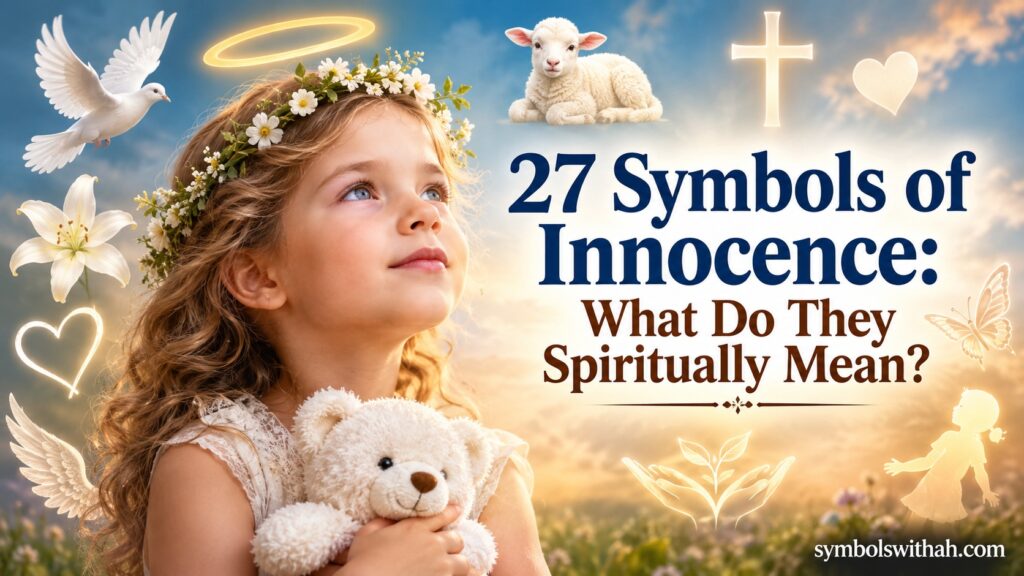

vInnocence is more than simply being young or inexperienced. 27 Symbols of Innocence: What Do They Spiritually Mean? explores the images people have used to express purity, gentleness, trust, honesty, and an unspoiled heart.
In the United States, these symbols appear everywhere. You may see them in wedding decorations, religious art, memorials, children’s books, tattoos, jewelry, holiday traditions, and home décor.
However, innocence doesn’t have one universal symbol. Meanings change with history, culture, religion, personal experience, and context. A white dove may suggest peace to one person and spiritual renewal to another.
Read More: Symbolism and Spiritual Meaning of a Spider Bite
Quick Answer
27 Symbols of Innocence: What Do They Spiritually Mean? commonly points to purity, gentleness, trust, peace, new beginnings, and freedom from wrongdoing. In the USA, white doves, lambs, white flowers, children, feathers, butterflies, stars, and white clothing are especially common expressions of these ideas.
TL;DR
• White often represents purity, clarity, and innocence in American culture.
• Lambs symbolize gentleness, vulnerability, sacrifice, and spiritual innocence.
• Doves commonly represent peace, purity, love, and spiritual presence.
• Children can symbolize trust, openness, wonder, and an unguarded heart.
• Flowers such as lilies and daisies often suggest purity and simplicity.
• Innocence can also mean emotional openness rather than lack of knowledge.
What Does Innocence Mean Symbolically?
Innocence usually describes a state untouched by wrongdoing, corruption, or harmful intention. Symbolically, however, it can mean much more.
It can represent a fresh beginning, honest emotions, childlike wonder, or freedom from guilt. For American readers, the idea often appears through familiar images rather than abstract words.
Innocence Is Not the Same as Ignorance
Innocence and ignorance aren’t identical.
Ignorance means lacking knowledge. Innocence can describe someone who has knowledge but chooses kindness, honesty, or trust.
That distinction matters because modern ideas of innocence have become more complex. Someone can be experienced and still be viewed as innocent in character.
Common Symbolic Qualities
Symbols of innocence frequently communicate:
• Purity without perfection
• Gentleness instead of aggression
• Trust and emotional openness
• New beginnings and fresh possibilities
• Honesty without hidden motives
27 Symbols of Innocence and Their Meanings
The following symbols have strong associations with innocence. However, their meanings aren’t always fixed.
1. White Dove
The white dove is one of the most recognizable symbols of innocence and peace.
Its soft feathers and gentle appearance helped create associations with purity and harmlessness. In Christianity, the dove also represents the Holy Spirit.
Ancient Mediterranean traditions connected doves with love and sacred feminine figures. Later Christian art gave the dove additional meanings connected with divine presence and purity.
Today, Americans commonly encounter white doves at weddings, memorials, religious ceremonies, peace events, and artwork.
2. White Lamb
The lamb represents innocence through gentleness and vulnerability.
In biblical traditions, lambs became closely connected with sacrifice and purity. Christian symbolism later connected the lamb with Christ as the Lamb of God.
The image also works outside religion. A young lamb naturally suggests softness, dependence, trust, and harmlessness.
3. White Lily
The white lily is strongly associated with purity and innocence.
Christian art frequently connects the lily with the Virgin Mary’s purity. Over time, the flower became a familiar image in religious paintings and ceremonies.
In the United States, white lilies also appear in weddings, memorial arrangements, gardens, and decorative art.
4. White Color
White may be the most widely recognized visual symbol of innocence in Western culture.
Its association with cleanliness and brightness makes it easy to connect with purity. White clothing also appears in American weddings, baptisms, religious ceremonies, and childhood celebrations.
However, white doesn’t always mean innocence. In some cultures and settings, it can also represent mourning, simplicity, or spiritual transition.
5. Children
Children often symbolize innocence because they represent openness, trust, curiosity, and early life.
American culture frequently uses children in stories about hope and a better future. Their images appear in family photography, advertising, holiday traditions, literature, and religious art.
Yet modern readers should avoid assuming every child is naturally innocent. Symbolism is an artistic idea, not a statement about real children’s experiences.
6. White Feather
A white feather often represents purity, peace, protection, and spiritual reassurance.
Feathers already suggest freedom because birds can move through the sky. Adding the color white strengthens associations with gentleness and cleanliness.
Today, white feathers are popular in jewelry, tattoos, artwork, memorials, and spiritual décor.
7. Butterfly
The butterfly represents transformation, beauty, renewal, and a fresh emotional beginning.
Its connection with innocence often comes from its delicate appearance. It can also represent returning to a more joyful or authentic self.
In American culture, butterfly imagery appears frequently in tattoos, children’s art, jewelry, gardens, and memorial designs.
8. Daisy
The daisy is strongly linked with simplicity and innocence.
Its small white petals and yellow center create a cheerful, uncomplicated appearance. In Western floral symbolism, daisies have long carried associations with innocence and purity.
Today, daisies often appear in children’s designs, spring decorations, clothing, tattoos, and nostalgic artwork.
9. White Rose
A white rose can symbolize innocence, purity, sincerity, and faithful love.
Red roses often communicate romantic passion, while white roses create a softer emotional message. Because of this contrast, white roses frequently appear at weddings and other meaningful ceremonies.
They can also appear in memorial settings, where innocence and remembrance overlap.
10. Snowdrop
The snowdrop is a small white flower associated with purity, hope, and renewal.
Because it can appear near the end of winter, it also suggests the arrival of something new.
Its meaning fits innocence particularly well because the flower looks delicate and untouched against a darker landscape.
11. White Butterfly
A white butterfly combines two powerful images.
The butterfly suggests transformation, while white suggests purity and peace. Together, they can represent a fresh emotional chapter or a sense of spiritual renewal.
In modern American symbolism, white butterflies frequently appear in tattoos, memorial artwork, jewelry, and inspirational designs.
12. Star
Stars can symbolize innocence through their association with light in darkness.
A small star shining against a night sky may suggest hope, guidance, purity, or something precious that remains untouched.
Stars are especially common in children’s stories and American popular culture. They often represent dreams, possibility, and wonder.
13. Angel
Angels are frequently portrayed as beings of purity, protection, and goodness.
Their wings, bright clothing, halos, and peaceful expressions reinforce these associations. In Christian art, angels often serve as messengers between heaven and humanity.
In American culture, angel imagery also appears outside religious settings. Angel wings are common in memorial jewelry, tattoos, ornaments, and sentimental artwork.
14. White Swan
The white swan represents grace, beauty, gentleness, and purity.
Its elegant appearance makes it a natural symbol of innocence. Swans also carry strong associations with love and transformation in myths and literature.
However, swans aren’t always innocent symbols. Their meaning can include power, loyalty, mystery, and transformation.
15. Dove Feather
A dove feather combines the symbolism of the dove with the symbolism of the feather.
Together, they can represent peace, innocence, freedom, and spiritual comfort.
This image works particularly well in jewelry and memorial designs because it communicates gentleness without requiring religious imagery.
16. Baby’s Breath
Baby’s breath is a delicate flower frequently used in American weddings and floral arrangements.
Its tiny white blossoms create an immediate association with purity and softness. The flower can also symbolize lasting affection and new beginnings.
Its name itself strengthens its connection with childhood and innocence.
17. White Clothing
White clothing can symbolize innocence, purity, honesty, and a fresh start.
American weddings provide one of the clearest examples. White garments also appear in religious ceremonies and childhood celebrations.
Still, the meaning isn’t universal. Clothing color can communicate different ideas across cultures and historical periods.
18. Pure Water
Clear water can symbolize emotional and spiritual cleansing.
Its transparency suggests honesty because nothing appears hidden beneath the surface. Flowing water can also represent renewal and the beginning of a new chapter.
American spiritual and wellness imagery often uses clear water to communicate peace and restoration.
19. Open Hands
Open hands symbolize trust because they aren’t hiding anything.
They can also represent generosity, honesty, surrender, welcome, and peaceful intentions.
In modern American artwork, open hands can communicate innocence without relying on religious imagery.
20. Heart
A simple heart can represent sincere love and emotional honesty.
When the heart is drawn without cracks, chains, or darker imagery, it may suggest openness and pure affection.
Children’s art often uses hearts this way. Adults may also use them in tattoos, cards, jewelry, and romantic designs.
21. White Horse
The white horse carries several meanings across different traditions.
It can represent purity, nobility, freedom, victory, or spiritual power. In some religious contexts, the white horse has more complex meanings than simple innocence.
Therefore, its interpretation depends heavily on the surrounding imagery and cultural setting.
22. White Deer
A white deer can symbolize gentleness, rarity, grace, and spiritual mystery.
Because white animals are uncommon in nature, they can feel almost magical in stories and folklore.
In American fantasy and nature-inspired artwork, a white deer may suggest something precious, untouched, or difficult to find.
23. Garden
A peaceful garden can symbolize an original state of innocence.
This idea connects strongly with the biblical Garden of Eden. Before the fall narrative, Eden represents harmony, beauty, and an unbroken relationship between humanity and creation.
Today, gardens can carry a softer meaning. They may represent childhood memories, safety, peace, growth, and emotional renewal.
24. Sunrise
Sunrise represents beginnings, hope, clarity, and renewal.
Its symbolism fits innocence because dawn suggests a world beginning again. Darkness has passed, while the day has not yet been complicated by events.
In American culture, sunrise imagery appears in photography, tattoos, motivational art, and spiritual designs.
25. White Candle
A white candle can represent peace, purity, remembrance, and spiritual light.
Its flame adds another layer of meaning. Light can symbolize truth, awareness, hope, and guidance.
White candles are used in religious ceremonies, memorials, meditation practices, and home décor.
26. White Heart
A white heart is a modern combination of color and emotional symbolism.
The heart represents love, while white suggests purity, sincerity, and peace. Together, the image can communicate gentle affection without strong romantic intensity.
Social media has also helped make colored heart symbols part of everyday digital communication.
27. The Carefree Smile
A genuine child’s smile can symbolize uncomplicated happiness and emotional openness.
Unlike a physical object, the smile represents a human quality. It suggests joy without calculation or hidden motives.
This symbolism appears in photography, literature, advertising, family memories, and personal artwork.
What Are the Historical Roots of Innocence Symbolism?
Many symbols of innocence developed long before modern America existed.
Ancient societies frequently connected purity with light, clean water, young animals, flowers, and sacred offerings. However, the exact meanings varied between civilizations.
Ancient Mediterranean Connections
Doves had sacred associations in ancient Mediterranean cultures. They were connected with love and fertility figures, including Aphrodite in Greek tradition.
Lambs also had an important place in ancient Near Eastern religious practices. Their later Christian symbolism developed partly through Jewish sacrificial traditions.
Early Christian Symbolism
Christian art gave innocence several recognizable visual forms.
The lamb became associated with Christ. The dove became connected with the Holy Spirit. White clothing and white flowers developed strong associations with purity and spiritual renewal.
These images eventually became part of European art and later influenced American religious culture.
Medieval and Renaissance Art
During the medieval and Renaissance periods, artists relied heavily on visual symbolism.
A white lily could communicate purity without written explanation. A dove could identify the Holy Spirit. A lamb could represent Christ.
These traditions shaped much of the symbolic vocabulary inherited by Western societies today.
How Are Symbols of Innocence Used in the USA?
Innocence symbolism has a particularly visible place in American everyday life.
It appears in religious settings, family traditions, weddings, memorials, entertainment, advertising, fashion, and personal expression.
Weddings and New Beginnings
White flowers, white clothing, doves, and candles frequently appear in American weddings.
These images help communicate ideas about commitment, sincerity, hope, and a new chapter. Their meaning has also become less strictly religious over time.
Childhood and Family Culture
American children’s books and films often use lambs, butterflies, stars, flowers, and soft colors.
These images create emotional associations with safety, wonder, friendship, and imagination.
Memorials
Innocence symbolism can become especially meaningful during remembrance.
White flowers, angel wings, doves, feathers, and butterflies may express peace or the memory of someone cherished.
What Do Symbols of Innocence Mean Spiritually?
Spiritual interpretations often focus on the inner qualities associated with innocence.
Rather than describing innocence as ignorance, many traditions connect it with sincerity, humility, compassion, or freedom from harmful intent.
Common Spiritual Themes
• Returning to a simpler emotional state
• Choosing compassion instead of resentment
• Beginning again after difficult experiences
• Seeking honesty in relationships
• Protecting a sense of wonder
Different traditions interpret these ideas differently. Therefore, no single spiritual meaning applies to every person.
What Do Innocence Symbols Mean Psychologically?
Innocence can carry strong emotional associations.
People often connect innocent imagery with safety, childhood memories, trust, and emotional warmth. These associations can make certain symbols feel comforting.
Why White Feels Innocent
White often creates visual impressions of cleanliness and openness.
Because it reflects light strongly, it can appear bright and uncomplicated. Western cultural traditions have reinforced these associations for centuries.
Why Animals Feel Innocent
Young animals appear dependent and vulnerable.
A lamb, kitten, bunny, or chick can therefore trigger feelings of tenderness. The symbolic meaning comes from the emotional response, not from a universal rule about the animal.
How Are Symbols of Innocence Used Today?
Modern Americans use innocence symbols in both traditional and highly personal ways.
Tattoos
Common tattoo choices include:
• White feathers representing peace or remembrance
• Butterflies representing renewal
• Doves representing peace and love
• White flowers representing purity
• Stars representing hope and childhood dreams
Jewelry and Fashion
White stones, feathers, angel wings, butterflies, and floral designs can communicate innocence without making an explicitly religious statement.
For some people, the symbol represents their personality. For others, it honors a person, memory, relationship, or life chapter.
Home Décor
White flowers, candles, angels, birds, and soft natural imagery can create a peaceful atmosphere.
However, décor symbolism is highly personal. A white object may simply be chosen for its appearance.
Innocence Symbolism Across Different Contexts
| Symbol | Common American Meaning | Broader Association | Important Context |
| White dove | Peace and purity | Spiritual presence | Religious and secular |
| Lamb | Gentleness and innocence | Sacrifice and vulnerability | Strong biblical influence |
| White lily | Purity | Spiritual devotion | Christian art |
| Butterfly | Renewal | Transformation | Modern personal symbolism |
| White color | Cleanliness and innocence | Light and simplicity | Meanings vary by culture |
| Child | Trust and wonder | New beginnings | Symbolic, not literal |
Are Symbols of Innocence Always Positive?
Not necessarily.
Innocence can become complicated when society equates it with naivety, weakness, or lack of experience. Modern discussions often recognize that these ideas aren’t the same.
Innocence Versus Naivety
A person can be innocent without being unaware.
For example, someone may understand hardship but still choose kindness. That can represent a mature form of innocence.
When Innocence Becomes Idealized
Some artistic traditions portray innocence as something completely untouched by life.
While beautiful, this idea can oversimplify human experience. People can be compassionate, wise, and emotionally open without remaining inexperienced.
How Has the Meaning of Innocence Changed?
The symbolism of innocence has shifted significantly over time.
Ancient traditions often connected purity with ritual cleanliness and sacred offerings. Medieval Christianity added strong associations with sin, salvation, virginity, and spiritual purity.
Later Western art expanded innocence into childhood, nature, beauty, and emotional sincerity.
Today, Americans often use innocence symbols in a more personal way. A butterfly may represent healing from a difficult chapter, while a white feather might honor someone who has passed away.
The symbols remain familiar, but their meanings have become more flexible.
Common Misunderstandings About Innocence Symbols
Symbolic meanings shouldn’t be treated like universal rules.
One Symbol Can Have Many Meanings
A white horse can represent purity in one setting and victory in another.
Likewise, a white flower can symbolize celebration, remembrance, mourning, or spiritual devotion.
Spiritual Meaning Is Personal
Seeing a butterfly doesn’t prove that a supernatural message has occurred.
Instead, people may interpret the experience through their beliefs, memories, and circumstances.
Cultural Context Matters
A symbol that feels positive in American culture may have another meaning elsewhere.
Therefore, context should always come before assumptions.
FAQs
1. What is the strongest symbol of innocence?
The white dove and lamb are among the strongest traditional symbols. White itself is also deeply connected with innocence and purity in Western culture.
2. What flower represents innocence?
The white lily is one of the best-known flowers associated with innocence and purity. Daisies and white roses can also carry similar meanings.
3. What animal symbolizes innocence?
The lamb is perhaps the clearest traditional example. Doves, young animals, white deer, and swans can also symbolize innocence depending on context.
4. What color represents innocence?
White is the color most commonly associated with innocence in American and broader Western traditions. It often suggests purity, cleanliness, peace, and new beginnings.
5. What symbolizes a pure heart?
A simple white heart, white flower, dove, or open hands can symbolize a pure heart. These images commonly communicate sincerity and gentle intentions.
6. What symbolizes innocence and purity?
White doves, lambs, lilies, roses, feathers, candles, and clothing are common examples. Their meanings can change depending on religious and cultural context.
Conclusion
Innocence has never depended on just one image. Across history, people have expressed it through white doves, lambs, flowers, children, feathers, butterflies, stars, light, and peaceful natural imagery.
The deeper lesson behind 27 Symbols of Innocence: What Do They Spiritually Mean? is that innocence can mean more than being inexperienced. It can represent sincerity, gentleness, trust, hope, and the ability to remain compassionate.
For modern readers, the most meaningful symbol may be the one that connects with a personal memory or value. Sometimes, innocence isn’t about returning to childhood. Instead, it’s about protecting the kindness and wonder that life hasn’t completely taken away.