

The evil eye is one of the world’s most recognizable protective symbols, appearing on jewelry, wall hangings, clothing, and everyday accessories. Its familiar blue-and-white design has traveled across generations, connecting ancient traditions with modern fashion. Yet the symbol carries a deeper story than its striking appearance suggests.
For centuries, people across the Mediterranean, Middle East, North Africa, and South Asia have believed that envy or excessive admiration can bring misfortune. In response, communities developed charms, prayers, gestures, and customs intended to guard against the feared influence. These practices differ considerably, reflecting the histories and values of the people who maintain them.
Science Museum Group Collection
Read More: JP Meaning in Text: What It Means, Examples, and How to Reply
Today, the evil eye meaning can refer to both the harmful gaze described in folklore and the amulet traditionally used to protect against it. Understanding this distinction helps explain why an object associated with something negative is often worn as a positive symbol. Its enduring appeal lies in a fascinating blend of cultural heritage, spiritual belief, personal meaning, and distinctive design.
Quick Answer: What Does the Evil Eye Mean?
The evil eye traditionally represents a harmful gaze believed to bring misfortune through envy, jealousy, or excessive admiration. The familiar eye-shaped amulet, however, is used as a symbol of protection against that feared influence.
Depending on the cultural setting, the evil eye symbol may represent:
- Protection: A traditional charm intended to ward off the harmful gaze.
- Awareness: A reminder to remain mindful of envy, attention, and relationships.
- Good fortune: A symbol associated with well-being and safeguarding valued things.
- Cultural heritage: A connection to family customs and regional traditions.
- Personal intention: A meaningful accessory chosen to express faith, identity, or a desire for peace.
The blue evil eye is especially recognizable, but its meaning is not identical everywhere. Color associations, wearing customs, and religious interpretations vary across communities. Although the belief has a long cultural history, supernatural protection from an amulet has not been scientifically established.
What Is the Evil Eye Symbol?
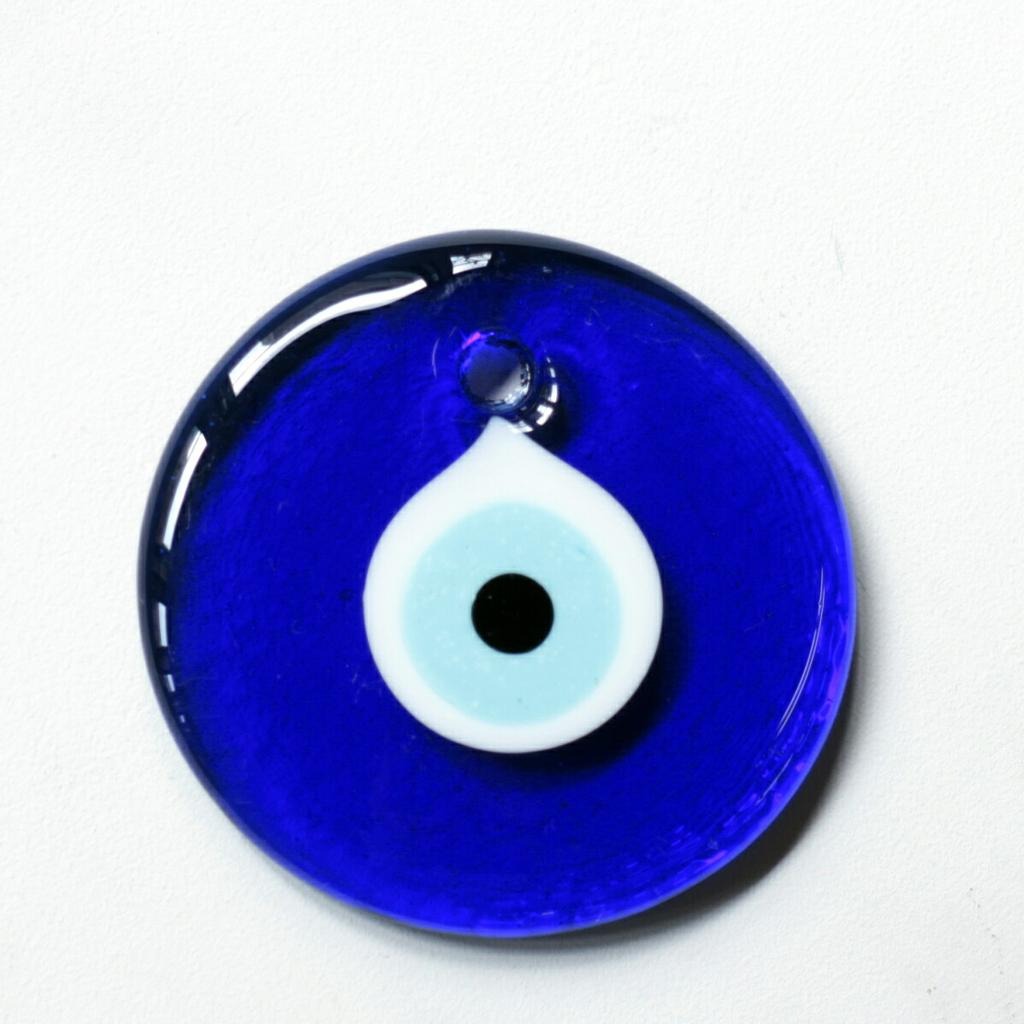
The evil eye symbol is usually an eye-shaped design believed to provide protection against envy or harmful attention. It often features concentric circles in blue, white, light blue, and black, creating the appearance of a watchful human eye.
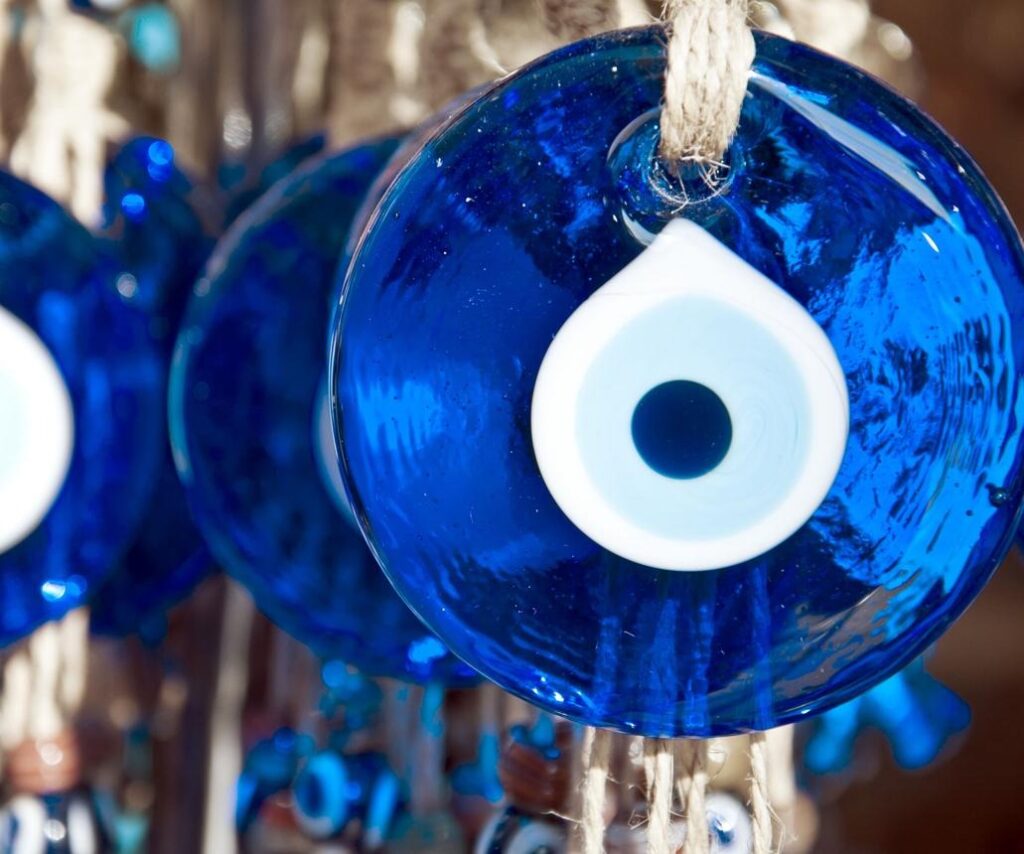
The Turkish nazar boncuğu is one of the best-known examples. These beads appear in bracelets, necklaces, household decorations, and other objects intended to serve as protective charms. The Science Museum Group documents a glass nazar amulet carried by a soldier stationed in Palestine during World War I, demonstrating that the object has a recorded history beyond its modern popularity.
Science Museum Group Collection
The Evil Eye Belief and the Protective Charm
Although people often use the same name for both, the belief and the symbol have different meanings.
- The evil eye belief: The idea that an envious or harmful gaze can cause illness, loss, or misfortune.
- The protective evil eye: An amulet traditionally intended to ward off, absorb, or deflect that harmful influence.
This distinction explains why people wear an eye-shaped charm without intending anything negative. The object represents protection against the danger described in folklore, rather than the harmful gaze itself.
What Does the Evil Eye Look Like?
The familiar design typically contains several colored circles arranged around a dark central pupil. Blue glass is especially common in Turkish and broader Mediterranean eye amulets.
However, evil eye designs are not limited to glass beads. They also appear in metal pendants, embroidered fabrics, ceramics, paintings, and contemporary decorative objects.
The History and Ancient Origins of the Evil Eye
The evil eye has a long and geographically widespread history. Its precise origins cannot be assigned confidently to one modern country, religion, or individual civilization.
Early Beliefs in the Ancient Near East
Ancient societies developed protective objects and rituals to address dangers they believed could affect health, crops, animals, children, and household prosperity. The harmful gaze became one explanation for misfortune that seemed sudden or difficult to understand.
Archaeological discoveries provide evidence of eye-related protective objects in the ancient Near East. However, an artifact’s appearance alone cannot establish every belief its owner held. Historians must examine its materials, archaeological context, inscriptions, and comparisons with other objects.
The distinction matters because popular articles sometimes present precise origin dates without explaining the evidence behind them.
The Evil Eye in Ancient Greece and Rome
Ancient Greek and Roman writers discussed beliefs about harmful or envious gazes. These ideas appeared in literature, folk practices, and protective traditions.
The Greek term baskania was associated with the evil eye, while Roman traditions included beliefs about fascinatio and protective objects. Some Romans used amulets and gestures intended to prevent harm.
The feared gaze was not always understood as a deliberate curse. In some traditions, even unintentional envy or excessive admiration could supposedly bring trouble. This interpretation helps explain why protective customs sometimes accompanied compliments, celebrations, and displays of good fortune.
How the Blue Eye Amulet Became Recognizable
The blue glass eye bead became particularly associated with Mediterranean and neighboring cultures. Glassworking, trade, migration, and contact between communities helped familiar forms circulate and develop over time.
The modern Turkish nazar boncuğu is now strongly associated with Türkiye, while related eye charms appear in Greek and other regional traditions. These similarities reflect centuries of cultural contact, although each community has its own terminology and customs.
Science Museum Group Collection
+2
The most accurate historical conclusion is that the evil eye is a broad cultural phenomenon with multiple expressions, rather than an invention belonging exclusively to one group.
What Does the Evil Eye Mean Spiritually?
For people who interpret symbols spiritually, the evil eye often represents protection from jealousy, unwanted attention, and negative intentions. Its significance may also extend to emotional awareness and personal identity.
These interpretations are not universal religious teachings. Some reflect longstanding folk customs, while others come from contemporary spiritual practices.
Protection From Envy and Negative Intentions
In many traditions, success, beauty, health, and prosperity are considered vulnerable to the harmful gaze. A protective charm expresses the hope that valued things will remain safe from jealousy or misfortune.
For example, a family might hang an evil eye charm near its entrance or give one to someone celebrating a new home. The gesture communicates care and a desire for well-being, regardless of whether everyone involved shares the same supernatural beliefs.
Awareness, Boundaries, and Emotional Grounding
Some modern wearers interpret the evil eye as a reminder to protect their emotional well-being. They may associate it with maintaining healthy boundaries, choosing trustworthy relationships, and avoiding unnecessary comparisons with others.
This interpretation can be meaningful without requiring belief in supernatural forces. A bracelet can serve as a personal reminder to respond thoughtfully to difficult situations rather than assume that every setback comes from someone else’s jealousy.
Good Fortune and Well-Being
The evil eye charm is also associated with safeguarding happiness, prosperity, and family well-being in certain cultural settings. People may give one as a gift during a move, a birth, a wedding, or another important life event.
However, it is important to distinguish the gift’s intended meaning from a guarantee of good fortune. The charm’s cultural significance is real, but its ability to prevent misfortune has not been established scientifically.
Evil Eye Meaning Across Different Cultures
The evil eye belief appears across numerous cultural and religious settings, but the details change from place to place. Learning these distinctions reveals why the symbol carries such lasting significance.
Turkish Culture: Nazar Boncuğu
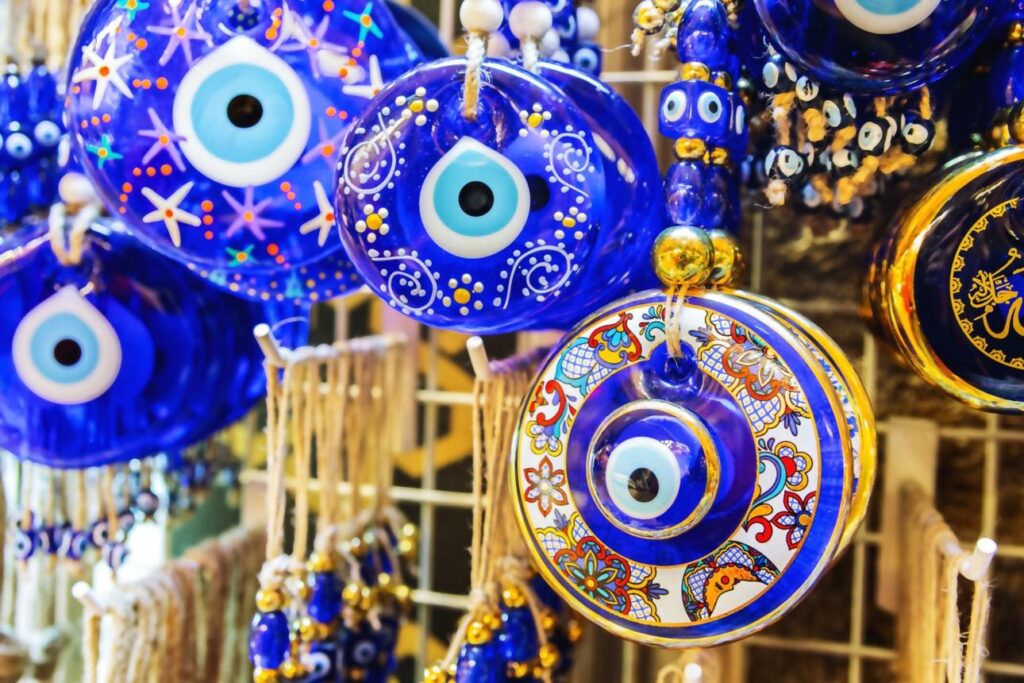
In Türkiye, the nazar boncuğu is a familiar blue-glass amulet associated with protection against the evil eye. It commonly features dark blue, light blue, white, and black rings.
People may wear the bead as jewelry or display it in homes, shops, vehicles, and other places. It can also appear on gifts and decorative objects.
The amulet is both a recognizable cultural motif and a symbol associated with traditional protective beliefs. Its popularity today also reflects its visual appeal and place in Turkish craft traditions.
Greek Culture: Mati
In Greek, mati means “eye.” The term is also associated with the evil eye belief and related protective customs.
Greek traditions include the use of eye-shaped charms and practices intended to address harm attributed to envy or excessive admiration. As in neighboring Mediterranean communities, interpretations can differ among families and regions.
Although the Greek mati and Turkish nazar may look similar, their cultural contexts and customary uses should not be treated as entirely interchangeable.
Middle Eastern and Arab Traditions
In Arabic, al-ʿayn refers to the eye and is commonly used in discussions of the evil eye. The belief appears in religious and folk contexts, with customs differing among communities.
Some people emphasize prayers, blessings, or religious recitations, while others use protective objects or family traditions. A protective practice may carry a particular meaning within one household without representing every Arab community.
In Islamic settings, discussions of the evil eye may draw on religious teachings as well as local customs. These should be distinguished from the modern commercial practice of assigning fixed meanings to decorative jewelry.
Jewish Traditions and Ayin Hara
The Hebrew expression ayin hara means “evil eye.” The concept appears in Jewish religious and cultural traditions, where it may be associated with envy, possessiveness, or concern about attracting unwanted attention.
Some Jewish communities have customs intended to protect against the evil eye. Others place greater emphasis on prayer, religious interpretation, or particular family practices.
It would be inaccurate to suggest that all Jewish people wear evil eye jewelry or interpret the concept in the same way.
South Asian Traditions: Nazar and Buri Nazar
In South Asia, nazar and buri nazar are widely recognized expressions associated with the evil eye or harmful attention. Related beliefs appear across different languages, religions, and regions.
Families may use protective threads, charms, gestures, prayers, or other customary practices. In some households, these customs are especially associated with children, celebrations, new possessions, or compliments about someone’s appearance.
For example, a relative might say that a child has attracted too much attention and perform a familiar family ritual. The practice reflects a cultural understanding of protection, although its details vary considerably.
North African and Other Mediterranean Traditions
Eye-shaped amulets and hand-shaped protective objects appear in North African and other Mediterranean settings. The Hamsa, also called the Khamsa, is one well-known example of a hand-shaped amulet associated with protection in several traditions.
Historical trade, migration, and shared regional experiences contributed to similarities between protective objects. Nevertheless, the symbols have distinct histories, and their meanings depend on cultural and religious context.
Science Museum Group Collection
+2
Evil Eye Colors and Their Meanings
Color plays an important role in the appearance of modern evil eye jewelry. Blue is the most recognizable choice, while other colors are often marketed with specific spiritual associations.
There is no single historical color system accepted by every tradition. The meanings below describe common contemporary interpretations, not universal rules.
| Evil eye color | Common modern association |
| Blue | Protection, calm, and the traditional eye amulet |
| Light blue | Peace, tranquility, and communication |
| Dark blue | Stability, confidence, and strength |
| White | Purity, clarity, and fresh beginnings |
| Black | Resilience, boundaries, and protection |
| Green | Growth, renewal, and prosperity |
| Red | Courage, vitality, and confidence |
| Pink | Love, affection, and emotional warmth |
| Purple | Intuition, reflection, and spirituality |
| Yellow | Optimism, creativity, and energy |
Why Is the Evil Eye Usually Blue?
Blue glass is especially associated with the Turkish nazar and several Mediterranean protective traditions. Its layered circles create the recognizable eye pattern found in many traditional beads.
The prominence of blue is historically and visually significant, but no single explanation accounts for every design. Materials, local craft traditions, aesthetic preferences, and cultural associations all contribute to the symbol’s appearance.
Does the Color Change the Evil Eye’s Meaning?
Sometimes, depending on the tradition or the wearer’s intentions. A contemporary jewelry seller might associate green with growth or pink with love, while another seller may use different descriptions.
These interpretations can help someone choose a personally meaningful design. However, they should not be presented as a fixed ancient code or a requirement for the charm to work.
Evil Eye Bracelet, Necklace, and Ring Meanings
Evil eye jewelry combines traditional symbolism with personal style. The form someone chooses may reflect cultural identity, family tradition, spiritual belief, or simply an appreciation for the design.
Evil Eye Bracelet Meaning
An evil eye bracelet is a wearable charm traditionally associated with protection from envy or harmful attention. It may feature a single blue bead, several small eye motifs, or a more elaborate arrangement.
Some people wear the bracelet daily, while others reserve it for meaningful occasions. Its significance often depends on the reason it was purchased or received.
Evil Eye Necklace Meaning
An evil eye necklace places the protective motif near the neck and chest. Pendants range from simple glass eyes to elaborate gold, silver, or gemstone designs.
For some wearers, the necklace expresses a connection to family customs. Others appreciate its symbolic meaning or treat it as an everyday accessory.
Evil Eye Ring Meaning
An evil eye ring offers a smaller, more subtle way to wear the design. It may represent protection, awareness, or personal identity, depending on the wearer’s interpretation.
There is no universal rule requiring a particular finger or hand.
Which Wrist Should You Wear an Evil Eye Bracelet On?
Some contemporary spiritual guides associate the left wrist with receiving energy and personal matters, while the right wrist is linked with action or outward expression.
These associations are not universal historical requirements. Different traditions and modern practitioners may give different explanations, and many people simply wear the bracelet wherever it feels comfortable.
The most useful approach is to consider the cultural tradition behind the specific design rather than assume that one wrist is correct for everyone.
Evil Eye Meaning in the Home
An evil eye charm displayed at home can represent a family’s hope for safety, harmony, and well-being. Its placement may follow cultural tradition, personal preference, or the practical appeal of the decoration.
Hanging an Evil Eye Near the Front Door
In some households, an evil eye charm hangs near the entrance to symbolize protection for the home and the people who enter it. Similar charms may appear above shop doors or in business spaces.
The doorway becomes a meaningful location because it marks the boundary between the home and the outside world. However, there is no universal placement rule shared by all traditions.
Evil Eye Decorations in Bedrooms and Living Spaces
Some people display evil eye artwork in bedrooms, living rooms, or other personal spaces. The decoration may serve as a reminder of family heritage, spiritual beliefs, or a wish for peace.
Modern designs range from traditional glass beads to framed artwork, ceramics, textiles, and minimalist wall decorations. Their meaning depends on the owner’s intentions and cultural context.
Evil Eye Charms for Babies and Families
Protective charms have historically been used for children and other loved ones in several cultures. The practice reflects the belief that vulnerable or admired individuals may attract unwanted attention.
Some families give an evil eye charm as a gift for a new baby or display one among other meaningful household objects. These customs should be understood as cultural practices, not substitutes for medical care or ordinary safety measures.
Evil Eye Tattoo Meaning and Popular Designs
An evil eye tattoo can combine a striking visual design with personal, cultural, or spiritual significance. Unlike a removable bracelet, a tattoo becomes a lasting part of the wearer’s appearance.
Evil Eye Tattoo as a Symbol of Protection
Many people choose the design to represent protection, awareness, or resilience. Others connect it with family heritage or an interest in Mediterranean and Middle Eastern symbolism.
The meaning is personal rather than automatic. A tattoo does not establish that someone follows a particular religion or believes in every traditional interpretation of the evil eye.
Popular Evil Eye Tattoo Designs
11
Common design choices include:
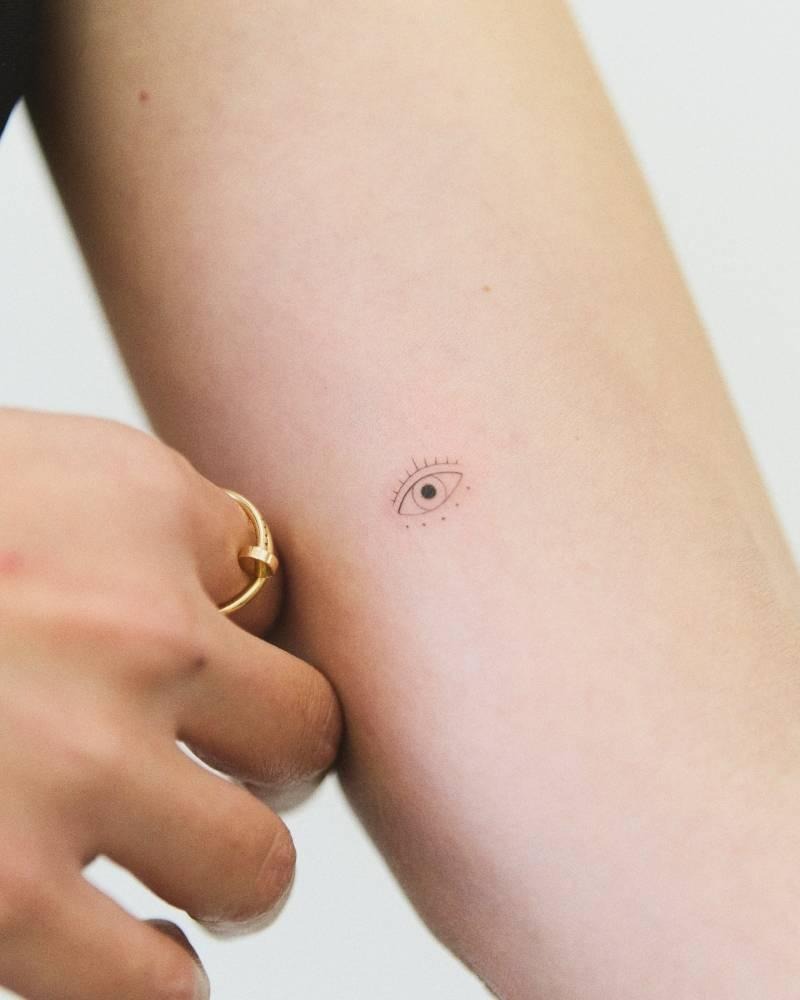
- Minimalist eye: A simple outline suited to a small tattoo.
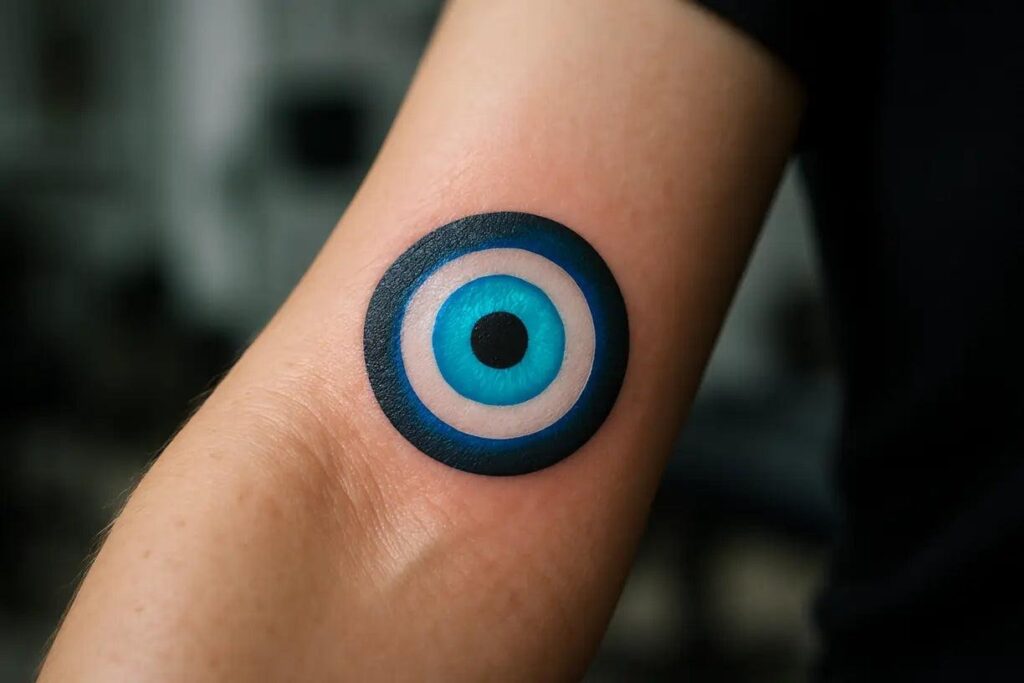
- Traditional blue eye: Concentric circles inspired by familiar glass amulets.
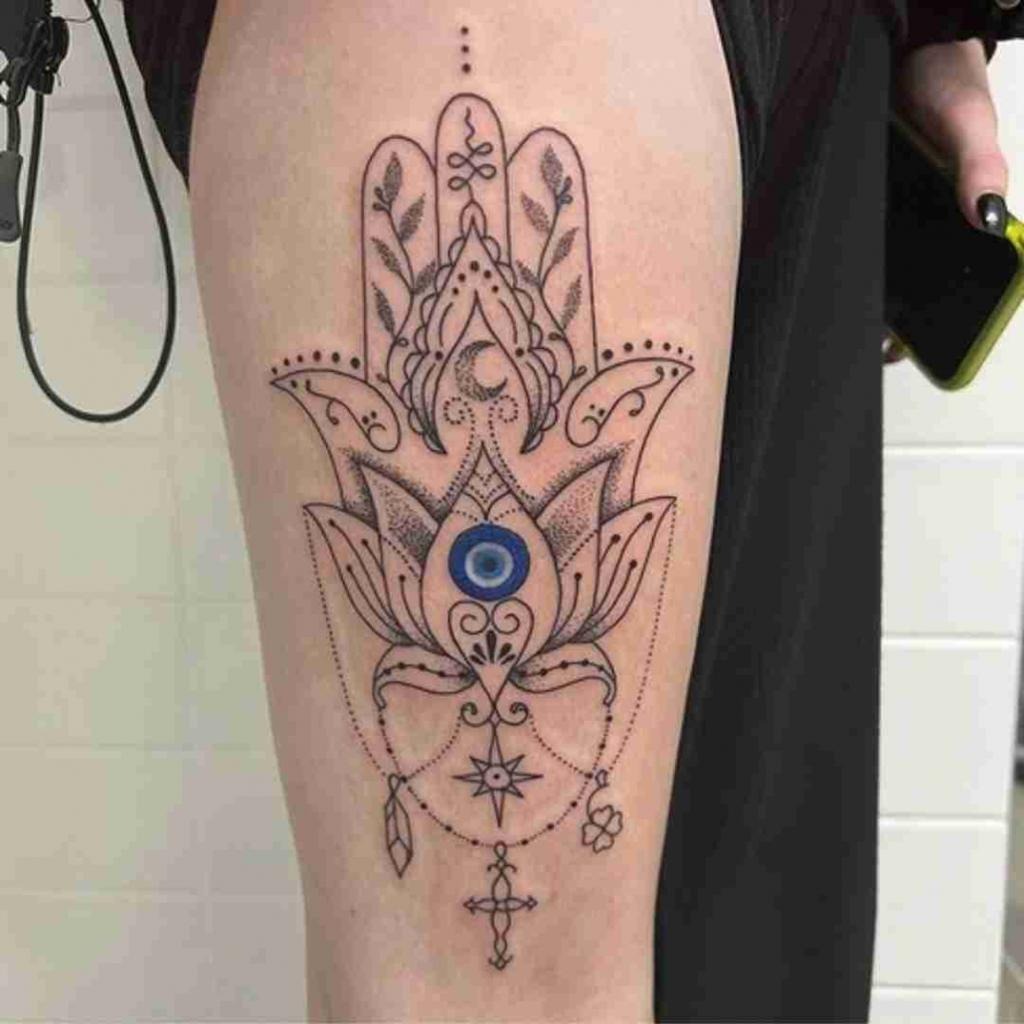
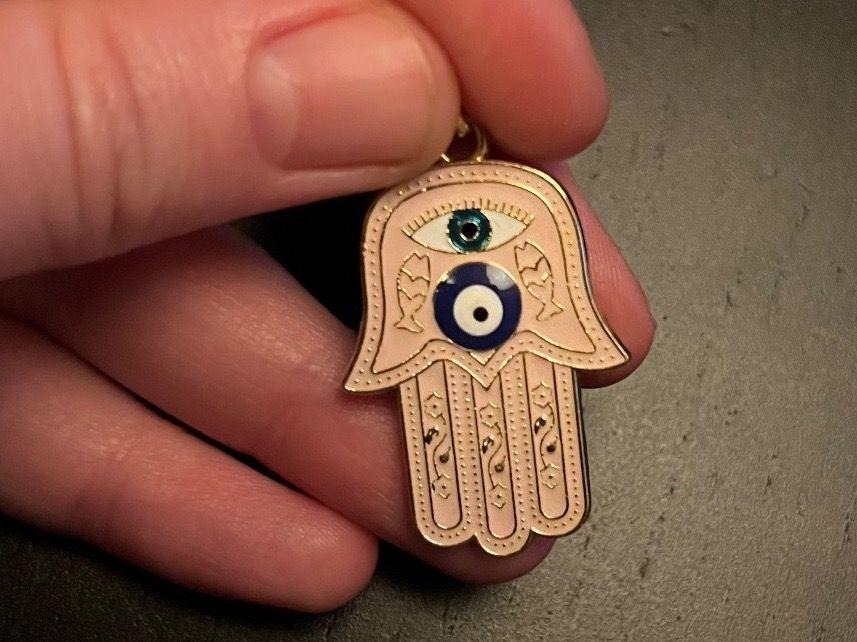
- Hamsa with an eye: A hand-shaped motif incorporating an eye at its center.
- Floral evil eye: A design combining the eye with flowers or botanical details.
- Geometric evil eye: Clean lines and symmetrical patterns for a contemporary look.
What to Consider Before Getting an Evil Eye Tattoo
Before choosing a design, research its cultural background and decide what it means to you. If the motif draws on a tradition outside your own, learning about its history can help you make an informed choice.
Also consider placement, size, color, and the artist’s experience. A clear design brief will help ensure that the finished tattoo matches your intentions.
Evil Eye vs. Hamsa Hand: What Is the Difference?
The evil eye and the Hamsa are related in some protective traditions, but they are not the same symbol. Understanding their different forms makes their meanings easier to distinguish.
7
| Feature | Evil eye | Hamsa hand |
| Typical appearance | An eye or concentric circles | An open hand with five fingers |
| Traditional association | Protection against the harmful gaze | Protection and, in some traditions, blessing |
| Common forms | Beads, pendants, wall decorations | Jewelry, hand-shaped pendants, wall hangings |
| Combined designs | Sometimes placed inside a hand motif | May feature an eye in the palm |
Can the Hamsa and Evil Eye Be Used Together?
Yes. Some designs combine the eye with the Hamsa, creating a single object that draws on both protective motifs.
The Hamsa has its own history in several Jewish, Muslim, and regional cultural settings. Its interpretation varies, so it should not be reduced to simply another name for the evil eye. The Science Museum Group, for example, documents a Persian brass amuletic hand specifically intended to avert the evil eye.
Science Museum Group Collection
How Do People Traditionally Protect Themselves From the Evil Eye?
Protective practices differ across communities. Some emphasize amulets, others rely on prayers or blessings, and some combine several customs.
Wearing a Protective Amulet
Eye-shaped glass beads, pendants, and other charms are among the best-known protective objects. People may wear them or display them in places associated with family life and prosperity.
A historical example comes from the Science Museum Group’s collection: a glass nazar amulet reportedly carried by a soldier stationed in Palestine during World War I. The object illustrates how such charms could accompany people in everyday life, including during periods of uncertainty.
Science Museum Group Collection
Prayers, Blessings, and Religious Practices
Some communities use religious recitations, prayers, or blessings when responding to concerns about the evil eye. The words and practices depend on the relevant religious tradition.
In other settings, people use customary expressions when complimenting a child or admiring someone’s good fortune. Such practices may help express care and reinforce shared cultural values.
Household Customs and Protective Rituals
Protective customs may include displaying charms, using particular gestures, or following family rituals. In parts of the Persian cultural sphere, historical accounts describe a variety of preventive and counteractive practices.
Encyclopaedia Iranica
These customs should be described in their cultural context rather than combined into one universal ritual. A practice meaningful to one family may be unfamiliar to another.
What Does It Mean When an Evil Eye Charm Breaks?
A broken evil eye bracelet or bead sometimes receives a spiritual interpretation. Some modern practitioners believe the charm has absorbed negativity or completed its protective role.
However, a broken charm does not prove that someone has cursed you or that supernatural harm has occurred. Glass, string, clasps, and other jewelry components can break through normal wear, impact, or material fatigue.
If a charm breaks, you can replace or repair it if it remains meaningful to you. There is no reliable evidence that you must perform a particular ritual afterward.
Is the Evil Eye a Religious Symbol or a Cultural Belief?
The evil eye is best understood as a belief with a broad cultural history and different interpretations across religious settings. It is not exclusively associated with one faith.
Evil Eye Beliefs in Religious Traditions
Jewish, Christian, Muslim, and other religious communities have encountered the concept in different historical and cultural contexts. Some religious discussions address envy or the harmful gaze, while local customs may add protective objects and rituals.
These categories should not be treated as interchangeable. A teaching found in a religious text is not necessarily identical to a later folk practice or a modern jewelry trend.
For example, a person may wear a nazar bead because it connects them with family heritage. Another person may view it purely as decoration, while someone else may reject amulets on religious grounds.
Is Wearing an Evil Eye Amulet Compatible With Every Religion?
No single answer applies to every faith or community. Some people accept the amulet as a cultural object or personal accessory, while others object to assigning spiritual power to physical items.
Anyone concerned about religious compatibility should consult trusted guidance within their own tradition. The meaning of an object often depends on both its use and the beliefs attached to it.
Is the Evil Eye Scientifically Proven?
There is no reliable scientific evidence establishing that an envious gaze transmits a supernatural curse or that an eye-shaped amulet prevents such harm.
That conclusion does not erase the symbol’s cultural significance. Objects can carry historical, emotional, religious, and social meaning even when their supernatural effects cannot be demonstrated.
A balanced explanation respects the people who value the tradition while distinguishing cultural belief from scientifically verified claims.
Evil Eye Meaning in Modern Fashion and Pop Culture
The evil eye has moved beyond traditional amulets into contemporary fashion, jewelry, and interior design. Its recognizable shape makes it easy to incorporate into both understated accessories and elaborate decorative pieces.
The Evil Eye as a Fashion Accessory
Today, the motif appears on bracelets, necklaces, rings, earrings, clothing, handbags, and home decorations. Designers may use glass, enamel, precious metals, gemstones, or printed patterns to reinterpret the traditional eye.
Some products preserve familiar blue concentric circles, while others use simplified or colorful designs. The result is a symbol that can be visually distinctive even when the wearer does not follow the underlying spiritual belief.
Wearing the Symbol for Personal Meaning
People may choose evil eye jewelry for several reasons:
- A connection to family or cultural heritage.
- An interest in traditional protective symbolism.
- A personal reminder to maintain emotional boundaries.
- An appreciation for the design and craftsmanship.
- A meaningful gift received from someone important.
These motivations can overlap. Someone might value both the charm’s appearance and its place in family tradition.
Cultural Appreciation and Respectful Use
The symbol’s widespread popularity makes cultural understanding especially important. Learning about the nazar, mati, and related protective motifs helps prevent different traditions from being treated as identical.
Respectful use does not require everyone to share the same beliefs. It does require recognizing that these designs have histories beyond their current role in fashion.
Common Myths and Misunderstandings About the Evil Eye
The evil eye’s popularity has produced plenty of explanations, but not all are historically accurate. Separating established cultural practices from modern assumptions helps readers understand the symbol more clearly.
Myth: Every Evil Eye Charm Must Be Blue
Fact: Blue is especially recognizable in Turkish nazar beads and other Mediterranean designs, but protective objects come in different materials, colors, and forms.
Myth: Everyone Interprets the Evil Eye the Same Way
Fact: Meanings differ across cultures, religious communities, families, and individual wearers. One person’s spiritual object may be another person’s decorative accessory.
Myth: A Broken Evil Eye Bracelet Proves Someone Sent Negative Energy
Fact: A broken bracelet may simply reflect ordinary wear, a damaged clasp, or weakened string. The break alone cannot establish a supernatural cause.
Myth: The Evil Eye and the Hamsa Are Identical
Fact: The evil eye is typically represented by an eye, while the Hamsa is a hand-shaped motif. Some designs combine them, but their histories remain distinct.
Myth: Wearing an Evil Eye Guarantees Protection
Fact: Protection is part of the symbol’s traditional meaning, but supernatural effects have not been scientifically demonstrated.
Myth: The Evil Eye Belongs to Only One Culture
Fact: Related beliefs and protective objects appear across many regions. Their similarities reflect complex histories of cultural contact, while their specific meanings remain diverse.
Frequently Asked Questions About Evil Eye Meaning
1. What Does the Evil Eye Mean Spiritually?
The evil eye is commonly associated with protection from envy, jealousy, and harmful attention. Spiritually minded people may also interpret it as a reminder to maintain boundaries, protect their peace, and appreciate their personal well-being. Its meaning depends on cultural background and individual belief.
2. Is the Evil Eye a Good or Bad Symbol?
The answer depends on whether someone means the harmful gaze or the protective charm. The evil eye belief describes a feared source of misfortune, while the eye-shaped amulet is traditionally used for protection. Consequently, people usually wear the charm as a positive symbol rather than an invitation for harm.
3. What Does a Blue Evil Eye Represent?
The blue evil eye is strongly associated with protection against the harmful gaze in Turkish and other Mediterranean traditions. Modern interpretations may also connect blue with calmness and stability. These additional color associations vary and should not be treated as universal historical rules.
4. Which Wrist Should You Wear an Evil Eye Bracelet On?
There is no universal wrist requirement. Some contemporary spiritual interpretations associate the left wrist with receiving energy and personal matters, while the right relates to action or outward expression. Other people choose whichever wrist feels comfortable or follows their family’s custom.
5. What Does It Mean When an Evil Eye Bracelet Breaks?
Some modern spiritual interpretations suggest that a broken charm has absorbed negativity or finished its protective role. However, this is a belief rather than an established fact. Ordinary wear, impact, and material damage can explain why jewelry breaks.
6. Can You Wear an Evil Eye Necklace Every Day?
Yes, people commonly wear evil eye necklaces as everyday jewelry. Some choose them for their traditional protective meaning, while others appreciate their appearance or cultural significance. If the necklace is meaningful to you, its daily use can reflect your personal preference without requiring a particular ritual.
7. What Is the Difference Between the Evil Eye and the Hamsa?
The evil eye usually appears as an eye-shaped motif intended to ward off the harmful gaze. The Hamsa is a hand-shaped symbol associated with protection and, in some traditions, blessing. The two are sometimes combined, but they have distinct histories and cultural interpretations.
Conclusion: Understanding the Evil Eye Meaning
The evil eye meaning brings together centuries of cultural history, protective beliefs, and personal symbolism. From the traditional Turkish nazar bead to jewelry, tattoos, and household decorations, the symbol continues to hold significance for people around the world.
Its central distinction is simple: the evil eye describes a feared harmful gaze, while the protective eye charm represents a traditional response to that fear. Color meanings, wearing customs, and religious interpretations vary across communities, so no single explanation fits everyone.
Whether you value the evil eye for its heritage, spiritual significance, or distinctive design, understanding its background makes the symbol more meaningful. Its enduring appeal lies not only in what the eye represents, but also in the stories and traditions people carry with it.