
Not all olive oils are produced or classified in the same way. The main difference is whether the oil is obtained through mechanical extraction alone or undergoes refining.
The International Olive Council (IOC) classifies olive oils according to their production methods, chemical characteristics, and sensory properties. Its standards distinguish extra virgin olive oil from other categories, including virgin olive oil and refined olive oil.
International Olive Council
Read More: JP Meaning in Text: What It Means, Examples, and How to Reply
+1
EVOO vs. Virgin Olive Oil vs. Regular Olive Oil
| Feature | Extra virgin olive oil | Virgin olive oil | Regular olive oil |
| Production | Mechanical or physical extraction | Mechanical or physical extraction | Generally refined oil blended with virgin olive oil |
| Maximum free acidity under IOC standards | 0.8 g per 100 g | 2.0 g per 100 g | Depends on the applicable product standard |
| Flavor | Fruity, grassy, bitter, or peppery | May have some sensory defects allowed for its category | Usually mild and neutral |
| Natural flavor compounds | Retains naturally occurring compounds in varying amounts | Retains naturally occurring compounds in varying amounts | Refining can remove some minor compounds |
| Common uses | Dressings, dips, roasting, sautéing, finishing | Everyday cooking and dressings | Everyday cooking when a mild flavor is preferred |
The acidity figures above are formal classification limits, not measurements of how sour the oil tastes. Both extra virgin and virgin olive oil must satisfy additional requirements beyond acidity.
International Olive Council
+1
Why Is EVOO Often Considered a Premium Olive Oil?
EVOO earns its classification by meeting specific requirements. Its natural flavor and aroma also make it desirable for people who enjoy distinctive olive oils.
However, premium status does not mean every bottle tastes exceptional. Freshness, olive variety, harvesting practices, extraction, and storage all influence the final result.
A reasonably priced, fresh EVOO may suit everyday cooking better than an expensive bottle that has been stored poorly.
What Does EVOO Taste Like?
Extra virgin olive oil can offer a surprisingly broad range of flavors. Some bottles taste delicate and buttery, while others have a strong green aroma and peppery finish.
These differences reflect the olives themselves, their maturity when harvested, and how the oil is produced.
Common flavor notes include:
- Fruity: Fresh olive or other fruit-like aromas.
- Grassy: A green aroma similar to freshly cut grass or leaves.
- Bitter: A distinct taste that can be noticeable in oils made from greener olives.
- Peppery: A tingling sensation in the throat after tasting.
- Mild: A softer flavor that does not overpower delicate ingredients.
Bitterness and pepperiness can be positive characteristics rather than signs of spoilage. The International Olive Council uses sensory assessment as part of its virgin olive oil classification system.
International Olive Council
+1
Why Does EVOO Sometimes Feel Peppery?
Some extra virgin olive oils contain phenolic compounds associated with bitterness and pungency. These characteristics vary with olive variety, maturity, production methods, and storage.
A peppery finish does not mean that chili peppers or spices have been added. It can be a natural feature of the oil.
If you prefer a mild taste, choose an EVOO described as delicate or smooth. If you enjoy stronger flavors, look for an oil with pronounced green, bitter, or peppery notes.
EVOO Health Benefits: What Should You Know?
EVOO contains mostly monounsaturated fat, including oleic acid. It also contains varying amounts of vitamin E and other naturally occurring compounds, including phenolics.
These characteristics help explain why olive oil is widely used in Mediterranean-style eating patterns. However, its benefits should be understood within the context of an overall diet rather than as a promise of specific medical results.
internationaloliveoil.org
+1
EVOO Provides Mostly Monounsaturated Fat
Dietary fats provide energy and help the body absorb fat-soluble vitamins. The type of fat you consume also matters for cardiovascular health.
Olive oil is rich in monounsaturated fatty acids. Replacing some foods high in saturated fat with sources of unsaturated fat can help improve blood cholesterol levels as part of a balanced diet.
For example, using EVOO instead of butter in a vegetable dish changes the type of fat in the meal while adding its own flavor.
EVOO Contains Naturally Occurring Phenolic Compounds
Phenolic compounds contribute to some of EVOO’s sensory characteristics and antioxidant activity. Their concentrations vary considerably between oils.
Olive variety, harvest timing, extraction, and storage can all influence the final composition. Therefore, the words “extra virgin” alone do not reveal the precise phenolic content of a particular bottle.
A practical takeaway: Choose fresh EVOO for its flavor and place it within a balanced eating pattern. Do not rely on it as a substitute for medical treatment.
Is EVOO Healthier Than Regular Olive Oil?
EVOO retains naturally occurring minor compounds that may be reduced during refining. Both EVOO and regular olive oil, however, can provide substantial amounts of monounsaturated fat.
The better choice depends on your cooking needs, preferences, and overall dietary pattern.
- Choose EVOO when you want a distinctive flavor and minimally processed olive oil.
- Consider regular olive oil when you prefer a more neutral taste.
- Use appropriate portions because all oils are energy-dense foods.
- Consider your complete diet rather than judging healthfulness from one ingredient.
Can You Cook With EVOO?
Yes. EVOO is suitable for many everyday cooking methods, including roasting, sautéing, baking, and pan-frying. You do not need to save it exclusively for salads or uncooked dishes.
Its performance depends on the oil’s freshness, composition, temperature, and duration of heating. All cooking oils can deteriorate when repeatedly or excessively overheated.
Is EVOO Good for Frying?
EVOO can be used for frying when the temperature is controlled appropriately. Avoid leaving the oil smoking heavily, as prolonged overheating can damage its quality.
For better results:
- Heat the oil gradually.
- Avoid leaving a pan of oil unattended over high heat.
- Use a suitable temperature for the food.
- Do not repeatedly reuse oil that has developed an unpleasant odor or appearance.
- Choose another oil if its flavor does not suit the dish.
Does EVOO Have a Low Smoke Point?
There is no single smoke-point figure that accurately describes every EVOO. The smoke point varies with the oil’s composition, free fatty acid content, and condition.
Smoke point is also only one part of cooking performance. Oxidative stability, temperature, and heating time matter as well.
For most household roasting and sautéing, fresh EVOO is a practical choice. The important rule is to avoid prolonged overheating.
Best Ways to Use EVOO in Everyday Meals
8
Here are several ways to enjoy EVOO:
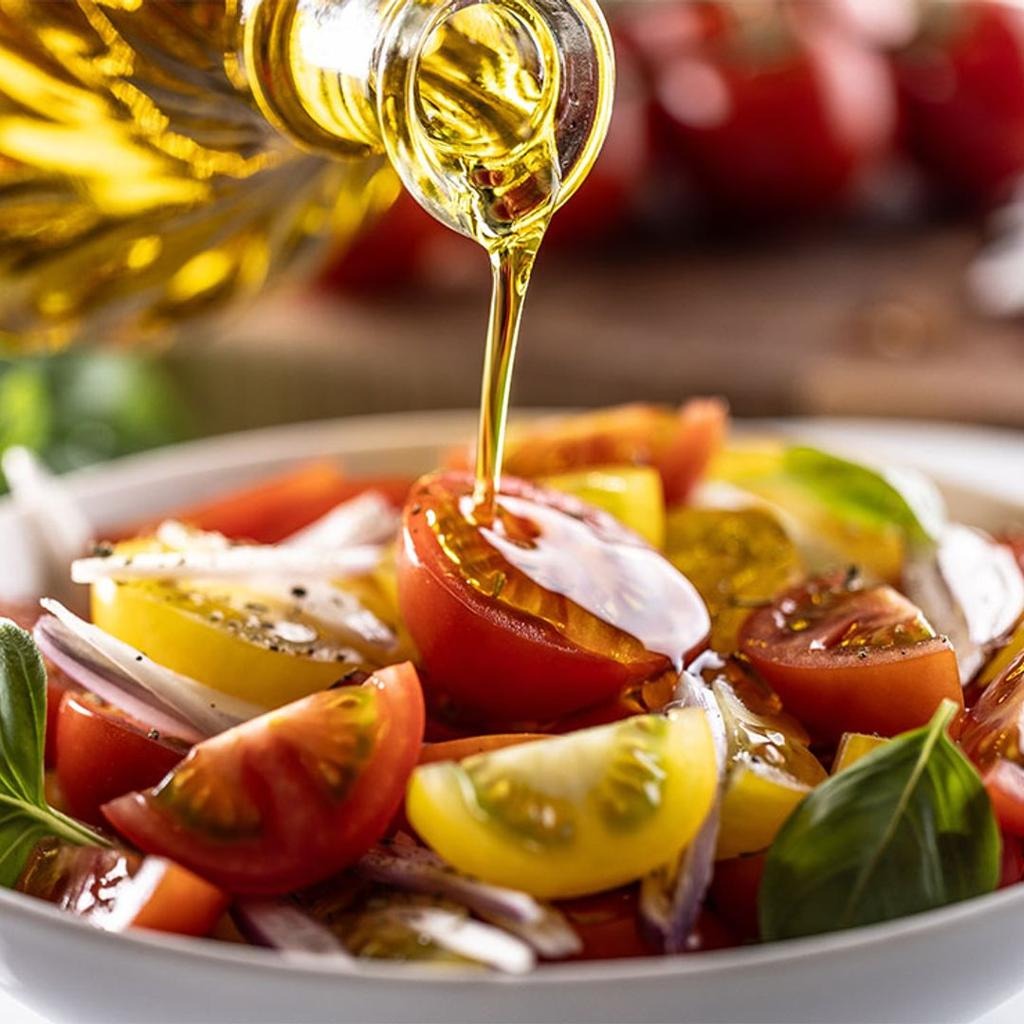
- Salad dressings: Combine it with lemon juice, vinegar, mustard, and seasonings.
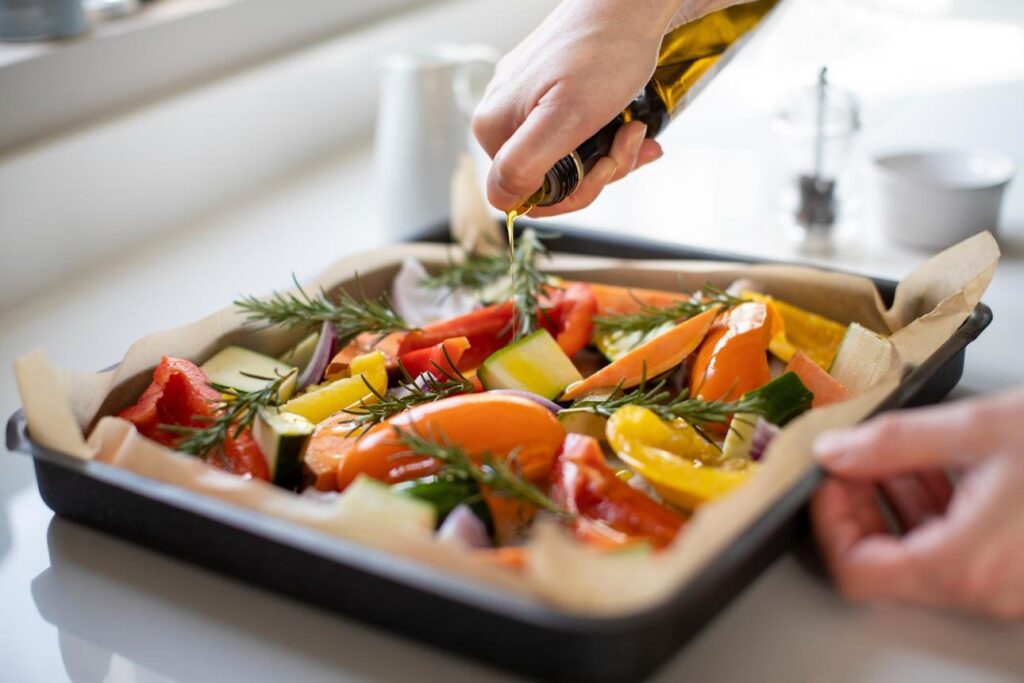
- Roasted vegetables: Toss potatoes, carrots, broccoli, or peppers with oil before roasting.
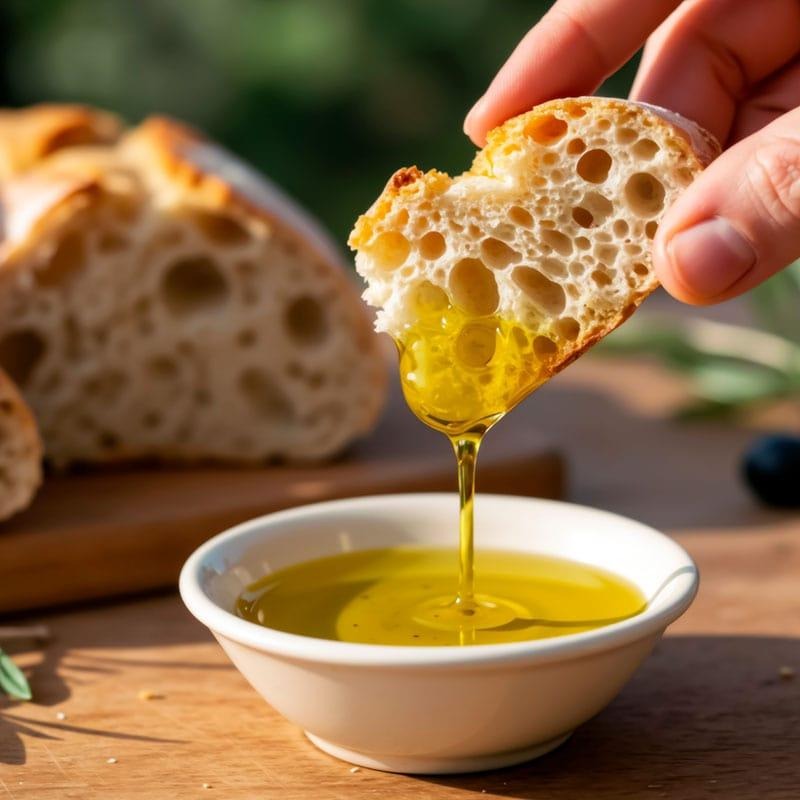
- Bread dips: Serve it with herbs, cracked pepper, or balsamic vinegar.
- Pasta: Drizzle a small amount over finished pasta for extra flavor.
- Sautéed vegetables: Use it for mushrooms, onions, greens, and other vegetables.
- Marinades: Mix it with garlic, herbs, spices, and citrus.
- Finishing: Add it to soup, beans, grilled vegetables, or fish just before serving.
A simple tasting exercise can help you understand EVOO’s flavor. Pour a small amount into a dish and taste it with plain bread. Notice whether it tastes fruity, grassy, bitter, or peppery.
How to Choose Good EVOO at the Grocery Store
A premium label or attractive bottle does not guarantee freshness. A better approach is to look for useful product information, suitable packaging, and evidence of careful handling.
Check the Label
When comparing bottles, look for:
- Extra virgin olive oil: Confirm the actual product category.
- Harvest date: When available, this helps you identify when the olives were harvested.
- Best-before date: Use it as a reference, while remembering that storage affects quality.
- Origin: Check whether the oil comes from a named country, region, or blend of origins.
- Packaging: Dark glass or another light-protective container helps reduce exposure.
- Producer information: Traceable details can help you evaluate the product.
A harvest date can be useful, but it is not the only sign of quality. The condition of the olives, production process, and storage also matter.
Does Expensive EVOO Mean Better Quality?
Not necessarily. Price may reflect production scale, olive variety, packaging, origin, certification, or supply conditions.
A high price alone does not establish freshness or superior flavor. Likewise, a less expensive bottle is not automatically poor quality.
Compare the information available and choose an oil that suits your cooking habits. If you use olive oil slowly, a smaller bottle may be a sensible purchase.
Should You Buy Organic EVOO?
Organic certification concerns agricultural production practices. It does not automatically mean the oil tastes better or contains more beneficial compounds than every non-organic alternative.
If organic production matters to you, certification can help guide your choice. Still, consider freshness, packaging, origin, and the actual extra virgin designation.
How to Store EVOO and Keep It Fresh
Even excellent EVOO can lose its flavor over time. Its main enemies are light, heat, and oxygen, which encourage oxidation and can gradually damage the oil’s aroma and quality. The International Olive Council recommends limiting exposure to these factors during storage.
internationaloliveoil.org
+1
Follow these practical storage tips:
- Keep the bottle in a cool, dark cupboard.
- Store it away from the stove and other heat sources.
- Close the cap tightly after each use.
- Avoid leaving the bottle open for long periods.
- Buy an amount you can use while the oil remains fresh.
- Check the aroma and taste if you suspect deterioration.
How Long Does EVOO Last After Opening?
There is no guaranteed period that applies to every bottle. Freshness at purchase, packaging, storage, and exposure to air all influence how long the oil retains its best flavor.
Follow the producer’s storage instructions and best-before guidance. After opening, protect the oil from heat and light, and close the container promptly.
Refrigeration is usually unnecessary for ordinary storage. Olive oil may become cloudy or partly solid in the refrigerator, but this alone does not mean it has spoiled. It generally returns to its usual appearance as it warms.
Common EVOO Myths and Misunderstandings
Online discussions and food labels sometimes make olive oil sound more complicated than it is. These common misconceptions are worth correcting.
Myth: EVOO Is Only for Salads
Fact: EVOO can be used for dressings, roasting, sautéing, baking, and many other cooking methods. Its flavor can improve both simple meals and elaborate recipes.
Myth: Peppery EVOO Is Spoiled
Fact: Pepperiness and bitterness can be normal sensory characteristics of extra virgin olive oil. A stale or rancid smell is a more concerning sign of deterioration.
Myth: Green Oil Is Always Better Than Golden Oil
Fact: Color varies with olive variety, maturity, and production conditions. Appearance alone cannot reliably establish an oil’s quality.
Myth: Cold-Pressed Automatically Means Extra Virgin
Fact: Cold-pressing describes a production method. Extra virgin classification depends on meeting the applicable chemical and sensory requirements.
Myth: EVOO Never Goes Bad
Fact: Olive oil is a perishable food product. Heat, light, and oxygen gradually encourage oxidation and loss of desirable flavor.
A Practical Example: Choosing EVOO for a Home Kitchen
Imagine a home cook comparing two bottles. One costs considerably more but comes in clear packaging with limited harvest information. The other costs less and provides origin details, a harvest date, and a dark bottle.
The second bottle offers more useful information for evaluating freshness and handling. However, neither bottle’s quality can be established from those details alone.
The cook plans to prepare salad dressings, roast vegetables, and finish pasta dishes. A fresh, flavorful EVOO in a suitable bottle may be the most practical choice.
The decision can follow a few simple steps:
- Confirm the extra virgin designation.
- Compare origin and harvest information when available.
- Choose packaging that protects the oil from light.
- Buy a quantity that suits your rate of use.
- Store the bottle properly after opening.
The lesson is to prioritize useful product information and good storage rather than relying on price or packaging alone.
Frequently Asked Questions About EVOO Meaning
What does EVOO stand for in cooking?
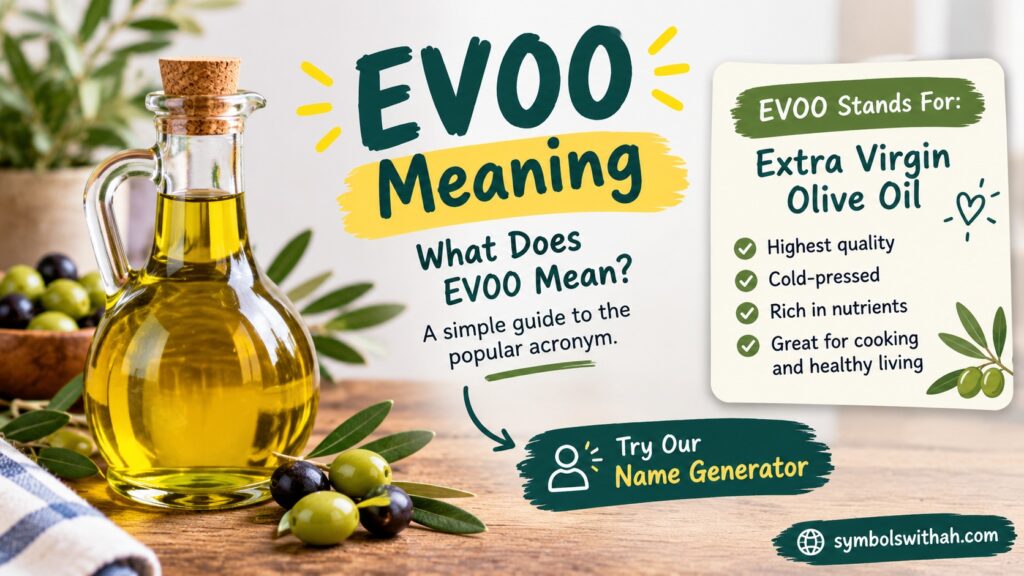
EVOO stands for extra virgin olive oil. Recipes use this abbreviation to identify olive oil that meets the extra virgin category requirements. It works well for dressings, roasting, sautéing, and finishing dishes.
Is EVOO the same as extra virgin olive oil?
Yes. EVOO is simply the abbreviation for extra virgin olive oil. Both terms refer to the same category of olive oil.
Is EVOO healthier than regular olive oil?
EVOO contains monounsaturated fat and varying amounts of naturally occurring phenolic compounds. Refining can reduce some minor compounds, but overall dietary quality matters more than choosing one ingredient alone.
Can you cook with EVOO at high heat?
EVOO is suitable for many common cooking methods, including roasting and sautéing. Avoid prolonged overheating and do not allow the oil to smoke continuously. The best temperature depends on the cooking method and oil condition.
What is the difference between EVOO and virgin olive oil?
Both oils are obtained without conventional refining. Extra virgin olive oil must meet stricter chemical and sensory requirements than virgin olive oil, including a lower maximum free acidity.
How can you tell if EVOO is fresh?
Check harvest information when available, inspect the packaging, and store the oil away from light and heat. A pleasant fruity aroma can be a useful sign, while stale or rancid odors may indicate deterioration.
Does EVOO mean organic olive oil?
No. EVOO means extra virgin olive oil, while organic refers to agricultural production standards. An oil can be extra virgin without being certified organic.
Final Thoughts on EVOO Meaning
Understanding EVOO meaning makes shopping and cooking easier. The abbreviation stands for extra virgin olive oil, a defined category based on production methods and quality requirements.
Its appeal comes from its distinctive flavor, culinary versatility, and predominantly monounsaturated fat profile. EVOO can bring fresh, fruity, grassy, or peppery notes to everyday meals while fitting into a balanced eating pattern.
To get the most from your bottle, check the label, consider harvest information, and store the oil away from light, heat, and oxygen. Use it while its flavor remains fresh, and choose a variety that suits your food.
Whether you drizzle EVOO over a salad, roast vegetables with it, or serve it alongside fresh bread, you do not need an elaborate recipe to enjoy its qualities. A little understanding of the label can help you make a more informed choice in the kitchen.
Sources for Further Reading
- International Olive Council: Olive oil categories and definitions
International Olive Council - International Olive Council: Trade standard applying to olive oils
internationaloliveoil.org - International Olive Council: Best practice guidelines for olive oil storage
internationaloliveoil.org