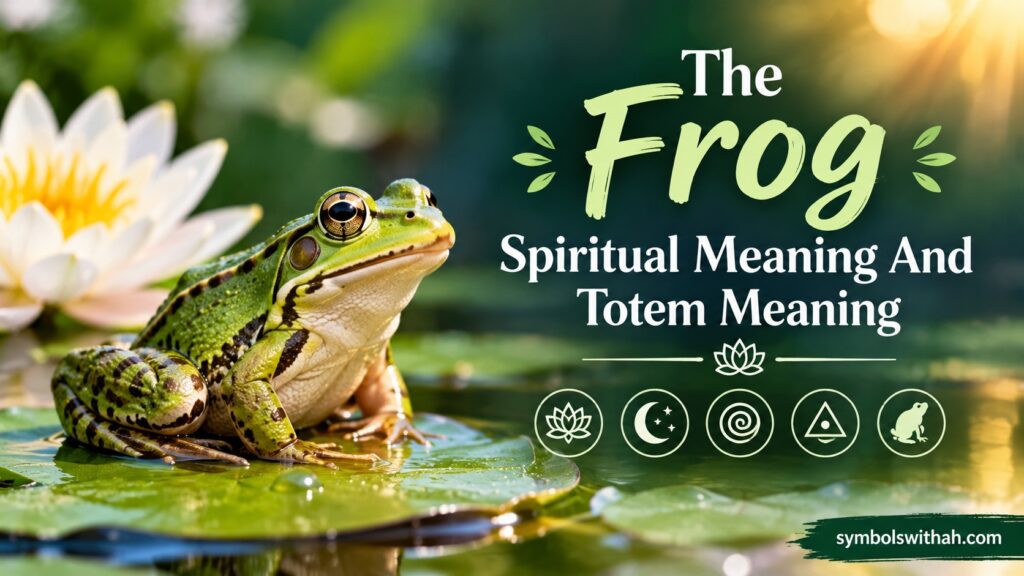

A frog appearing near your home, crossing your path, or showing up repeatedly in your dreams can feel surprisingly meaningful. The frog spiritual meaning and totem meaning often center on transformation, renewal, adaptability, fertility, and the courage to embrace change. These associations arise partly from the frog’s remarkable life cycle and partly from centuries of cultural stories.
In the United States, frogs often bring to mind springtime, rain, garden ponds, good fortune, and fresh beginnings. Their journey from tadpole to adult makes them natural symbols of personal growth. However, frog symbolism reaches far beyond modern spiritual interpretations. Ancient Egyptians connected frogs with fertility and childbirth, while other traditions developed distinct stories involving water, weather, luck, and creation.
Still, no single interpretation explains every frog encounter. Your surroundings, personal experiences, and cultural background can influence what the animal represents to you. Understanding these different perspectives helps you appreciate the frog without treating every appearance as a supernatural prediction.
Read More: Winter Symbolism: Meanings Around the World
Quick Answer: What Does the Frog Symbolize Spiritually?
The frog spiritual meaning and totem meaning in modern American spirituality most commonly involve transformation, renewal, adaptability, emotional release, and new beginnings. Across particular historical and cultural traditions, frogs also symbolize fertility, rain, prosperity, and the return of life. Their meaning depends on the tradition, setting, and personal interpretation.
TL;DR: Frog Symbolism at a Glance
- Transformation: A frog’s life cycle represents meaningful personal change.
- Renewal: Frogs often symbolize fresh starts and renewed energy.
- Adaptability: Their connection to water and land suggests flexibility.
- Abundance: Some traditions associate frogs with fertility and prosperity.
- Emotional cleansing: Modern interpretations connect frogs with releasing old feelings.
- Totem meaning: The frog can represent growth, resilience, and responsiveness to change.
What Does a Frog Symbolize?
Frog symbolism begins with the animal itself. Frogs live closely connected to water, undergo dramatic physical changes, and respond to seasonal conditions. These natural characteristics help explain why people have associated them with life’s transitions.
The Frog as a Symbol of Transformation
A frog begins life as an egg, develops into a tadpole, and gradually becomes an adult. During metamorphosis, its body changes dramatically, allowing it to occupy a different ecological role.
This process provides a vivid metaphor for personal development. Someone leaving an old relationship, beginning a new career, or rebuilding confidence might identify with the frog’s changing life stages.
Transformation, however, doesn’t always happen comfortably. Growth may require patience, unfamiliar experiences, and the willingness to leave old habits behind.
Water, Renewal, and Fresh Beginnings
Water is essential to many frogs, although different species have different habitat requirements. Ponds, marshes, streams, and temporary pools provide important places for feeding, breeding, and development.
Consequently, frogs often become symbols of renewal and life returning after a dry or difficult period. Their calls during rainy weather can also make them feel like heralds of seasonal change.
Common Frog Symbolism
In contemporary spiritual interpretations, frogs are frequently associated with:
- Personal transformation and changing circumstances.
- Renewal after disappointment, grief, or exhaustion.
- Flexibility when familiar routines no longer work.
- Fertility, abundance, and the growth of new possibilities.
- Awareness of emotional needs and surrounding conditions.
These are symbolic interpretations, not universal beliefs or guaranteed predictions.
Historical Roots of Frog Symbolism
Frogs have appeared in religious imagery, folklore, decorative objects, and literature for thousands of years. Their meanings developed through human relationships with rivers, rainfall, agriculture, reproduction, and seasonal change.
Ancient Egyptian Frog Symbolism
Ancient Egypt provides one of the clearest historical examples of frog symbolism. Frogs appeared in connection with fertility, birth, regeneration, and the renewal of life.
The goddess Heqet, associated with childbirth and fertility, was depicted with a frog’s head or in frog form. Frog-shaped amulets were also produced and worn, reflecting the animal’s protective and reproductive associations.
The annual flooding of the Nile helped explain these connections. As floodwaters receded, frogs appeared in large numbers across wet landscapes, alongside the renewed agricultural life supported by the river.
A frog therefore represented more than an unusual animal. It could evoke the return of life, the promise of fertility, and the continuation of existence. Museum collections preserve ancient Egyptian frog amulets that illustrate these associations.
Frogs in Ancient Mediterranean Traditions
Frogs also appeared in ancient Greek and Roman culture, although their meanings differed from Egyptian religious symbolism.
In Greek literature, frogs became memorable characters in comedy and satire. Aristophanes’ play The Frogs, first performed in 405 BCE, uses the creatures in a comic journey involving the underworld and literary criticism.
This example demonstrates that frogs weren’t always treated as sacred symbols. They could also serve as humorous characters, literary devices, or observations about ordinary nature.
European Folklore and Religious Imagery
European folklore gave frogs and toads a mixture of meanings. Some stories portrayed them as magical creatures, while others associated them with witches, poison, or unpleasant places.
Religious imagery also sometimes treated frogs negatively. In the biblical Book of Exodus, a plague of frogs becomes part of the narrative of Egypt’s confrontation with Moses.
However, this episode shouldn’t be treated as the only Christian interpretation of frogs. Its meaning belongs to a specific religious story, while other cultures developed very different associations.
Frog Spiritual Meaning in the United States
In America, frogs occupy a familiar place in everyday life. They appear around backyard ponds, wetlands, gardens, rural waterways, children’s books, and seasonal decorations. These ordinary encounters help shape their modern symbolic appeal.
Renewal and New Beginnings in American Culture
For many Americans, frogs suggest springtime and the return of activity after winter. Their calls can signal warmer weather, while their presence around ponds evokes thriving natural habitats.
This seasonal association supports the modern interpretation of frogs as symbols of fresh starts. Someone beginning a new chapter might use frog imagery to represent the belief that growth remains possible after a difficult period.
Good Luck and Prosperity
Frog ornaments, figurines, and garden decorations sometimes carry associations with luck or abundance. Some of these meanings draw inspiration from international traditions, while others reflect contemporary personal beliefs.
A frog displayed near an entrance, for example, might serve as a decorative reminder of opportunity and positive change. However, such an interpretation isn’t a universal American custom.
Nature and Environmental Awareness
Frogs also symbolize the natural world and the importance of healthy wetlands. Their sensitive relationship with environmental conditions makes amphibians relevant to conservation discussions.
In the United States, scientists monitor amphibian populations because habitat loss, disease, pollution, and climate-related changes can threaten particular species.
This ecological connection adds a grounded meaning to frog imagery: life depends on balance, and small environmental changes can have significant consequences.
Frog Totem Meaning: What Does the Frog Represent?
The phrase frog totem meaning appears frequently in contemporary spiritual writing. People often use it to describe qualities they associate with frogs, such as flexibility, persistence, and the ability to navigate change.
However, the word totem has specific cultural meanings in some Indigenous communities. It shouldn’t be treated as a universal label for every personal animal symbol.
The Frog as a Personal Symbol of Growth
In modern personal spirituality, the frog may represent someone learning to adapt without losing their sense of self.
Its life cycle offers a useful metaphor for periods when old routines no longer fit. A person might recognize that their goals, relationships, or priorities have changed, even when the next stage remains unclear.
The frog’s symbolic lesson isn’t that change will always be easy. Instead, it encourages patience with processes that unfold gradually.
Qualities Associated With Frog Totem Interpretations
Modern spiritual interpretations often connect frogs with these qualities:
- Adaptability: Responding thoughtfully when circumstances change.
- Persistence: Continuing through uncomfortable stages of growth.
- Sensitivity: Paying attention to surroundings and emotional needs.
- Renewal: Recognizing opportunities after setbacks.
- Resourcefulness: Finding workable paths through unfamiliar situations.
These qualities are reflective prompts rather than fixed personality traits. Seeing yourself in frog symbolism doesn’t prove that you possess a particular spiritual ability.
A Note on Indigenous Totem Traditions
In some Indigenous cultures, totemic relationships connect people, families, clans, animals, and inherited cultural responsibilities. These traditions vary considerably between nations and communities.
Therefore, a modern personal association with frogs shouldn’t automatically be described as an Indigenous totem. Respectful writing distinguishes contemporary spiritual language from specific cultural practices.
Frog Symbolism Across Different Cultures
Frogs don’t carry one worldwide meaning. Their symbolism reflects local environments, religious traditions, folklore, and the ways communities have understood the natural world.
Chinese Traditions and Prosperity
In some Chinese cultural and feng shui traditions, the three-legged money frog, commonly called Chan Chu, is associated with wealth and prosperity.
The figure often appears as a squat frog-like creature with three legs, sometimes holding a coin. It is used as a symbolic representation of attracting or protecting prosperity.
This particular figure is distinct from the broader symbolism of ordinary frogs. It shouldn’t be assumed that every Chinese tradition interprets frogs identically.
Japanese Frog Symbolism
In Japan, the word for frog, kaeru, shares its pronunciation with a word meaning “to return.” This wordplay has helped frogs become associated with returning home safely and, in some settings, good fortune.
Frog charms and small decorative objects may reflect these associations. However, their meaning depends on the object, setting, and tradition.
Indigenous North American Traditions
Frogs appear in stories and cultural imagery among some Indigenous peoples of North America, including traditions connecting them with water, rain, and the natural world.
These meanings are not interchangeable across nations. Each community has its own histories, languages, and teachings, so a single universal “Native American frog meaning” would be misleading.
A Cross-Cultural Comparison
| Cultural or symbolic context | Common association | Important distinction |
| Ancient Egypt | Fertility, childbirth, and regeneration | Connected with specific religious beliefs and Nile ecology |
| Some Chinese traditions | Prosperity and good fortune | The three-legged money frog has a distinct symbolic role |
| Japanese folklore | Safe return and good luck | Wordplay contributes to the association |
| Some Indigenous traditions | Water, rain, and relationships with nature | Meanings vary by nation and community |
| Modern American spirituality | Transformation and renewal | Often used as a personal reflective symbol |
These examples show recurring themes without suggesting that every culture shares the same beliefs.
Emotional and Psychological Meaning of the Frog
A frog can become meaningful because its appearance connects with a person’s current emotions or circumstances. The symbolism may offer a useful way to reflect on change, uncertainty, or the desire for a fresh start.
The Frog as a Metaphor for Personal Change
People often recognize their own experiences in the frog’s transformation. A major life transition can feel similar to metamorphosis: familiar structures disappear before a new routine becomes comfortable.
For example, someone changing careers might feel caught between two identities. The frog offers a simple image for that in-between period, when progress is happening even though the destination remains unclear.
Emotional Cleansing and Release
Modern spiritual writing sometimes connects frogs with emotional cleansing because of their relationship with water. In this interpretation, water represents feelings, while the frog represents movement through changing emotional conditions.
This can be a useful metaphor for examining resentment, disappointment, or habits that no longer help. However, the symbol doesn’t replace practical support or guarantee emotional healing.
What Frog Symbolism Might Encourage You to Consider
If frogs feel personally meaningful, consider these questions:
- What part of your life is changing right now?
- Are you resisting a transition that may be necessary?
- Which old habits no longer match your current priorities?
- Where could greater flexibility help you move forward?
- What would a genuinely fresh start look like?
The value lies in thoughtful reflection, not in assuming the animal has delivered a definite prediction.
What Does It Mean When You See a Frog?
A frog appearing unexpectedly can catch your attention, especially when you’re already thinking about an important decision. Spiritual interpretations often connect these encounters with renewal, adaptability, and changing circumstances.
However, frogs also appear for ordinary biological reasons. Moisture, temperature, shelter, breeding conditions, and available food influence where they live.
A Frog Near Your House
Some people interpret a frog near their home as a symbol of renewal, prosperity, or positive change. Others simply appreciate it as a sign of nearby wildlife.
The location may feel meaningful because a home represents security, routine, and personal identity. You might use the encounter as a reminder to refresh your surroundings or pay attention to a new opportunity.
A Frog Crossing Your Path
A frog crossing your path can become a personal metaphor for a transition. Its movement between different environments may remind you that flexibility matters when circumstances shift.
Still, there is no established universal rule that a frog crossing your path predicts good luck or a specific event.
Seeing Frogs Repeatedly
Repeated encounters may feel significant, particularly when frogs appear in dreams, artwork, conversations, and outdoor settings.
You might interpret the pattern as a reminder to consider growth or change. At the same time, once something catches your attention, you’re naturally more likely to notice it again.
Both explanations can coexist: the encounters may be ordinary, while the meaning you choose to reflect on can remain personally valuable.
Frog Dreams and Their Spiritual Meaning
Frog dreams can be interpreted in several ways, but no single explanation applies to everyone. Personal memories, emotions, recent experiences, and cultural beliefs can all influence dream imagery.
Dreaming About a Frog
A frog appearing calmly in a dream might remind you of renewal, patience, or adapting to new circumstances. If you’re facing a major transition, the image could reflect thoughts already occupying your mind.
However, the dream doesn’t establish that an outside force is sending a message.
Dreaming About Many Frogs
A group of frogs might bring to mind abundance, activity, or a situation involving many moving parts. Its emotional tone matters: a peaceful pond feels different from a crowded, unsettling scene.
Rather than relying on a universal dream dictionary, consider what the frogs were doing and how you felt.
A Simple Frog Dream Interpretation Guide
| Dream image | Possible personal association | Reflection question |
| A tadpole becoming a frog | Gradual development | What is changing in my life? |
| A frog near clear water | Renewal or calm | Where do I need a fresh perspective? |
| Many frogs calling | Activity or heightened awareness | What has recently demanded my attention? |
| A frog jumping away | Movement or uncertainty | Am I ready to let something change? |
| A frog hiding | Patience or something overlooked | What have I been avoiding? |
These interpretations are possibilities, not scientifically established meanings or reliable forecasts.
Frog Symbolism in Tattoos, Art, and Home Decor
Frogs have a distinctive appearance that makes them appealing in art. Their rounded bodies, expressive eyes, powerful hind legs, and varied colors can support playful, realistic, or deeply symbolic designs.
Frog Tattoos and Personal Identity
A frog tattoo can represent transformation, environmental appreciation, resilience, or a love of wildlife. Someone recovering from a difficult period might choose a frog to mark a new chapter.
Others simply enjoy the animal’s unusual appearance or connection to a favorite memory.
Common design choices include:
- A frog beside water, representing renewal and natural balance.
- A tadpole and adult frog, representing personal development.
- A jumping frog, suggesting movement and adaptability.
- A stylized green frog, emphasizing playfulness and individuality.
- A traditional cultural motif, whose meaning should be researched carefully.
Frogs in Gardens and Interior Design
Frog statues and ornaments frequently appear in gardens, patios, and outdoor water features. Their association with ponds and springtime makes them a natural fit for these spaces.
Some people also display frog figures as reminders of luck, abundance, or new beginnings. Others choose them simply because they enjoy whimsical decoration.
Frogs on Social Media
Online, frog imagery can convey several different moods. A cute cartoon frog may suggest humor or friendliness, while a realistic frog photograph might express an interest in wildlife.
Because internet images often become memes, their meaning can change quickly. A frog picture doesn’t automatically carry a spiritual message, and its meaning may depend entirely on the community sharing it.
Misunderstandings and Controversies About Frog Symbolism
Frog symbolism becomes confusing when modern interpretations are presented as ancient facts or when one culture’s beliefs are applied to everyone.
Not Every Frog Encounter Is an Omen
Spiritual traditions sometimes treat animal encounters as meaningful signs. However, frogs are living animals with ordinary habitat and survival needs.
A frog near your door may feel personally significant, but it doesn’t reliably predict money, romance, pregnancy, or major life events.
Frog Symbolism Isn’t Universally Positive
Although many contemporary interpretations emphasize transformation and good fortune, historical meanings vary.
The biblical plague of frogs, for example, gives them a troubling role within a specific religious narrative. European folklore also includes negative associations.
These examples don’t cancel positive symbolism. They demonstrate why cultural context matters.
Respect Cultural Symbols and Living Traditions
Frog imagery from a specific Indigenous, Chinese, Japanese, or Egyptian tradition may carry meanings beyond its decorative appearance.
Before using such imagery, learn where it comes from and what it represents. Avoid labeling every animal symbol a universal spiritual teaching or attributing a tradition to communities without evidence.
Spiritual Meaning and Scientific Explanation Can Coexist
A frog’s natural behavior can inspire symbolic reflection without requiring supernatural claims.
Its metamorphosis is a biological process, while its association with personal change is a human interpretation. Keeping those categories distinct allows the symbolism to remain meaningful and intellectually honest.
How Frog Symbolism Has Changed Over Time
Frog symbolism has never followed one simple historical path. Different societies developed their own interpretations, and later generations adapted those meanings to new settings.
From Fertility and Agriculture to Personal Growth
In ancient Egypt, frogs were closely connected with fertility, childbirth, and regeneration. These meanings made sense within a society shaped by the Nile’s seasonal floods.
Today, many Americans encounter frog symbolism through personal spirituality, tattoos, social media, and garden decorations. Transformation and renewal often receive more attention than ancient religious practices.
From Folklore to Modern Digital Culture
Older stories sometimes portrayed frogs as sacred, comic, magical, or threatening. Modern digital culture adds further layers through cartoons, memes, character designs, and environmental imagery.
Consequently, a frog can symbolize serious personal growth in one setting and simple humor in another.
What Has Remained Consistent?
Certain associations recur because they reflect recognizable features of frog biology.
- Their life cycle offers a vivid image of transformation.
- Their connection to water encourages associations with rain and renewal.
- Their seasonal activity can suggest the return of life.
- Their varied habitats make adaptability an intuitive theme.
These recurring patterns help explain the frog’s lasting appeal, even though their specific meanings differ between cultures.
Frequently Asked Questions About Frog Spiritual Meaning
What does a frog mean spiritually?
In modern spiritual interpretations, frogs often represent transformation, renewal, adaptability, and new beginnings. Some traditions also associate them with fertility, rain, or prosperity. The meaning depends on the cultural setting and personal interpretation.
Is a frog a sign of good luck?
Some traditions associate frogs with good fortune and prosperity, including particular Chinese and Japanese cultural contexts. However, frogs aren’t universally considered lucky, and their appearance doesn’t guarantee a future outcome.
What does a frog totem mean?
In contemporary spiritual language, frog totem meaning often centers on flexibility, growth, and navigating transitions. However, totem has specific meanings in certain Indigenous cultures and shouldn’t be used as a universal label for personal animal symbolism.
What does it mean when a frog visits your house?
Some people interpret a frog near their home as a symbol of renewal, abundance, or opportunity. In practical terms, the animal may simply be seeking moisture, shelter, insects, or a suitable habitat.
What does dreaming about a frog mean?
A frog dream might personally suggest change, growth, or emotional renewal, particularly during a life transition. However, dream symbols don’t have one fixed meaning, so your feelings and circumstances matter.
What does a frog symbolize in ancient Egypt?
Ancient Egyptian frog symbolism included fertility, childbirth, regeneration, and renewed life. The goddess Heqet, associated with childbirth, was depicted with frog features, and frog amulets reflected related beliefs.
What does a frog tattoo symbolize?
A frog tattoo can represent transformation, adaptability, renewal, environmental awareness, or personal resilience. Its meaning ultimately depends on the design, cultural background, and reason the wearer chose it.
Conclusion
The frog spiritual meaning and totem meaning bring together transformation, renewal, adaptability, and the possibility of fresh beginnings. These associations reflect the frog’s remarkable life cycle, its relationship with water, and the many cultural stories humans have developed around it. From ancient Egyptian amulets to modern American tattoos, frogs continue to inspire different interpretations.
Still, frog symbolism doesn’t have to predict the future to feel meaningful. A frog near your garden, in a dream, or in a piece of artwork can simply remind you that change is part of life. Consider what the animal brings to mind, respect the traditions behind its imagery, and let your reflection lead toward a thoughtful next step.