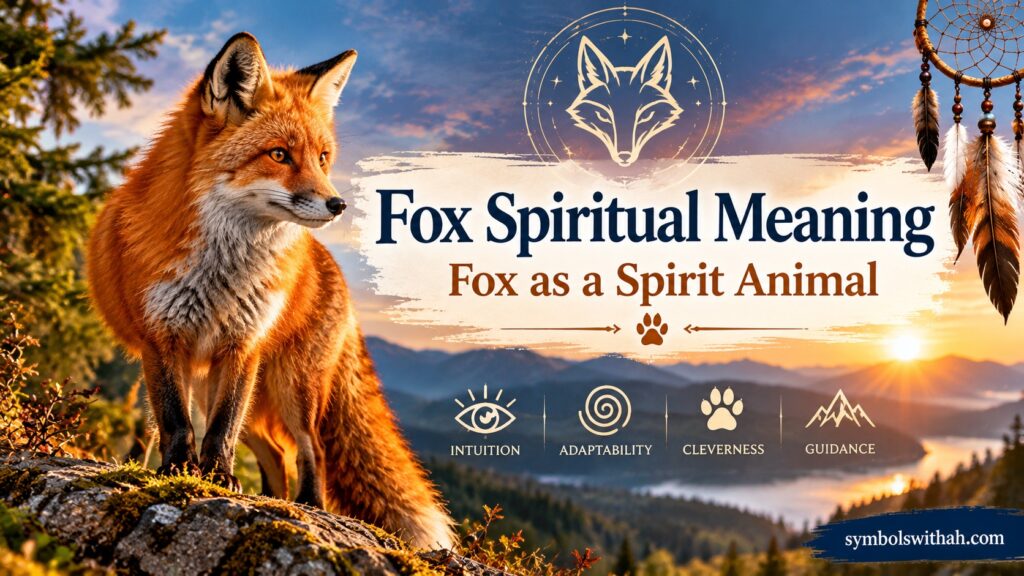

A fox appearing on your path can feel like a small moment with a deeper meaning. The fox spiritual meaning is often connected with intelligence, adaptability, intuition, independence, and the ability to navigate difficult situations. Across modern American spirituality, the fox frequently represents someone who observes carefully, thinks creatively, and knows when to act.
Foxes also carry complicated meanings in folklore. Their cleverness has inspired admiration, while their secrecy has sometimes earned them a reputation for deception. Because of this contrast, the fox can symbolize both wisdom and caution. Its message depends on the story, tradition, and personal experience surrounding the encounter.
In the United States, fox imagery appears in wildlife photography, literature, tattoos, nature-inspired decor, and spiritual discussions. Some people interpret a fox sighting as a personal reminder to trust their instincts. Others simply appreciate the animal’s beauty and resourcefulness. Neither interpretation requires believing that every wildlife encounter predicts something supernatural.
Read More: Winter Symbolism: Meanings Around the World
Quick Answer
In American spiritual symbolism, the fox as a spirit animal commonly represents cleverness, adaptability, awareness, and strategic action. In broader folklore, foxes can symbolize transformation, mystery, protection, or trickery, depending on the culture and story.
TL;DR
• Foxes commonly symbolize intelligence, adaptability, and careful observation.
• A fox sighting may inspire reflection, awareness, or a fresh perspective.
• Red foxes often evoke warmth, energy, independence, and resourcefulness.
• Historical folklore portrays foxes as both clever helpers and deceptive tricksters.
• Fox tattoos frequently express independence, curiosity, resilience, and individuality.
• Spiritual interpretations vary, and no single meaning applies to every culture.
What Does a Fox Symbolize?
The fox is a small, alert mammal known for its pointed ears, narrow muzzle, bushy tail, and agile movements. These physical traits have helped shape its symbolic identity across storytelling traditions and modern spiritual interpretations.
Unlike animals associated mainly with strength or size, the fox often represents the ability to succeed through observation and clever decisions. Its symbolism centers on using available resources instead of relying on force.
The Main Symbolic Meanings of a Fox
Several recurring themes explain why people find the fox spiritually meaningful.
- Intelligence: Finding creative solutions when ordinary approaches fail.
- Adaptability: Adjusting to changing circumstances without losing direction.
- Intuition: Noticing subtle details before making an important decision.
- Independence: Trusting your judgment while remaining aware of others.
- Caution: Recognizing risks before committing to a particular path.
- Cleverness: Using strategy, patience, and timing to overcome obstacles.
These meanings arise partly from the fox’s real behavior and partly from cultural imagination. However, the animal doesn’t carry one universal spiritual message. Its significance changes with the setting and the person interpreting it.
Why the Fox Represents Cleverness
Foxes are opportunistic animals, meaning they take advantage of available food and shelter. Red foxes eat varied foods and can live in forests, grasslands, agricultural areas, and some urban environments.
This flexibility has helped people associate them with resourcefulness. A fox doesn’t always need the largest territory or the greatest strength to survive. Instead, it benefits from alertness, learning, and an ability to respond to changing conditions.
As a symbol, the fox encourages a practical question: Could a smarter approach work better than a harder one?
Fox Spiritual Meaning and Spiritual Messages
In contemporary spirituality, the fox often represents awareness, thoughtful action, and personal adaptability. People may interpret its appearance as an invitation to reconsider a situation rather than react immediately.
These interpretations are personal beliefs, not established predictions. Still, the fox offers a useful symbol for thinking about choices, relationships, and changing circumstances.
A Reminder to Trust Your Awareness
A fox may inspire you to pay attention to details you’ve overlooked. Perhaps a conversation feels incomplete, or a decision requires more information.
The symbolic lesson isn’t to become suspicious of everyone. Instead, it encourages you to observe carefully and separate evidence from assumptions.
An Invitation to Adapt
Foxes can survive in different environments by adjusting their behavior to available resources. Spiritually, this adaptability can represent flexibility during transitions.
For example, starting a new job may require learning unfamiliar routines. Rather than expecting everything to feel comfortable immediately, the fox symbolizes finding your footing through patience and experimentation.
A Call for Quiet Confidence
Foxes often move with controlled, deliberate movements. Their symbolism can therefore represent confidence that doesn’t depend on constant attention or approval.
Sometimes, the most effective action happens without an announcement. A quiet plan, thoughtful preparation, and consistent effort may accomplish more than dramatic gestures.
Fox as a Spirit Animal: What Does It Mean?
The phrase fox as a spirit animal appears frequently in contemporary American spiritual writing. People often use it to describe an animal whose perceived qualities reflect their personality, current challenges, or spiritual interests.
However, the phrase doesn’t describe one universal belief shared by all cultures. Different Indigenous nations have distinct relationships with animals, spiritual practices, and traditional stories. Modern personal symbolism should not be confused with those specific traditions.
Traits Associated With the Fox Spirit Animal
In contemporary personal spirituality, fox symbolism commonly emphasizes:
- Quick thinking when circumstances change unexpectedly.
- Independence without rejecting meaningful relationships.
- Awareness of subtle signals and changing surroundings.
- Patience before taking an important step.
- Creative solutions to complicated problems.
Someone who identifies with fox symbolism might see themselves as observant, private, resourceful, or independent. These associations can help describe personal values, but they don’t establish a person’s character or destiny.
What Lesson Might Fox Symbolism Offer?
Imagine facing a disagreement at work. Your first impulse might be to defend yourself immediately.
A fox-inspired approach would involve listening, observing the situation, and choosing your response carefully. That doesn’t mean manipulating anyone. Instead, it means using patience and judgment before acting.
The useful lesson is strategic awareness, not dishonesty.
What Does It Mean When You See a Fox?
Seeing a fox can be exciting, especially when the encounter happens unexpectedly. In spiritual interpretations, the experience may become a prompt to consider adaptability, independence, awareness, or an unresolved decision.
There is no reliable evidence that a fox sighting predicts a particular event. Foxes are wild animals with their own routines, food sources, and habitats. Their appearance may have an ordinary ecological explanation even when the encounter feels personally meaningful.
Seeing a Fox During the Day
Foxes are often active around dawn and dusk, although they can appear during daylight. A daytime sighting doesn’t automatically mean the animal is sick or that the encounter carries a supernatural warning.
Symbolically, you might use the experience to reflect on something you’ve been avoiding. The fox can represent bringing a hidden concern into clearer view.
Seeing a Fox Cross Your Path
A fox crossing your path can become a personal symbol of transition or changing direction. Some people interpret it as encouragement to stay flexible when plans shift.
Consider what was happening when you noticed the animal. Were you thinking about a difficult choice, starting something new, or feeling uncertain? Your own associations may explain why the encounter felt memorable.
Seeing a Fox Repeatedly
Repeated sightings may feel especially significant. Symbolically, they can encourage you to revisit themes such as independence, awareness, and adaptability.
However, repeated encounters can also have practical explanations. You may live near a fox’s territory, travel along the same route, or pass through an area with accessible food and shelter.
The experience can be meaningful to you without needing to become a prediction.
Red Fox Spiritual Meaning
The red fox is one of the most recognizable foxes in American culture. Its rusty orange coat, pale underside, pointed ears, and bushy tail create a vivid image associated with warmth, autumn, and woodland life.
In contemporary symbolism, the red fox often represents energy, cleverness, creativity, and resourcefulness. These interpretations draw partly from its striking appearance and partly from its reputation in folklore.
What Does an Orange or Red Fox Symbolize?
Red and orange shades are often associated with warmth, vitality, confidence, and creativity. When combined with fox imagery, they can suggest an energetic mind that adapts quickly.
A red fox illustration might therefore suit someone who values independence and creative problem-solving. The symbolism remains an artistic or personal interpretation rather than a fixed spiritual rule.
Red Fox Symbolism in Everyday Life
Red fox imagery works naturally in autumn artwork, woodland decorations, nature journals, and personal accessories. Its warm coloring can create a welcoming atmosphere without losing the animal’s mysterious character.
For some people, the red fox also represents the balance between boldness and caution. It looks striking, yet its survival depends on awareness rather than appearance alone.
Fox Symbolism in American History and Culture
In the United States, fox symbolism has developed through European storytelling traditions, Indigenous cultural histories, wildlife encounters, children’s literature, and modern popular culture.
The result is a mixed reputation. Americans may admire the fox as clever and beautiful while also associating it with trickery or sly behavior.
European Fables and American Storytelling
European stories helped establish the fox as a clever character who uses intelligence to outwit stronger opponents. The medieval Reynard tradition, for example, portrayed a fox navigating social conflicts through wit and deception.
Aesop’s fables also helped popularize fox characters in English-language storytelling. The story commonly known as The Fox and the Grapes inspired the expression “sour grapes,” describing the tendency to dismiss something after failing to obtain it.
These stories traveled through books, education, and family storytelling. Consequently, American audiences inherited both the fox’s clever reputation and its association with self-serving behavior.
The Fox in Modern American Culture
Today, foxes appear in children’s books, animated characters, wildlife programs, fashion, and nature-inspired design. Their expressive faces and recognizable silhouettes make them appealing subjects for both playful and serious artwork.
In popular culture, a fox character may be mischievous, loyal, wise, or dangerous. That flexibility keeps the animal interesting because it can represent different personality traits without losing its recognizable identity.
Fox Symbolism Across Cultures and Spiritual Traditions
Fox stories appear in several parts of the world, but their meanings are not identical. Understanding these differences matters because a symbol that represents a helpful guide in one tradition may represent a dangerous trickster in another.
Cultural interpretations should be understood within their own histories rather than combined into one universal spiritual system.
Japanese Kitsune Traditions
In Japanese folklore, kitsune refers to foxes, including supernatural fox beings known for intelligence and shape-shifting abilities. Their stories range from protective and helpful figures to mysterious or dangerous characters.
Foxes also have an important association with Inari, a Japanese deity connected with rice, agriculture, and prosperity. Fox figures appear at Inari shrines as messengers or attendants, although they are not simply interchangeable with the deity itself.
This tradition shows why fox symbolism cannot be reduced to cleverness alone. Religious setting and individual stories shape the animal’s meaning.
Chinese Fox-Spirit Traditions
Chinese folklore includes fox spirits often called huli jing. These beings can possess extraordinary abilities, including transformation, and appear in stories with varied moral roles.
Some tales portray fox spirits as dangerous or deceptive, while others explore loyalty, love, knowledge, or relationships between humans and supernatural beings. Their meanings depend on the story and historical setting.
Indigenous North American Traditions
Foxes appear in stories and cultural practices associated with some Indigenous North American peoples. Their roles vary among nations and may involve wisdom, assistance, hunting, trickery, or other culturally specific meanings.
There is no single Indigenous interpretation of the fox. Traditional teachings belong to particular communities, and not every nation uses the same animal symbolism.
Therefore, modern readers should avoid presenting a generalized “Native American fox spirit animal” as though it represents every Indigenous culture. Specific tribal sources provide a more respectful and accurate understanding.
The Emotional and Psychological Meaning of Fox Symbolism
Fox symbolism can resonate because the animal represents a combination of desirable and uncomfortable traits. Intelligence can support problem-solving, but cleverness can also become manipulation. Independence can create confidence, yet excessive secrecy may weaken relationships.
This tension gives the fox more depth than a symbol representing only good fortune or success.
The Fox as a Symbol of Self-Awareness
A fox can represent the ability to notice patterns, question assumptions, and respond thoughtfully. In personal reflection, these qualities may encourage someone to consider how they handle uncertainty.
For example, a person facing a major change might ask whether they are reacting from fear or making a considered decision. Fox imagery can serve as a reminder to pause and assess the situation.
The Shadow Side of Fox Symbolism
Every symbolic trait has a possible downside.
- Cleverness can become manipulation when used without honesty.
- Independence can become isolation when support is consistently rejected.
- Caution can become suspicion when evidence is ignored.
- Adaptability can become inconsistency when personal values disappear.
- Privacy can become avoidance when important conversations never happen.
These contrasts don’t mean fox symbolism predicts negative behavior. Instead, they offer a way to reflect on how useful qualities can become unhelpful when taken too far.
Fox Spiritual Meaning in Dreams
Dreaming about a fox can feel vivid because foxes often appear mysterious, alert, and unpredictable in popular imagination. Some spiritual interpretations connect fox dreams with intuition, adaptability, caution, or the need to examine a complicated situation.
However, dreams don’t have universally established symbolic meanings. A dream’s emotional tone and your personal experiences may matter more than any general interpretation.
Dreaming of a Friendly Fox
A friendly fox may remind you of trust, resourcefulness, or a relationship that encourages you to think differently. If the dream feels peaceful, you might reflect on where flexibility has helped you recently.
The image doesn’t prove that someone is protecting you spiritually. Its meaning can remain personal and reflective.
Dreaming of a Fox Watching You
A watching fox may suggest awareness, observation, or feeling scrutinized. Consider whether you have been paying close attention to someone else’s behavior or worrying about how others perceive you.
The dream could also reflect a recent encounter with wildlife or a fox-related story. Personal context helps distinguish possible interpretations.
Dreaming of a Fox Chasing or Escaping
A chasing fox might represent a concern you feel unprepared to address. An escaping fox could reflect uncertainty, avoidance, or a desire for greater independence.
Rather than treating the dream as a warning, consider what feelings remained after waking. Fear, curiosity, relief, and amusement can lead to different personal interpretations.
Fox Colors and Their Symbolic Meanings
Foxes appear in several coat colors, including red, gray, silver, black, and white. Color-based spiritual interpretations are largely modern or tradition-specific, so they should not be treated as universal meanings.
Still, color can shape the emotional effect of fox imagery in artwork, dreams, tattoos, and personal reflection.
| Fox Appearance | Common Modern Association | Possible Personal Reflection |
| Red or orange fox | Energy, creativity, resourcefulness | Where could you approach a challenge creatively? |
| Gray fox | Balance, subtlety, adaptability | Are you considering different viewpoints? |
| Silver or dark fox | Mystery, privacy, independence | What deserves closer observation? |
| White fox | Clarity, rarity, spiritual mystery | What feels new or unfamiliar to you? |
| Black fox | Strength, secrecy, individuality | Are you protecting your boundaries wisely? |
These associations are interpretive, not fixed cultural facts. A black or white fox doesn’t automatically carry a particular spiritual message, and natural coat colors vary by species and individual animal.
Fox Tattoos, Jewelry, and Modern Spiritual Expression
Fox imagery is popular in contemporary art because it combines a recognizable shape with rich symbolic possibilities. Its pointed ears, narrow face, and flowing tail remain easy to identify even in minimalist designs.
In the United States, a fox tattoo may express individuality, cleverness, independence, or appreciation for wildlife. The meaning ultimately belongs to the person choosing the design.
Common Fox Tattoo Ideas
Different styles can emphasize different aspects of fox symbolism.
- Geometric fox: Often suggests order, precision, and thoughtful design.
- Watercolor fox: Can emphasize creativity, movement, and artistic freedom.
- Minimalist fox: May represent simplicity, quiet confidence, or personal independence.
- Fox with a moon: Can evoke mystery, nighttime, and reflection.
- Fox in a forest: May express a connection with nature and adaptability.
These are common artistic interpretations rather than established symbolic rules. A design may also commemorate a favorite animal, childhood story, or meaningful wildlife encounter.
Fox Symbolism in Home Decor and Social Media
Fox illustrations appear on prints, cushions, stationery, clothing, and seasonal decorations. Their woodland appearance works especially well with rustic, nature-inspired, and autumnal styles.
Online, a fox avatar or illustration might communicate curiosity, independence, playfulness, or cleverness. However, a person’s choice of fox imagery doesn’t automatically reveal their personality or spiritual beliefs.
Misunderstandings and Controversies About Fox Spiritual Meaning
Fox symbolism can become misleading when modern interpretations are presented as ancient facts or universal cultural beliefs. Spiritual writing often blends folklore, personal reflection, and religious traditions, even though those sources are not interchangeable.
Separating them helps readers appreciate the symbol without overstating what it means.
Does Every Fox Sighting Carry a Spiritual Message?
No established evidence shows that every fox sighting has a supernatural cause or predicts a future event. Foxes may appear because they are searching for food, traveling through their territory, or responding to nearby activity.
Still, someone may use a memorable encounter as an opportunity for personal reflection. That experience can hold meaning without being treated as proof of a supernatural event.
Is the Fox Always a Trickster?
No. Although European fables often portray foxes as cunning or deceptive, other stories give them helpful, protective, or wise roles.
Japanese fox traditions, for example, include varied relationships with people and the divine. Even within a single culture, individual stories may portray fox figures differently.
Is “Fox as a Spirit Animal” a Universal Traditional Belief?
No. The phrase is widely used in contemporary spirituality, but it shouldn’t be presented as a universal Indigenous teaching.
Indigenous communities have distinct languages, histories, and spiritual practices. When discussing a specific tradition, use sources connected to that community and preserve the context of its teachings.
How Fox Symbolism Has Changed Over Time
The fox’s symbolic reputation has never remained completely fixed. Different societies have interpreted the same animal through their own relationships with nature, storytelling, religion, and everyday life.
From Folklore to Modern Personal Symbolism
In many European stories, the fox became an emblem of cleverness, deception, and social maneuvering. These stories often used animal characters to explore human behavior without directly describing real individuals.
Over time, fox imagery also became familiar in children’s literature, illustrations, and popular entertainment. Modern spiritual interpretations frequently emphasize adaptability, independence, and intuition.
Why the Fox Remains Relevant Today
The fox continues to appeal to modern audiences because its qualities reflect familiar human challenges. People often need to adjust to new circumstances, understand complicated relationships, and make decisions with incomplete information.
As a result, the fox can represent both practical intelligence and the need to use that intelligence responsibly. Its enduring appeal comes from this balance rather than one unchanging spiritual definition.
Frequently Asked Questions About Fox Spiritual Meaning
What does it mean spiritually when a fox crosses your path?
Some people interpret a fox crossing their path as a reminder to stay adaptable, alert, and thoughtful. However, there is no universal spiritual rule that assigns one meaning to every encounter.
Is a fox a good omen or a bad omen?
Foxes have represented helpful guides, clever tricksters, and dangerous figures in different stories. Whether a sighting feels positive or negative depends on your beliefs, cultural background, and personal interpretation.
What does a fox symbolize in the Bible?
The fox appears in biblical passages, including imagery associated with cunning or destruction. Its biblical meaning depends on the passage and its context, rather than a universal rule that foxes always symbolize one spiritual quality.
What does a red fox mean spiritually?
Modern interpretations often associate a red fox with resourcefulness, energy, creativity, and adaptability. These associations draw partly from the animal’s distinctive coloring and partly from contemporary symbolic traditions.
What does it mean to dream about a fox?
A fox dream may prompt reflection on awareness, independence, caution, or an uncertain situation. However, dreams don’t have one scientifically established symbolic meaning, so personal context matters.
What does a fox tattoo symbolize?
A fox tattoo can represent intelligence, independence, adaptability, curiosity, or a connection with nature. Its meaning depends on the chosen design and the personal story behind it.
Conclusion
The fox spiritual meaning and fox as a spirit animal often center on intelligence, adaptability, intuition, and thoughtful action. Across folklore and modern American culture, the fox represents both the benefits and the risks of being clever. Its stories remind us that resourcefulness can be admirable, but wisdom also requires honesty and good judgment.
A fox sighting, dream, or piece of fox artwork can become a meaningful prompt for personal reflection. However, no single interpretation fits every person or tradition. Consider the context, respect cultural differences, and explore what the animal’s qualities bring to mind.
Sometimes, the fox’s most useful lesson is simple: observe carefully, adapt when necessary, and choose your next step with intention.