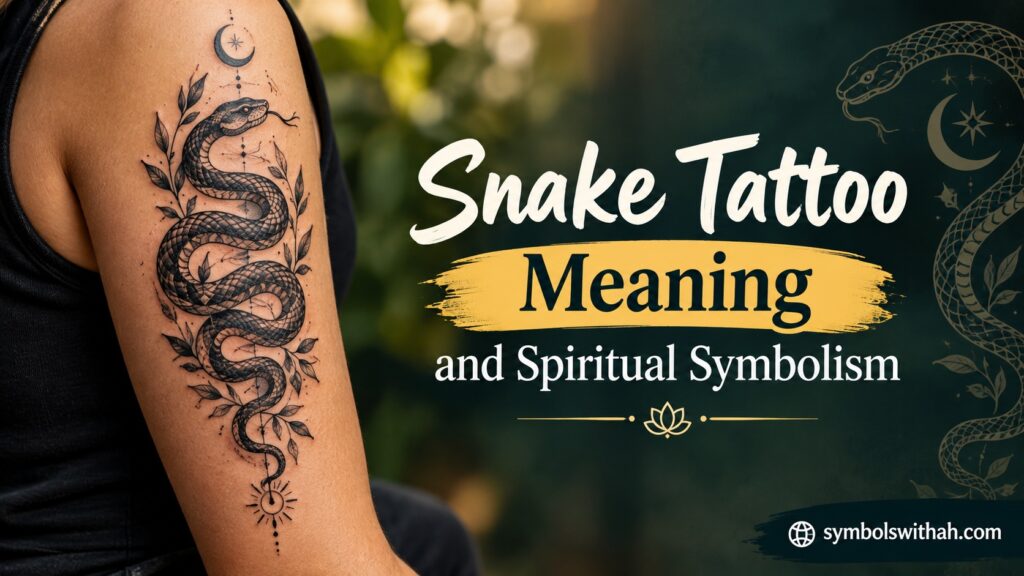

A snake tattoo can represent far more than danger or mystery. Snake Tattoo Meaning and Spiritual Symbolism often connects with personal transformation, survival, wisdom, healing, and protection. For many Americans, the design marks a turning point, a difficult chapter overcome, or a stronger sense of identity.
However, snakes carry different meanings across religions, cultures, and artistic traditions. A serpent shedding its skin can suggest renewal, while a coiled rattlesnake may communicate defiance. A snake wrapped around a staff can point toward healing, and a serpent beside a rose may suggest the balance between beauty and danger.
That range makes snake tattoos especially personal. The species, posture, colors, and accompanying symbols all shape the message. Understanding these details helps you appreciate the design without assuming every snake tattoo means the same thing.
Read More: Winter Symbolism: Meanings Around the World
Quick Answer
In the United States, snake tattoo meaning and spiritual symbolism commonly center on transformation, resilience, wisdom, protection, and personal power. Across different traditions, snakes can also represent healing, fertility, temptation, divine energy, or the repeating cycle of life and death. The tattoo’s specific meaning depends on its design, cultural background, and the wearer’s intentions.
TL;DR
- Transformation: Shedding skin suggests renewal and leaving an old chapter behind.
- Protection: A coiled or alert snake can symbolize boundaries and self-defense.
- Wisdom: Serpents appear in traditions connected with knowledge and spiritual insight.
- Healing: Ancient medical imagery links snakes with restoration and renewal.
- Spirituality: Some traditions associate serpents with sacred energy or life cycles.
- Personal identity: Modern tattoos often express survival, independence, and meaningful change.
What Does a Snake Tattoo Symbolize?
The snake is a powerful tattoo subject because it combines beauty, danger, and renewal. Its long body can curve naturally around an arm, leg, shoulder, or spine. That flexibility also allows artists to create designs ranging from tiny fine-line serpents to elaborate full-body compositions.
For American tattoo enthusiasts, a snake can communicate strength without relying on words. However, the message changes according to the snake’s posture and surrounding imagery.
Transformation and Rebirth
Snakes periodically shed their outer skin as they grow. This visible change has made them a natural symbol of renewal in many traditions.
A person might choose a snake tattoo after ending a difficult relationship, changing careers, recovering from a personal setback, or beginning a new chapter. The image represents movement rather than a fixed identity.
Power and Protection
A snake’s stillness can look calm, but its body remains ready to move. That combination makes it a fitting symbol of awareness, self-control, and defense.
A coiled serpent may represent guarded strength. A raised cobra or exposed fangs can communicate a more forceful message: respect my boundaries, and don’t mistake patience for weakness.
Wisdom and Healing
Snakes also have long associations with knowledge and medicine. Their presence in ancient healing imagery shows that people haven’t always viewed them as threatening creatures.
Today, a snake tattoo may represent learning through experience, physical or emotional recovery, or the wisdom gained from difficult circumstances.
Historical Origins of Snake Symbolism
Snake symbolism reaches far beyond modern tattoo culture. Ancient communities encountered snakes in fields, homes, temples, and wild landscapes, inspiring both reverence and fear. Over time, those experiences became part of mythology, religious imagery, jewelry, medicine, and decorative art.
Ancient Egypt and the Sacred Serpent
In ancient Egypt, the cobra became an important symbol of royal authority and protection. The rearing cobra, known as the uraeus, appeared on royal crowns and other images of power.
The serpent could represent a dangerous force controlled in defense of the ruler. This association helped establish a lasting connection between snakes, authority, and guardianship.
Egyptian imagery also included serpents connected with creation, renewal, and the world beyond death. These meanings varied by deity and setting, so no single interpretation describes every Egyptian snake image.
Ancient Greece and Healing
In ancient Greek traditions, snakes were associated with Asclepius, the god of healing. His familiar emblem showed a single serpent winding around a staff.
That image remains recognizable in medical settings today. It demonstrates how a creature feared for its venom could also represent recovery and skilled care.
Snakes also appeared in Greek religious art and mythology, where their meanings depended on the story and deity involved.
The Ouroboros and the Cycle of Life
The ouroboros depicts a serpent eating its own tail. Ancient Egyptian imagery contains early examples, and the motif later appeared in Greek and alchemical traditions.
Because the snake forms a closed circle, the design can suggest continuity, cyclical time, renewal, and the relationship between endings and beginnings.
For modern tattoo wearers, an ouroboros may represent a life cycle, a lasting bond, or the idea that change never truly stops.
Snake Tattoo Meaning in American Culture
In the United States, snake tattoos draw on several traditions at once. American tattoo culture includes bold sailor-inspired designs, religious imagery, medical symbols, nature-based artwork, and influences from international tattoo styles.
The snake’s appeal comes partly from this versatility. It can look rebellious, spiritual, elegant, dangerous, or protective without changing the animal itself.
The American Rattlesnake and Defiance
The rattlesnake has a distinctive place in American history. During the American Revolution, rattlesnake imagery became associated with colonial resistance and warnings against aggression.
The Gadsden flag, featuring a coiled rattlesnake and the words “Don’t Tread On Me,” is a well-known example. Today, the image can communicate independence, resistance, personal liberty, or a readiness to defend one’s boundaries.
However, modern interpretations differ. Some people display the rattlesnake as a historical emblem, while others use it to express contemporary political views. A rattlesnake tattoo alone doesn’t establish the wearer’s political beliefs.
Traditional American Tattoo Art
Bold outlines and limited colors help traditional American snake tattoos remain legible from a distance. Artists often combine serpents with daggers, roses, skulls, or other familiar tattoo motifs.
These combinations can create contrasting meanings. A snake with a dagger may suggest danger, courage, or betrayal, while a serpent wrapped around a rose may explore the tension between beauty and risk.
The meaning isn’t fixed by the style. Personal history and artistic choices still matter.
Spiritual Meaning of a Snake Tattoo
For some people, a snake tattoo expresses spiritual growth or a connection with forces larger than everyday life. For others, it represents personal values without any religious commitment. Both approaches can give the design deep significance.
Spiritual Awakening and Inner Change
In some Hindu traditions, kundalini describes spiritual energy symbolically associated with a coiled serpent. This concept is part of a specific religious and yogic framework, not a universal definition of snake symbolism.
A person inspired by this tradition may use a serpent tattoo to express spiritual discipline, awareness, or a journey toward deeper understanding. However, a snake tattoo by itself doesn’t automatically indicate belief in kundalini.
Protection and Personal Boundaries
Some spiritual interpretations treat the snake as a guardian or a warning against harmful influences. Its alert posture and defensive abilities support this association.
A wearer might choose the image as a personal reminder to trust their judgment, protect their peace, or remain aware of their surroundings. These are personal interpretations rather than guaranteed supernatural effects.
Death, Renewal, and Continuity
Because snakes shed their skin, they can symbolize the transition between one stage of life and another. The ouroboros takes this idea further by depicting a serpent forming a circle.
Together, these images can represent change, continuity, and acceptance of life’s repeating patterns. They may feel especially meaningful during major transitions.
Snake Tattoo Meaning Across Different Cultures
Snakes appear in many religious and cultural traditions, but their meanings aren’t interchangeable. A design inspired by one tradition may carry a very different message from a similar-looking serpent elsewhere.
| Cultural or religious context | Common association | Important distinction |
| Ancient Egyptian imagery | Royal authority, protection, divine power | Meanings vary by deity and setting. |
| Ancient Greek tradition | Healing, sacred guardianship, mythology | Not every Greek serpent symbol represents medicine. |
| Christian tradition | Temptation, danger, wisdom, or healing in different passages | Biblical serpent imagery is not uniformly negative. |
| Hindu traditions | Divine stories, sacred energy, and protection | Specific meanings depend on the deity and tradition. |
| Japanese artistic traditions | Protection, good fortune, transformation, or other story-based meanings | Motifs depend on the design and its cultural background. |
| Mesoamerican traditions | Creation, divine power, and knowledge in specific serpent figures | Feathered-serpent imagery has distinct cultural significance. |
Biblical and Christian Interpretations
In the biblical story of Eden, the serpent becomes associated with temptation and disobedience. This account strongly influenced Western images of snakes as deceptive or dangerous.
However, biblical serpent imagery isn’t limited to that story. The bronze serpent in the Book of Numbers is associated with healing, and later Christian interpretation connects it with other theological themes.
Consequently, a snake tattoo may express temptation, spiritual struggle, healing, or the tension between wisdom and danger. The design and the wearer’s beliefs determine the intended meaning.
Hindu and Buddhist Traditions
Serpent beings known as nagas appear in Hindu and Buddhist traditions, although their roles differ across stories and communities. They may be associated with water, guardianship, sacred places, or divine power.
A tattoo drawing directly from these traditions deserves careful research. Understanding the specific figure and its religious context is more respectful than treating every sacred serpent as a generic symbol of energy.
Japanese Snake Imagery
In Japanese art and tattoo traditions, snakes may be associated with protection, good fortune, transformation, and particular legends or religious figures. Their meaning depends on the composition and cultural story being referenced.
For example, a snake paired with peonies creates a different visual message from a serpent depicted in a frightening mythological scene. Anyone choosing such a design should learn what the complete composition represents.
What a Snake Tattoo Says About Your Personality
What a Snake Tattoo Says About Your Personality
A snake tattoo can communicate personal values, but it doesn’t reveal someone’s entire character. People choose designs for different reasons, from their love of reptiles to memories of personal change.
Independence and Confidence
Snakes often move alone and rely on their senses to navigate their surroundings. As a tattoo, this image may reflect independence, self-reliance, or comfort with standing apart from others.
Some wearers choose a striking serpent to express confidence. Others prefer a smaller design that carries private meaning without attracting much attention.
Resilience After Difficult Experiences
The image of a snake shedding its skin can offer a powerful metaphor for surviving change. Someone might choose it after leaving an unhealthy situation or rebuilding their life.
However, the tattoo doesn’t need to represent a painful experience. It can also mark a new ambition, growing maturity, or a decision to live differently.
Mystery and Emotional Strength
A snake’s quiet movements and watchful posture can suggest mystery. Its ability to remain still before moving also lends itself to interpretations involving patience and controlled strength.
These meanings are personal associations, not scientific personality assessments. A snake tattoo can express what the wearer values without proving anything about their behavior.
Snake Tattoo Colors and Their Meanings
Color can change the mood of a snake tattoo dramatically. Although there are no universal rules, certain colors carry familiar associations in American visual culture.
Black Snake Tattoo Meaning
A black snake tattoo often creates a bold, dramatic appearance. It may suggest mystery, strength, protection, or a serious approach to personal change.
Blackwork designs also emphasize the serpent’s shape and movement. They can look striking without relying on bright colors or elaborate background details.
Green Snake Tattoo Meaning
Green commonly evokes nature, growth, renewal, and vitality in contemporary American imagery. A green serpent may therefore emphasize transformation or a connection with the natural world.
However, green snakes also appear in traditional art and fantasy-inspired designs. The color alone doesn’t establish a spiritual meaning.
Red Snake Tattoo Meaning
Red often suggests passion, energy, danger, or intensity. A red serpent can create a more confrontational appearance than a muted gray or green design.
When paired with a rose, red may highlight romance and desire. With a dagger, it may reinforce a dramatic sense of conflict or danger.
White Snake Tattoo Meaning
A white snake can suggest clarity, rarity, mystery, or spiritual significance. In some East Asian traditions, white snakes have particular folkloric or religious associations.
However, those meanings shouldn’t be applied automatically to every white serpent tattoo. The design’s cultural inspiration and the wearer’s intentions remain important.
Popular Snake Tattoo Designs and Their Symbolism
The snake’s shape makes it easy to combine with other images. These pairings can add layers of meaning, although their interpretations remain flexible.
Snake and Rose Tattoo
A snake wrapped around a rose brings together beauty and danger. The rose may suggest love, affection, or growth, while the serpent introduces caution, strength, or mystery.
Some people choose this design to represent love with boundaries. Others simply appreciate the contrast between delicate petals and the snake’s flowing body.
Snake and Dagger Tattoo
A serpent wrapped around a dagger often creates a bold, confrontational design. It may suggest courage, conflict, danger, or the need to protect oneself.
In some designs, the dagger dominates and gives the image a martial appearance. In others, the snake’s movement softens the weapon’s rigid shape.
Snake and Skull Tattoo
The skull often represents mortality, remembrance, or the passage of time. Combined with a snake, it can explore themes of death, renewal, danger, or life’s temporary nature.
This pairing doesn’t necessarily express negativity. For some wearers, it serves as a reminder to value the present.
Ouroboros Tattoo
An ouroboros shows a serpent eating its own tail, forming a circle. The design often represents cycles, continuity, renewal, and the connection between endings and beginnings.
Its compact shape works well on wrists, forearms, shoulders, and other locations. Some people also choose it to symbolize a lifelong commitment to growth.
Snake Tattoo Placement and Personal Meaning
Placement affects a tattoo’s appearance, visibility, and relationship with the body. It doesn’t have a universal spiritual meaning, but it can influence how the design feels to its wearer.
Snake Tattoo on the Arm
Arms provide space for curved, flowing designs. A snake can wind around the forearm or upper arm, creating movement as the wearer moves.
This placement works for both bold traditional artwork and detailed realistic designs. It also makes the tattoo relatively easy to display or cover with clothing.
Snake Tattoo on the Hand or Finger
Small snake tattoos on fingers and hands can look delicate or striking. The narrow shape of the fingers suits a serpent’s long, winding body.
However, hand and finger tattoos are highly visible. They may also require more frequent touch-ups because these areas experience regular friction and washing.
Snake Tattoo on the Spine or Leg
A long serpent can follow the natural lines of the spine, calf, or thigh. These placements suit designs that emphasize the snake’s length and movement.
A larger area also gives the artist room for scales, shading, flowers, or other decorative elements. The best placement depends on the desired size and level of detail.
Misunderstandings and Controversies Around Snake Tattoos
Snake tattoos sometimes attract strong reactions because the animal carries contradictory meanings. Some people see a serpent as dangerous or evil, while others associate it with healing, wisdom, and protection.
Neither interpretation applies universally.
Does a Snake Tattoo Always Represent Evil?
No. The association between snakes and evil is especially familiar in some Western religious and cultural settings, including interpretations of the Eden story.
Other traditions give serpents sacred, protective, or healing roles. A snake tattoo should therefore be interpreted through its specific imagery rather than a single religious assumption.
Are Snake Tattoos a Sign of Betrayal?
A snake can symbolize deception in some stories and visual traditions. However, a tattoo doesn’t automatically indicate dishonesty, revenge, or harmful intentions.
The wearer might be expressing resilience, a fascination with reptiles, or a personal connection to transformation. Assuming bad character from the image alone oversimplifies its meaning.
Cultural Respect and Tattoo Choices
Some snake designs reference specific sacred figures, traditional art forms, or cultural histories. Before choosing one, learn about its origins and the significance of its accompanying symbols.
This matters particularly when a design includes recognizable religious figures, traditional motifs, or ceremonial imagery. Respectful research helps prevent meaningful cultural symbols from becoming misunderstood decorations.
How Snake Tattoo Meanings Have Changed Over Time
Snake symbolism has never followed a single path. Ancient communities connected serpents with different gods, healing practices, dangers, and stories. Later religious art strengthened some negative Western associations, while medical emblems preserved the snake’s connection with healing.
In modern American tattoo culture, these histories overlap with personal storytelling and artistic experimentation.
From Religious Symbol to Personal Expression
Earlier snake images often belonged to specific myths, religious traditions, or systems of authority. Their meanings were shaped by the communities that created and used them.
Today, a wearer might combine several visual influences or choose a snake simply because its shape appeals to them. Personal meaning now plays a major role alongside inherited symbolism.
Why Snake Tattoos Remain Meaningful
The snake’s physical characteristics continue to inspire interpretation. Its shedding skin suggests change, its venom can evoke danger, and its defensive posture can communicate protection.
These observable traits help explain why similar themes appear across otherwise different traditions. Still, shared imagery doesn’t mean every culture understands snakes in the same way.
Frequently Asked Questions About Snake Tattoo Meaning
What does a snake tattoo mean spiritually?
A snake tattoo may represent transformation, wisdom, protection, healing, or spiritual growth. Its meaning depends on the tradition inspiring the design and the personal beliefs of the wearer.
Is a snake tattoo good luck or bad luck?
There is no universal answer. Some traditions associate snakes with protection, prosperity, or renewal, while others emphasize danger or temptation. The design’s cultural context matters more than a blanket label.
What does a snake tattoo mean for a woman?
A woman may choose a snake tattoo to express independence, confidence, transformation, mystery, or personal strength. These meanings aren’t limited to women, and no single interpretation applies to every wearer.
What does a snake tattoo with a rose mean?
A snake and rose often bring together beauty and danger, love and caution, or softness and strength. The wearer may also choose the pairing for its visual contrast rather than a specific symbolic message.
What does a snake tattoo mean in the Bible?
In the story of Eden, the serpent is associated with temptation and disobedience. However, other biblical passages use serpent imagery differently, including the bronze serpent connected with healing in Numbers 21.
Does a snake tattoo symbolize transformation?
Yes, transformation is one of its common modern interpretations. Because snakes shed their skin, people often use the image to mark personal growth, a fresh start, or a major life transition.
Conclusion
Snake tattoo meaning and spiritual symbolism can encompass transformation, resilience, wisdom, healing, protection, and personal power. Its historical roots reach across ancient mythology, religious imagery, medicine, and traditional tattoo art. In the United States, snake tattoos can also express independence, defiance, and personal reinvention.
However, no single meaning fits every serpent design. The colors, posture, accompanying symbols, cultural influences, and wearer’s intentions all shape the message. A snake beside a rose may feel romantic and mysterious, while a coiled rattlesnake may communicate vigilance and resistance.
If you’re considering a snake tattoo, start with the meaning that feels most personal to you. Then explore the design’s cultural background and choose imagery that reflects your story with care.