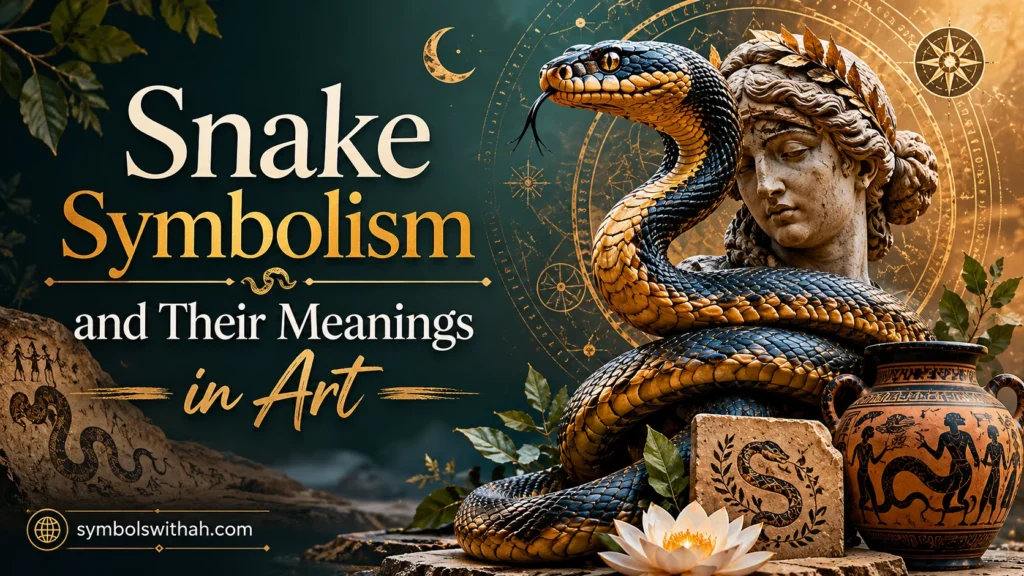

Snakes have appeared in art for thousands of years. From ancient carvings to modern tattoos, they carry meanings that shift with culture and time. Today, many people in the United States explore Snake Symbolism and Their meanings in the Art to understand deeper ideas about life, change, and identity.
At first glance, a snake might seem simple. However, its curved body, shedding skin, and quiet movement give it powerful symbolic weight. Artists have used snakes to express both fear and wisdom, danger and healing.
Because of this dual nature, snake symbolism remains one of the most complex visual ideas in art. Let’s explore how it developed and what it means today.
Read More: Eye Twitching Spiritual Meaning and Symbolic Insights
Quick Answer
Snake Symbolism and Their meanings in the Art often represent transformation, rebirth, and hidden power in the United States, while also reflecting danger, temptation, and healing across cultures.
TL;DR
• Snakes often symbolize transformation and renewal
• In the U.S., they also represent independence and caution
• Ancient cultures linked snakes to life, death, and healing
• Modern art uses snakes for identity and personal meaning
• Meanings can be both positive and negative
What Is Snake Symbolism in Art?
Snake imagery appears in many forms of art, from paintings to sculptures. Understanding its visual traits helps explain its meaning.
How Snakes Appear in Art
Snakes are often shown in specific ways that shape interpretation:
• Coiled snakes suggest potential energy or hidden power
• Shedding skin represents renewal and rebirth
• Open mouths or fangs signal danger or warning
• Intertwined snakes hint at balance or dual forces
• Circular snakes (biting tail) symbolize eternity
These visual details guide how viewers interpret the message behind the artwork.
Historical Origins of Snake Symbolism
Snake symbolism didn’t start in modern times. It has deep roots in ancient civilizations.
Ancient and Pre-Christian Roots
Snakes were important symbols long before modern religions:
• In ancient Egypt, snakes protected royalty and sacred spaces
• Greek traditions linked snakes to healing and medicine
• Early Mesopotamian art showed snakes as life-giving forces
• Many Indigenous cultures viewed snakes as earth-connected beings
Over time, these meanings blended and evolved. Some stayed positive, while others shifted toward fear.
Snake Symbolism in American Culture
In the United States, snake symbolism took on unique meanings shaped by history and media.
National and Cultural Associations
Snakes appear in key American symbols and ideas:
• The “Don’t Tread on Me” snake stands for independence
• Snakes can represent caution or hidden threats
• In Western films, snakes often symbolize danger in nature
• In modern art, they reflect personal transformation
Because of this, Americans often see snakes as both warning signs and symbols of strength.
Cross-Cultural and Spiritual Meanings
Snake symbolism varies widely across cultures, but common themes connect them.
Shared Global Interpretations
Across different traditions, snakes often mean:
• Transformation due to shedding skin
• Wisdom and hidden knowledge
• Life cycles, including death and rebirth
• Protection or guardianship in sacred spaces
Although meanings differ, the idea of change is almost always present.
Emotional and Psychological Associations
Snakes trigger strong emotions. This makes them powerful artistic symbols.
What Snakes Represent Emotionally
People often associate snakes with:
• Fear of the unknown or hidden danger
• Personal growth and change
• Inner strength and survival instincts
• Mystery and secrecy
Because emotions vary, snake imagery can feel either empowering or unsettling.
Snake Symbolism in Modern Art and Design
Today, snake symbolism is everywhere—from galleries to social media.
Common Modern Uses
Snakes appear in many creative spaces:
• Tattoos representing personal transformation
• Fashion designs symbolizing bold identity
• Home decor with nature-inspired themes
• Digital art exploring duality and balance
Modern artists often use snakes to express individuality rather than tradition alone.
Snake Symbolism in Tattoos
Snake tattoos are especially popular in the United States.
Why People Choose Snake Tattoos
These tattoos often carry personal meaning:
• A fresh start after a major life change
• Strength gained from hardship
• Protection against negativity
• Connection to nature or instinct
Each design tells a different story depending on the person.
Positive and Negative Meanings of Snakes
Snake symbolism is not one-sided. It includes both light and dark meanings.
Dual Interpretations
Snakes can represent:
• Healing and renewal
• Danger and betrayal
• Wisdom and insight
• Temptation and moral conflict
This duality is what makes snake symbolism so enduring in art.
Snake Symbolism Table (USA Context)
| Context | Meaning in the USA | Common Associations | Notes |
| Politics | Independence, resistance | Gadsden flag | Revolutionary roots |
| Tattoos | Transformation, resilience | Personal growth | Highly individualized meaning |
| Pop Culture | Danger, suspense | Movies, thrillers | Often exaggerated |
| Spiritual Art | Renewal, life cycles | Energy, rebirth | Influenced by global ideas |
| Fashion & Design | Boldness, mystery | Patterns, accessories | Trend-driven symbolism |
Misunderstandings and Controversies
Snake symbolism can be misunderstood, especially when removed from context.
Common Misinterpretations
Some issues include:
• Assuming all snake symbols are negative
• Ignoring cultural origins of certain designs
• Using sacred symbols without understanding meaning
• Overgeneralizing religious interpretations
Because meanings vary, context always matters.
How Snake Symbolism Has Changed Over Time
Snake symbolism hasn’t stayed the same. It evolves with society.
Shifts in Meaning
Over the centuries:
• Ancient positive meanings mixed with fear-based views
• Religious influences added moral interpretations
• Modern culture emphasizes personal meaning
• Social media spreads new symbolic trends quickly
Today, people often choose meanings that reflect their own experiences.
Snake Symbolism in Spiritual Contexts
Many people connect snakes to spiritual ideas, even in modern America.
Spiritual Interpretations
Snakes are often linked to:
• Energy flow and awakening
• Transformation of the self
• Balance between opposing forces
• Cycles of life and renewal
These ideas often come from a mix of global traditions.
Why Snake Symbolism Still Matters Today
Despite its ancient roots, snake symbolism remains relevant.
Modern Relevance
Snakes continue to resonate because they:
• Represent change in a fast-moving world
• Reflect personal identity and growth
• Connect people to nature and instinct
• Offer layered meanings in simple forms
This makes them powerful symbols in both art and daily life.
FAQs
What does a snake symbolize in art?
In art, snakes often symbolize transformation, rebirth, and hidden power. They can also represent danger or temptation depending on context.
Is snake symbolism positive or negative?
It can be both. Snakes represent healing and renewal, but also fear and warning.
Why are snakes linked to transformation?
Because snakes shed their skin, they naturally symbolize renewal and change.
What does a snake tattoo usually mean?
It often represents personal growth, resilience, or a major life transition.
Are snake symbols religious?
Some are. Snakes appear in many spiritual traditions, but meanings vary widely.
Why do Americans use snake imagery?
In the U.S., snakes often symbolize independence, caution, and strength.
Conclusion
Snake symbolism has traveled a long path through history. From ancient art to modern design, it carries meanings that are both powerful and flexible. In the United States, it reflects independence, transformation, and personal identity.
At the same time, its deeper roots remind us of life’s cycles and hidden forces. That’s why Snake Symbolism and Their meanings in the Art continue to inspire artists and audiences alike.
As you encounter snake imagery, consider what it might mean for you. Often, the most important interpretation is the one you bring to it.