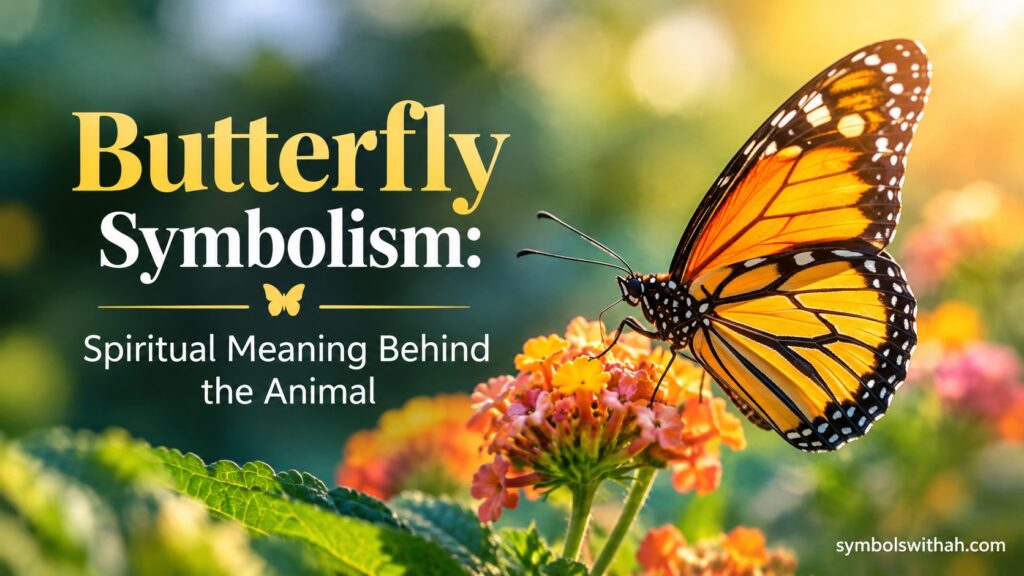

Butterfly symbolism has fascinated people because the animal seems to embody change itself. A crawling caterpillar enters a chrysalis, then emerges with wings, creating a natural image of renewal, freedom, and transformation.
In the United States, butterflies often appear in gardens, tattoos, jewelry, artwork, memorials, and spiritual conversations. The monarch carries an especially strong American association because its remarkable migration connects landscapes across the country with Mexico and Canada. The U.S. Fish and Wildlife Service describes monarchs as one of North America’s most recognizable butterflies.
However, butterfly meaning isn’t limited to one spiritual tradition. Ancient Greek ideas connected butterflies with the soul, while East Asian art associated them with themes such as spring, longevity, happiness, and transformation. These older interpretations still influence how people understand butterflies today.
Read More: Vulture Spiritual Meaning and Symbolism: A Deeper Guide
Quick Answer
Butterfly symbolism: spiritual meaning behind the animal usually centers on transformation, rebirth, freedom, hope, and personal growth. In the United States, butterflies also symbolize resilience, remembrance, seasonal change, and the beauty of life’s transitions.
TL;DR
- Butterflies commonly symbolize transformation and personal growth.
- Their metamorphosis makes them powerful images of renewal.
- Ancient Greek traditions connected butterflies with the human soul.
- Monarchs hold special cultural meaning across North America.
- Butterfly tattoos often represent freedom, healing, or a new chapter.
- Modern spiritual interpretations are personal rather than universal facts.
Butterfly Symbolism at a Glance
Before exploring history and spirituality, it helps to understand the butterfly’s basic symbolic language. Its meaning often comes from what people observe in nature rather than from one fixed religious doctrine.
A butterfly begins life in a completely different form. It then passes through dramatic physical changes before becoming a winged adult. That visible transformation naturally invites comparisons with human growth.
Common Butterfly Meanings
People commonly associate butterflies with:
- Transformation — becoming something different through life’s changes.
- Freedom — moving lightly and independently through the world.
- Renewal — beginning again after a difficult period.
- Hope — finding beauty after uncertainty or hardship.
- Growth — developing emotionally, spiritually, or personally.
- Rebirth — leaving an older identity behind.
- Joy — appreciating beauty, movement, and the present moment.
These meanings aren’t universal rules. Instead, they are recurring interpretations shaped by culture, art, religion, psychology, and personal experience.
Why the Butterfly Feels So Symbolic
Few animals display such an obvious life-stage transformation.
The monarch, for example, develops from an egg into a caterpillar, then enters the chrysalis stage before emerging as an adult butterfly. Adult monarchs typically have wingspans of about three to four inches.
That biological process gives the butterfly an unusually powerful visual metaphor. Something can change dramatically without losing its connection to what came before.
What Does a Butterfly Symbolize in the United States?
In American culture, butterflies often represent change, beauty, freedom, nature, and remembrance. Their presence in gardens and public spaces also connects symbolism with everyday experiences.
The monarch has an especially strong place in the American imagination. Its orange-and-black wings, long migration, and dependence on native milkweed have made it both a beloved animal and a conservation symbol.
The Butterfly as a Symbol of Freedom
Butterflies move through the air with an apparent lightness that humans often associate with freedom.
That association appears in American art, jewelry, clothing, tattoos, and personal decoration. A butterfly can suggest independence without looking aggressive or confrontational.
For many people, it represents the ability to move forward after feeling restricted.
The Butterfly as a Symbol of Summer
Butterflies also mark seasonal change.
When butterflies become active in gardens, many Americans associate them with:
- Warm weather and blooming gardens.
- Childhood memories of catching insects.
- Outdoor exploration and nature.
- Renewal after winter.
- Pollinator-friendly landscapes.
- The arrival of spring and summer.
The monarch strengthens this seasonal symbolism because its migration creates a visible rhythm across North America.
The Butterfly as a Symbol of Remembrance
Butterflies sometimes appear on memorial jewelry, funeral arrangements, artwork, and remembrance tattoos.
This association comes partly from the creature’s transformation. Someone grieving may find comfort in the idea of life changing rather than simply disappearing.
However, this is a personal symbolic interpretation. It should not be presented as proof of an afterlife or a supernatural message.
Ancient Butterfly Symbolism and Historical Roots
Butterfly symbolism is far older than modern spiritual culture. Ancient writers and artists noticed the striking connection between butterflies and ideas about the soul.
One of the clearest historical examples comes from ancient Greek language and mythology.
Psyche and the Butterfly
The Greek word psyche could refer to the soul or mind, and Psyche became the name of a mythological figure associated with the soul.
Butterflies became connected with Psyche in Greek and later European artistic traditions. The Metropolitan Museum of Art specifically identifies butterflies as symbols of Psyche in works connected with Cupid and the soul.
This connection helped establish one of the butterfly’s most enduring symbolic ideas:
The butterfly can represent the soul moving from one state into another.
Later European artists repeatedly used butterfly wings when depicting Psyche. This made the insect an artistic shorthand for spiritual identity, inner life, and transformation.
Transformation Before Modern Spirituality
Ancient people did not understand insect metamorphosis exactly as modern biology does.
Still, they could observe the remarkable sequence of caterpillar, chrysalis, and butterfly. The transformation appeared mysterious and almost otherworldly.
That visual mystery helped make the butterfly a natural symbol for:
- The soul.
- Renewal.
- Hidden potential.
- Death and rebirth.
- Spiritual change.
- The mystery of existence.
Modern readers can appreciate these historical meanings without treating ancient interpretations as scientific explanations.
Spiritual Meaning of a Butterfly
For many modern readers, the butterfly carries a gentle spiritual message about change without destruction.
The creature doesn’t simply disappear and return. Instead, its entire body develops through distinct stages. That makes it a useful metaphor for periods when a person’s identity, priorities, or circumstances are changing.
Butterfly as a Sign of Transformation
Seeing a butterfly may feel meaningful during a major life transition.
People often connect butterflies with:
- Starting a new career.
- Leaving an unhealthy situation.
- Beginning a relationship.
- Recovering from emotional hardship.
- Moving to a new place.
- Entering a new stage of adulthood.
The symbolism becomes especially powerful when the butterfly mirrors something already happening in someone’s life.
Butterfly as a Sign of Hope
A butterfly can also represent hope after a difficult season.
The chrysalis is particularly evocative because the outside world cannot see the transformation happening within it. Symbolically, that can resemble periods when growth is happening quietly.
However, spiritual symbolism should remain personal. A butterfly appearing near you isn’t scientifically established as a supernatural sign.
Butterfly as a Reminder to Change
Sometimes the symbolism is less about predicting change and more about accepting it.
A butterfly doesn’t remain a caterpillar simply because its earlier form was familiar. Its life depends on transformation.
That makes the butterfly a useful symbol for releasing outdated habits, identities, or expectations.
Butterfly Metamorphosis and the Meaning of Rebirth
The butterfly’s life cycle is arguably its strongest symbolic feature.
The transformation is real biology, yet humans naturally give it metaphorical meaning. That distinction matters because the biological process doesn’t prove spiritual rebirth.
From Caterpillar to Butterfly
A simplified life cycle looks like this:
Egg → Caterpillar → Chrysalis → Adult Butterfly
Each stage has a different appearance and purpose.
The caterpillar focuses heavily on feeding and growth. The chrysalis represents a hidden developmental stage. The adult emerges with wings and reproductive capabilities.
The dramatic visual contrast explains why metamorphosis has become such a familiar metaphor for human transformation.
Why the Chrysalis Matters Symbolically
The chrysalis often represents the in-between stage.
You aren’t who you were, but you haven’t yet become who you’re going to be.
That makes it a useful symbol for uncertainty, patience, and quiet development.
A person experiencing a major transition may identify strongly with this stage because outward progress isn’t always visible.
Butterfly Colors and Their Symbolic Meanings
Color changes the emotional impression of a butterfly symbol.
There isn’t one universal spiritual dictionary for butterfly colors. However, certain associations appear repeatedly in American spiritual culture, art, fashion, and popular symbolism.
| Butterfly Color | Common Symbolic Association | Modern Interpretation |
| White | Peace, innocence, spiritual renewal | Calmness and fresh beginnings |
| Black | Mystery, endings, change | Transformation and reflection |
| Blue | Peace, communication, intuition | Emotional calm and inner awareness |
| Yellow | Joy, optimism, energy | Happiness and renewed confidence |
| Orange | Creativity, warmth, vitality | Motivation and personal energy |
| Red | Passion, courage, intensity | Strong emotion and determination |
| Purple | Spirituality, imagination, mystery | Inner growth and intuition |
| Pink | Love, tenderness, compassion | Emotional healing and affection |
Why Color Changes the Message
A white butterfly can feel peaceful because white often carries associations with purity and calm.
Meanwhile, a black butterfly can feel mysterious because darker colors frequently suggest the unknown or hidden aspects of life.
These meanings are symbolic associations, not fixed rules. Cultural background and personal experience can change the interpretation.
Butterfly Symbolism Across Cultures
Butterfly meanings become even richer when viewed across different cultures.
However, traditions shouldn’t be blended together as though they all teach the same thing. Similar symbols can emerge independently and still carry distinct meanings.
Japan and East Asian Traditions
Butterflies have a long history in Japanese visual culture.
The Metropolitan Museum notes that butterflies in Japanese art can represent longevity and springtime. Butterfly motifs appear on textiles, lacquerware, paintings, and ceremonial objects.
Japanese wedding imagery also gives butterflies an auspicious role. Paired butterflies can represent a married couple, while the butterfly motif can carry associations with a long and happy marriage.
China and the Butterfly Dream
Chinese philosophical tradition contains one of the most famous butterfly stories.
In the Zhuangzi, the philosopher Zhuang Zhou dreams that he is a butterfly. After waking, he wonders whether he dreamed of being a butterfly or whether a butterfly dreamed of being Zhuang Zhou.
The story raises questions about identity, perception, and the boundaries between waking experience and dreams.
So the butterfly can symbolize more than transformation. It can also evoke uncertainty about identity and reality.
Indigenous Mexico and the Monarch
Monarch butterflies hold important cultural meaning in parts of Mexico.
The Smithsonian’s National Museum of the American Indian has highlighted longstanding Indigenous Mexican symbolism surrounding monarchs and their seasonal return.
In some communities, monarch migration has become associated with the return of deceased loved ones around Día de los Muertos. That interpretation belongs to particular cultural traditions and shouldn’t be generalized to every Mexican person or Indigenous community.
The symbolism is especially powerful because the butterflies actually return seasonally.
Butterfly Symbolism, Grief, and Remembrance
Few symbols combine fragility and resilience as naturally as the butterfly.
That combination explains its popularity in grief-related art and memorial objects.
Why Butterflies Appear in Memorials
Butterfly imagery can express several ideas at once:
- Life continues through profound change.
- Memories remain after physical separation.
- Beauty can exist alongside grief.
- A person’s influence may continue.
- Love can survive difficult transitions.
- Nature can provide moments of comfort.
A butterfly tattoo may therefore commemorate someone who died without literally representing death.
A Gentle Symbol of Continuing Memory
The butterfly’s movement can also suggest a memory that returns unexpectedly.
Someone might see a butterfly in a garden and remember a parent, child, partner, friend, or another loved one.
That experience can be meaningful without requiring a supernatural explanation.
The symbol works because humans naturally connect memories with places, seasons, objects, colors, and sensory experiences.
Psychological Meaning of Butterfly Symbolism
Butterflies can carry strong psychological associations because their form visually represents change.
People often use symbols to give abstract experiences a concrete image. The butterfly makes an invisible process easier to imagine.
Butterfly as an Identity Symbol
Someone drawn to butterfly imagery may connect with ideas such as:
- Personal reinvention.
- Independence.
- Emotional recovery.
- Creativity.
- Self-expression.
- Freedom from old expectations.
- Confidence after adversity.
However, a butterfly tattoo or necklace doesn’t automatically reveal someone’s personality.
Symbolic interpretation should describe possibilities rather than label people.
Why Transformation Feels Powerful
Human identity isn’t completely static.
People change through relationships, education, work, loss, travel, aging, and difficult experiences. The butterfly offers a simple visual language for those complicated transitions.
Its appeal often comes from this tension:
The butterfly is delicate, yet its entire existence depends on dramatic change.
That makes it a surprisingly strong symbol.
Butterfly Tattoos and Modern Identity
Butterfly tattoos remain popular because the image is visually adaptable and symbolically flexible.
A tattoo can represent transformation without needing a long explanation.
Common Butterfly Tattoo Meanings
People may choose butterfly tattoos to symbolize:
- A major personal transformation.
- Recovery from a difficult chapter.
- Freedom after restriction.
- A new beginning.
- A loved one’s memory.
- Feminine beauty or self-expression.
- Spiritual growth.
- Acceptance of change.
The design itself can add another layer.
A butterfly paired with flowers may emphasize growth and beauty. A butterfly emerging from darker imagery may emphasize survival and renewal.
Placement Can Change the Feeling
The location can influence how a tattoo is perceived.
A small butterfly on the wrist may feel delicate and personal. A large back piece can appear more dramatic and expressive.
Wing position also matters. Open wings often suggest freedom, while a resting butterfly can feel quieter and more contemplative.
Butterflies in Home Decor, Fashion, and Social Media
Today, butterfly symbolism extends far beyond spiritual writing.
The image appears frequently in American fashion, jewelry, artwork, stationery, bedroom decor, gardens, and digital graphics.
Butterfly Decor
Butterfly motifs can create a feeling of:
- Lightness.
- Spring.
- Natural beauty.
- Youthfulness.
- Movement.
- Renewal.
In home decor, realistic butterfly images tend to feel nature-focused. Stylized or glittering designs may feel more whimsical.
Butterflies on Social Media
Butterflies have also become a visual shorthand for transformation online.
People may use butterfly imagery when discussing:
- Personal growth.
- New chapters.
- Healing journeys.
- Style changes.
- Confidence.
- Major life transitions.
However, social media can flatten complicated cultural symbols into aesthetic trends.
A butterfly image may be meaningful to one person and simply decorative to another.
Butterfly Symbolism, Nature, and Conservation
Modern butterfly meaning increasingly includes something practical: environmental awareness.
This is particularly true of the monarch in the United States.
The U.S. Fish and Wildlife Service reported on September 21, 2026, that monarch populations have declined and that the agency had proposed threatened-species protection. The agency also stated that no final ruling had yet taken effect.
Why the Monarch Matters Symbolically
The monarch’s migration turns it into a symbol of connection.
Eastern monarchs can travel up to about 3,000 miles between breeding areas and wintering grounds.
They cross borders, ecosystems, and seasons during their annual cycle.
That makes the monarch a compelling symbol of:
- Migration.
- Connection.
- Endurance.
- Seasonal rhythm.
- Interdependence.
- Environmental responsibility.
The conservation story adds a modern dimension to butterfly symbolism. Beauty isn’t only something to admire; it can also encourage people to protect the habitat that makes that beauty possible.
Misunderstandings and Misuse of Butterfly Symbolism
Butterfly symbolism is usually positive, but some interpretations become misleading when presented as universal truth.
A Butterfly Isn’t Automatically a Spiritual Message
Seeing a butterfly can feel personally meaningful.
However, there is no scientific method for proving that an ordinary butterfly sighting is a supernatural message from a deceased person, angel, spirit, or higher power.
It is perfectly reasonable to hold a personal spiritual interpretation while recognizing the difference between belief and evidence.
Not Every Butterfly Has the Same Meaning
A monarch, swallowtail, painted lady, and blue butterfly don’t carry identical cultural histories.
Likewise, a white butterfly doesn’t have one fixed meaning across every religion or culture.
Meaning depends on:
- Species.
- Color.
- Cultural setting.
- Historical period.
- Personal experience.
- Religious tradition.
- Artistic context.
Avoid Mixing Traditions Carelessly
A common modern habit is combining Greek mythology, Indigenous traditions, Christianity, Buddhism, and contemporary spirituality into one universal “butterfly meaning.”
That can erase important differences.
A more respectful approach is to describe each tradition on its own terms.
How Butterfly Meanings Have Changed Over Time
The butterfly has accumulated meanings rather than replacing one meaning with another.
Ancient Greek associations with the soul helped establish a spiritual interpretation. European art later expanded the connection through images of Psyche. East Asian traditions developed their own associations involving spring, longevity, dreams, happiness, and marriage.
In modern America, the butterfly became increasingly associated with personal transformation and self-expression.
Tattoos, memorial art, jewelry, fashion, and social media have all broadened its symbolic vocabulary.
A Symbol With Many Layers
Today, one butterfly can simultaneously suggest:
Nature → Change → Freedom → Memory → Hope → Identity
That layered quality is one reason the symbol remains so durable.
It can mean something deeply personal without needing a single official definition.
FAQs About Butterfly Symbolism
What does a butterfly symbolize spiritually?
A butterfly commonly symbolizes transformation, renewal, freedom, growth, and hope. Spiritual interpretations vary, so these meanings are best understood as symbolic traditions rather than universal facts.
What does seeing a butterfly mean spiritually?
Some people interpret a butterfly sighting as a reminder of change, hope, or a new beginning. Others simply appreciate the encounter as a beautiful moment in nature.
What does a butterfly symbolize after someone dies?
Butterflies are sometimes used as symbols of remembrance, continuing love, and transformation after death. In some Mexican traditions, monarch butterflies have associations with the return of deceased loved ones around Día de los Muertos.
What does a butterfly tattoo symbolize?
A butterfly tattoo can represent transformation, freedom, healing, personal growth, or remembrance. The species, colors, surrounding imagery, and tattoo placement can make the meaning more specific.
What does a white butterfly symbolize?
White butterflies are often associated with peace, innocence, purity, and renewal. However, white butterfly meanings differ across cultures and personal spiritual traditions.
What does a black butterfly symbolize?
Black butterflies may symbolize mystery, endings, transition, or profound change. They don’t automatically represent death or bad luck.
Why are butterflies associated with transformation?
Their metamorphosis provides a visible example of dramatic biological change. Because the transformation is so striking, people have used butterflies as metaphors for personal and spiritual change for centuries.
Conclusion
Butterfly symbolism: spiritual meaning behind the animal is rooted in one powerful observation: life can change form without losing its deeper continuity. From ancient ideas about the soul to modern American tattoos and memorial art, butterflies continue to represent transformation, freedom, hope, and renewal.
In the United States, the monarch adds another meaningful layer. Its extraordinary migration connects people, landscapes, seasons, and conservation efforts across North America.
Ultimately, a butterfly can mean something different to every person who encounters it. Whether it represents a fresh beginning, a cherished memory, or simply the beauty of nature, its symbolism invites one gentle idea: change can be part of becoming, not the end of who you were.