
Have you ever received a text that simply said “idk” and wondered what the person really meant? You might see this abbreviation in text messages, social media comments, group chats, and online conversations. Although it looks simple, its meaning can change slightly depending on the situation, the conversation, and the person using it.
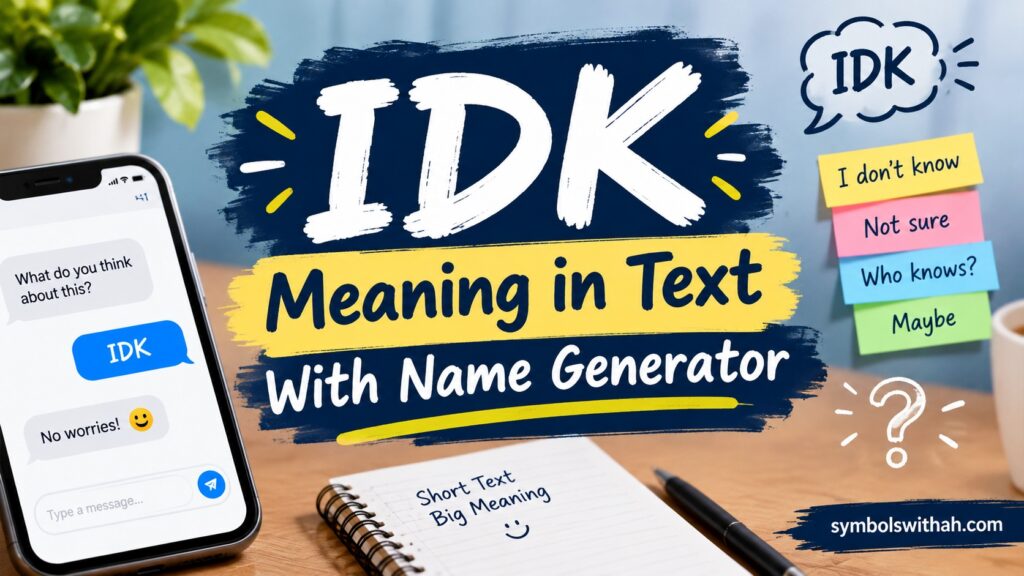
The IDK meaning in text is straightforward: it stands for “I don’t know.” People use it when they lack an answer, feel unsure, or don’t have enough information to respond confidently. Sometimes, it communicates genuine confusion. In other situations, it can sound casual, hesitant, uninterested, or even a little dismissive.
Understanding IDK can help you interpret messages more accurately and avoid unnecessary misunderstandings. Whether a friend sends it on Snapchat, someone uses it in an Instagram comment, or a person you’re dating replies with “idk,” the surrounding conversation usually provides the best clues.
Read More: OP Meaning in Text: What Does OP Mean in Chat?
Quick Answer: What Does IDK Mean in Text?
IDK means “I don’t know.” It is a common abbreviation used in texting, online chats, and social media to express uncertainty or a lack of knowledge.
For example:
- Friend: “What time are we meeting?”
- You: “IDK yet. I’ll ask everyone.”
- Meaning: You don’t know the meeting time yet.
IDK is informal and generally neutral. It isn’t automatically rude, angry, or dismissive. The person’s tone, the topic, and what they say before or after it help determine the intended meaning.
IDK Meaning in Text: TL;DR
- Full form: I don’t know.
- Main meaning: Uncertainty, lack of information, or an unknown answer.
- Where it’s used: Text messages, social media, gaming chats, and online conversations.
- Tone: Usually casual, but it can sound dry or dismissive in some situations.
- Similar abbreviations: IDC means “I don’t care,” while IDEK means “I don’t even know.”
- Best response: Ask a follow-up question, offer options, or give the person time to answer.
What Does IDK Mean in Texting and Everyday Conversations?
IDK is a short form of “I don’t know.” People use it when they don’t have an answer, haven’t made a decision, or aren’t completely sure what they think.
The abbreviation saves time and makes a message feel more conversational. The Cambridge English Dictionary defines IDK as an abbreviation for “I don’t know” used on social media and in text messages.
definition in the Cambridge English Dictionary
+1
Each letter represents part of the original phrase:
- I = I
- D = Don’t
- K = Know
Here are a few everyday examples:
| Text message | What it means |
| “IDK where he went.” | I don’t know where he went. |
| “IDK what to wear.” | I’m unsure what to wear. |
| “IDK yet.” | I haven’t decided yet. |
| “IDK, maybe tomorrow.” | I’m not sure, but tomorrow is possible. |
| “IDK why that happened.” | I don’t understand why it happened. |
Notice that IDK doesn’t always mean the sender knows absolutely nothing. Someone might understand most of a situation but still feel uncertain about one detail.
For example, a friend might say, “IDK if I’ll make it tonight.” They aren’t necessarily refusing your invitation. They may simply need more time to decide.
What Does IDK Mean in Slang?
As texting slang, IDK means “I don’t know,” but it can also communicate hesitation, confusion, or uncertainty.
Unlike some internet expressions that have developed several unrelated definitions, IDK usually keeps the same basic meaning. Its conversational purpose changes depending on how someone uses it.
Consider these common situations.
Expressing a Lack of Knowledge
Someone may use IDK because they genuinely don’t have the information.
Example:
- Person A: “What page is the homework on?”
- Person B: “IDK. I missed the last class.”
Here, the abbreviation is a direct and honest answer.
Showing Uncertainty
IDK can also mean someone hasn’t decided what they want to do.
Example:
- Friend: “Do you want to go shopping this weekend?”
- You: “IDK yet. I need to see what I’m doing.”
The person hasn’t rejected the invitation. They are leaving the decision open.
Softening an Opinion
Sometimes, people use IDK before expressing an opinion. This makes their statement sound less definite.
Example: “IDK, I actually liked the first movie better.”
The person has a clear preference. However, starting with IDK makes the opinion feel casual rather than forceful.
Avoiding a Direct Answer
In some conversations, IDK can help someone avoid discussing a subject.
Example:
- Person A: “Why did you stop talking to him?”
- Person B: “IDK.”
The reply doesn’t explain the reason. The sender might genuinely be confused, might not want to share personal details, or might need time to think.
Important: Don’t assume someone is hiding something just because they use IDK. Their other messages and the situation provide better clues.
Where Did IDK Come From?
The phrase “I don’t know” existed long before texting. IDK developed as part of the wider use of abbreviations in digital communication.
As text messaging, internet chat rooms, instant messaging, and online forums became popular, people began shortening common expressions. This made conversations quicker and helped users type less on small phone keyboards.
Other familiar abbreviations include:
- LOL: Laughing out loud
- BRB: Be right back
- BTW: By the way
- OMG: Oh my God
- IMO: In my opinion
- IDK: I don’t know
IDK became a standard part of informal online language because the phrase it represents appears so often in everyday conversation.
Today, you can encounter it across different ages and online communities. It isn’t exclusive to Gen Z or Gen Alpha, and it doesn’t belong to one particular social media platform.
There isn’t a single universally established date when people first started using IDK. The safest way to describe its development is as part of the broader growth of internet and texting shorthand.
What Does IDK Mean Depending on the Context?
The literal meaning stays the same, but the message’s tone can shift. To understand what someone intends, look at the question they are answering, their wording, and the surrounding conversation.
When someone is confused
“IDK what she’s talking about.”
The sender doesn’t understand the situation or what another person means.
When someone is undecided
“IDK if I’m free on Saturday.”
The sender hasn’t confirmed their plans and may need more time.

When someone is being playful
“IDK who ate the last cookie 😂.”
The sender might be joking, especially if the conversation is lighthearted.
When someone seems distant
“idk.”
A very short reply may feel uninterested, but it could also mean the sender is busy, tired, or unsure what to say.
The key is to read the entire exchange rather than focusing on three letters. A message like “IDK, let me check” shows a willingness to help. A message like “IDK. Stop asking me” communicates frustration much more clearly.
What Does IDK Mean on Social Media?
IDK is common across social platforms because users often communicate through short comments, direct messages, captions, and quick replies.
Its meaning generally stays the same across platforms, although the surrounding conversation can influence its tone.
IDK on Instagram
On Instagram, people use IDK in direct messages, comments, Stories, and casual conversations.
Example: “IDK why this picture makes me laugh so much.”
The sender is expressing confusion or amusement in a relaxed way.
IDK on Snapchat
On Snapchat, IDK can appear in quick chats and short replies.
Example:
- You: “What are we doing after school?”
- Friend: “IDK yet.”
This means your friend hasn’t decided on a plan.
IDK on TikTok
TikTok users may write IDK in comments, captions, or discussions about videos.
Example: “IDK why this trend is so funny, but I can’t stop watching.”
Here, IDK adds a casual, humorous tone.
IDK on WhatsApp and Discord
In WhatsApp group chats, IDK often appears when people are organizing plans or asking questions. On Discord, it can be used in gaming chats, community discussions, and private messages.
Example: “IDK where the next mission starts.”
The sender simply doesn’t know where to go in the game.
| Platform | Example | Likely meaning |
| “IDK, this outfit looks better.” | Casual opinion | |
| Snapchat | “IDK yet.” | Undecided |
| TikTok | “IDK why this is so relatable.” | Amusement or confusion |
| “IDK what time we’re leaving.” | Missing information | |
| Discord | “IDK where the team went.” | Uncertainty during a game |
What Does IDK Mean From a Guy or Girl?
When a guy or girl texts IDK, the basic meaning is still “I don’t know.” The abbreviation doesn’t have a different definition based on the sender’s gender.
However, the context can help you understand what the person means emotionally.
If a Guy Texts IDK
A guy might use IDK when he isn’t sure about plans, doesn’t know the answer, or doesn’t have a strong opinion.
For example:
- You: “Are you coming to the party?”
- Him: “IDK yet, I’ll let you know.”
This suggests he hasn’t decided. It doesn’t automatically mean he doesn’t want to see you.
If he repeatedly gives one-word answers and never helps move the conversation forward, you might reasonably notice that the exchange feels one-sided. Still, the abbreviation alone isn’t enough to determine his interest.
If a Girl Texts IDK
A girl might use IDK for the same reasons: uncertainty, hesitation, lack of information, or a quick response.
For example:
- You: “Which restaurant do you want to try?”
- Her: “IDK, you choose.”
In this case, she may be happy to let you decide rather than expressing disinterest.
What Does IDK Mean in a Romantic Conversation?
In dating or flirting, the exact question matters.
If you ask, “Do you like me?” and receive “IDK,” the person may be unsure of their feelings, uncomfortable answering, or unwilling to give a clear response.
The most useful approach is to avoid guessing. You could reply, “That’s okay. You don’t have to figure it out right now.”
Remember: IDK alone cannot prove attraction, rejection, anger, or romantic interest. Look at the person’s broader behavior and communicate directly when something matters to you.
Is IDK Rude, Dry, or Dismissive?
IDK is not inherently rude. It is a normal abbreviation that can sound neutral, friendly, uncertain, or abrupt depending on the situation.
For example, “IDK, let me find out” sounds helpful. By contrast, replying with only “IDK” to a serious question may feel cold if the other person expected a thoughtful response.
Here is how different versions may come across:
| Message | Possible tone |
| “IDK, I’ll check.” | Helpful and neutral |
| “idk lol” | Casual or playful |
| “IDK 🤷” | Uncertain or unconcerned |
| “idk yet, sorry” | Polite hesitation |
| “IDK.” | Direct, potentially abrupt |
| “IDK and I don’t care.” | Dismissive or irritated |
These are possible interpretations, not fixed rules. A period doesn’t automatically indicate anger, and lowercase letters don’t guarantee friendliness.
How to Tell Whether IDK Sounds Dismissive
Look for patterns rather than relying on one message.
- Conversation effort: Does the person ask questions and contribute to the discussion?
- Situation: Are they answering a casual question or responding to something serious?
- Additional wording: Do they explain their uncertainty, or do they shut down the conversation?
- Consistency: Do they communicate this way regularly, or is this unusual for them?
- Follow-up behavior: Do they return later with an answer?
A friend who texts “IDK” while rushing to class may simply be busy. Someone who repeatedly avoids every important question may be showing that they aren’t ready to discuss the subject.
If the difference matters, ask calmly rather than assuming the worst.
IDK vs. IDC, IDEK, IDRK, and IKR
IDK looks similar to several other texting abbreviations, but each one communicates something different. Confusing them can change the meaning of a message.
| Abbreviation | Full form | Meaning and use |
| IDK | I don’t know | Shows uncertainty or lack of knowledge |
| IDC | I don’t care | Shows that something doesn’t matter to the sender |
| IDEK | I don’t even know | Adds emphasis to confusion or uncertainty |
| IDRK | I don’t really know | Expresses uncertainty, often more tentatively |
| IKR | I know, right? | Expresses agreement or shared reaction |
IDK vs. IDC
These two abbreviations are particularly easy to confuse.
- IDK: “I don’t know which movie is playing.”
- IDC: “IDC which movie we watch.”
The first person lacks information or hasn’t decided. The second person is saying the choice doesn’t matter to them.
IDK vs. IDEK
IDEK means “I don’t even know.” It often adds emphasis to the original meaning.
Example: “IDEK how I passed that exam.”
The sender is expressing stronger surprise or confusion than a simple IDK might convey.
IDK vs. IDRK
IDRK means “I don’t really know.” It can sound less definite or more conversational.
Example: “IDRK if that’s the best option.”
The person is unsure whether the option is right.
IDK vs. IKR
IKR means “I know, right?” It is usually used to agree enthusiastically with another person’s statement.
Example:
- Friend: “That concert was amazing!”
- You: “IKR!”
Here, the sender agrees rather than expressing uncertainty.
How to Respond When Someone Texts IDK
The best response depends on the question and what you want from the conversation. You don’t need to overthink every IDK. Often, a simple follow-up is enough.
When Someone Genuinely Doesn’t Know
Try asking whether they can check.
Example:
- You: “Do you know when the store closes?”
- Friend: “IDK.”
- You: “No worries. I’ll look it up.”
This keeps the conversation moving without making the other person feel pressured.
When Someone Is Undecided
Offer choices or give them time.
Example:
- You: “Pizza or burgers?”
- Friend: “IDK.”
- You: “Let’s do pizza unless you’re craving something else.”
This is useful when the decision is minor and someone doesn’t have a strong preference.
When Someone Is Joking
You can respond with humor if the conversation is already playful.
Example:
- You: “Who finished the last cookie?”
- Friend: “IDK 👀”
- You: “Very suspicious!”
The joke works because both people understand the lighthearted context.
When Someone Seems Distant
If the message feels unusually cold, give them room to explain.
You could say:
- “That’s okay. Want to talk about it later?”
- “No pressure. Let me know when you figure it out.”
- “I’m not sure I understand. Can you explain a little more?”
Avoid immediately accusing the person of being rude. A short message can reflect many things, including distraction or uncertainty.
Real Examples of IDK in Text Messages
The following sample conversations show how IDK works in different everyday situations.
Making Plans
Alex: “Are we meeting at 6 or 7?”
Jordan: “IDK, I haven’t heard back from Sam.”
Meaning: Jordan doesn’t have the confirmed time.
Talking About School
Mia: “What did the teacher say about the assignment?”
Taylor: “IDK. I was absent yesterday.”
Meaning: Taylor doesn’t know because they missed the information.
Discussing a Relationship
Person A: “Do you want to try dating?”
Person B: “IDK. I need time to think.”
Meaning: Person B is uncertain and wants time before making a decision. It isn’t a definite yes or no.
Choosing Something to Watch
Friend A: “What movie should we watch tonight?”
Friend B: “IDK, anything funny.”
Meaning: Friend B doesn’t have a specific choice but is suggesting a general preference.
Reacting to Something Funny
Friend A: “Why did he walk into the room like that?”
Friend B: “IDK 😂”
Meaning: The reply expresses amusement or shared confusion.
Responding to a Serious Question
Person A: “Why have you been upset lately?”
Person B: “IDK. I’ve just had a lot on my mind.”
Meaning: The person may be struggling to explain their feelings. In this situation, a supportive response is usually more helpful than demanding an immediate answer.
These examples demonstrate an important point: IDK can be a complete answer to a simple question, but it can also introduce a longer explanation.
When Should You Use IDK?
IDK works best when the conversation is informal and both people understand common texting shorthand.
Good Situations for Using IDK
Use it when you’re chatting with friends, relatives, classmates, or people in online communities.
It fits naturally in:
- Casual text messages
- Group chats
- Social media comments
- Private messages
- Gaming conversations
- Informal discussions about plans
- Lighthearted conversations where you don’t have a definite answer
For example, “IDK what time I’ll arrive” is perfectly understandable in a conversation with a friend.
When to Avoid IDK
In professional or formal writing, a complete phrase usually sounds clearer and more considerate.
Avoid relying on IDK in:
- Formal emails
- Job applications
- Academic essays
- Business reports
- Client communication
- Official requests or important instructions
Instead of writing “IDK when the report is due,” try “I’m not sure when the report is due, but I’ll confirm the deadline.”
This version communicates uncertainty while showing that you’re taking responsibility for finding the answer.
Better Alternatives to IDK
If you want to sound more specific, consider these alternatives:
| Instead of IDK | Try this | Best situation |
| IDK | “I’m not sure.” | General uncertainty |
| IDK | “I haven’t decided yet.” | Making a choice |
| IDK | “Let me check.” | Finding information |
| IDK | “I’ll get back to you.” | Work or important plans |
| IDK | “I need some time to think.” | Personal or emotional decisions |
The goal isn’t to avoid IDK completely. It’s to choose wording that fits your audience and makes your meaning clear.
Is IDK Written as IDK, Idk, or idk?
All three forms generally mean “I don’t know.” The difference is mostly stylistic rather than semantic.
- IDK: Uppercase letters. Often used for a clear, standard abbreviation or added emphasis.
- idk: Lowercase letters. Common in relaxed, everyday texting.
- Idk: Capitalized first letter. May appear at the beginning of a sentence or simply reflect someone’s typing habits.
For example:
- “IDK what happened.”
- “idk what happened.”
- “Idk what happened.”
All three communicate the same basic idea.
Punctuation and emojis can affect how a message feels, but they don’t create a universal emotional code. “idk 😅” might sound awkward or playful, while “IDK!!!” might show emphasis or frustration. The context still matters most.
Technically, IDK is an initialism because people usually pronounce the letters individually: “eye-dee-kay.” People also casually call it an acronym, but initialism is the more precise linguistic term.
FAQs About IDK Meaning in Text
What does IDK stand for in texting?
IDK stands for “I don’t know.” People use it when they don’t have an answer, aren’t sure about something, or haven’t made a decision. It is common in text messages, social media, and online chats.
What does IDK mean from a girl or guy?
The basic meaning is the same regardless of gender: “I don’t know.” The person may be unsure, undecided, or unable to answer. If the message appears in a romantic conversation, consider the specific question and the person’s overall communication rather than assuming what they feel.
Is IDK rude in a text?
No, IDK isn’t automatically rude. It is a normal, informal abbreviation. However, a very short response may feel dismissive in a serious conversation, especially when someone expects an explanation or a thoughtful answer.
What is the difference between IDK and IDC?
IDK means “I don’t know,” while IDC means “I don’t care.” IDK communicates uncertainty or a lack of information. IDC suggests that something doesn’t matter to the sender or that they don’t have much concern about it.
What does lowercase idk mean?
Lowercase “idk” means the same thing as uppercase IDK. People often use lowercase letters for casual texting. Although capitalization can influence how a message feels, it doesn’t reliably reveal someone’s mood or intentions.
How do you reply when someone texts IDK?
Your response depends on the situation. You could ask, “Can you check?” if they lack information, or say, “That’s okay, take your time” if they’re undecided. If their message seems unclear, ask a gentle follow-up instead of making assumptions.
Can you use IDK in a professional email?
It’s usually better to avoid IDK in formal emails. Write “I’m not sure,” “I don’t have that information yet,” or “I’ll confirm and get back to you.” These phrases sound more professional and explain what you’ll do next.
Is IDK still used in texting in 2026?
Yes. IDK remains a recognized abbreviation in informal digital communication. It appears in everyday messages, online comments, and chats because it is short, familiar, and easy to understand.
Conclusion: Understanding IDK in Everyday Texting
The IDK meaning in text is simple: it stands for “I don’t know.” People use it in everyday messages, social media conversations, group chats, and online communities to express uncertainty, a lack of information, or indecision.
However, understanding IDK involves more than memorizing its full form. The same abbreviation can sound casual, playful, hesitant, or dismissive depending on the conversation. A message like “IDK, I’ll check” shows willingness to help, while a brief “idk” may leave the conversation open to interpretation.
Remember the difference between IDK and similar expressions such as IDC, IDEK, IDRK, and IKR. Each has a distinct meaning, and confusing them can change the message entirely.
Most importantly, don’t judge someone’s feelings based on IDK alone. Read the surrounding messages, consider the situation, and ask a clear question when necessary. Once you understand how it works, you’ll be able to recognize and use IDK naturally in everyday texting.